Type 1 vs Type 2 Aluminized Steel: A Comparison Guide for Automotive, HVAC & Exhaust Buyers
Type 1 vs Type 2 Aluminized Steel: A Comparison Guide for Automotive, HVAC & Exhaust Buyers

Aluminized steel buyers across automotive, HVAC and exhaust supply chains eventually face the same fork: ASTM A463 Type 1 or ASTM A463 Type 2. Both are hot-dip aluminum-coated carbon steel sheet. Both are ordered inside the same thickness and width envelope. Both can carry the same AS coating-weight designation. What separates them is coating chemistry, and behind that, the service environment each coating was designed to survive.
Type 1 uses an aluminum-silicon alloy coating and is the designation ASTM A463 assigns to heat resistance, with capability cited up to 677 °C. Type 2 uses a pure aluminum coating and is the designation assigned to atmospheric corrosion resistance. One grade is chosen for temperature, the other for weather. Everything else on the order — thickness from 0.37 mm to 3.0 mm, width from 600 mm to 1500 mm, coating weight from AS80 to AS300 g/m² — follows that decision.
Quick answer: specify Type 1 when the part sees sustained or cycling elevated temperature — exhaust components, heat exchangers, furnace and radiant-tube parts. Specify Type 2 when the part faces atmospheric corrosion and weather rather than heat — HVAC casings, ducting, outdoor enclosures. MESCO supplies both as ASTM A463 T1/T2 aluminized steel sheet in 0.37–3.0 mm thickness, 600–1500 mm width and AS80 / AS120 / AS240 / AS275 / AS300 g/m² coating weights.
The Problem: Why “Aluminized Steel” on a Purchase Order Is Not a Specification
A purchase order line can look complete and still leave the material undefined. “Aluminized steel sheet, 1.0 mm × 1250 mm, AS120, ASTM A463” fixes the standard, the gauge, the width and the coating mass, but not the type. Two suppliers can both confirm compliance with ASTM A463 and ship two different coatings against that same line, because compliance with a standard does not by itself identify which of its two types was produced.
The mismatch rarely surfaces at goods-in inspection. Dimensions check. Coating weight checks. The certificate quotes the standard. It surfaces later, in service: a heat-exposed part that was never ordered as a heat grade, or an outdoor application that paid for thermal capability it never uses.
For buyers moving from research into evaluation, this is the most consequential control point in the specification, and the type designation is where it gets controlled. A buyer who fixes the type first turns a vague material request into a comparable quotation; a buyer who leaves it open receives quotations that cannot be compared on a like-for-like basis.
Industry Background: What ASTM A463 Defines, and Why It Matters Commercially
ASTM A463/A463M is the standard specification for aluminum-coated steel sheet published by ASTM International. Under that specification the material is classified into two types. Type 1 carries an aluminum-silicon alloy coating and is intended for heat resistance, with capability cited up to 677 °C. Type 2 carries a pure aluminum coating and is intended for atmospheric corrosion resistance. The type designation therefore describes the coating system and the service environment it was designed for; it is not a commercial label attached after the fact.
The category is large. Zion Market Research reported the global aluminized steel sheet market at USD 13.43 billion in 2024, a figure that reflects how widely the material is used across automotive exhaust systems, HVAC equipment and industrial components exposed to heat or long-term outdoor conditions.
On top of the standard sits a sourcing reality the standard does not describe: coating weight availability varies by producer. MESCO reports an ASTM A463 T1/T2 range covering AS80, AS120, AS240, AS275 and AS300 g/m², and states that AS120 is held as ready-stock coil. Buyers comparing quotations should confirm which coating weights a supplier can actually ship, not only which types it can certify.
Type 1 vs Type 2: Where the Two Coatings Diverge
Type 1 — aluminum-silicon coating, built for heat
Type 1 is a carbon steel base carrying an aluminum-silicon alloy coating, the aluminum silicon coated steel familiar to exhaust and furnace engineers. ASTM A463 assigns it to heat resistance, with capability cited up to 677 °C. The grade is selected where the part will operate at elevated temperature: exhaust-system components, heat exchangers, furnace parts, radiant tubes and heat shields. In furnace, oven and heat-exchanger construction the same grade is commonly described as a heat-reflective steel material.
Two selection points matter here. First, specify against the service temperature of the finished part, not the process temperature of the line that forms or coats it. Second, the type decides heat capability; coating weight is a separate variable that determines how much coating metal sits on the sheet and therefore how much protection margin the material carries.
Type 2 — pure aluminum coating, built for atmospheric corrosion
Type 2 carries a pure aluminum coating and is specified for atmospheric corrosion resistance. It is the type to evaluate where the part is exposed to weather, moisture and ambient atmosphere instead of sustained high temperature: HVAC casings, ducting, outdoor enclosures and long-exposure surfaces. Where the priority is long-life aluminized steel performance in an atmospheric environment, Type 2 combined with a higher AS designation is the specification route.
Type 2 is not a heat grade. Substituting it into a hot section because it happens to be in stock is precisely the type mismatch the ASTM A463 classification exists to prevent.
What the two types share
- Base material: both are produced on a carbon steel base, with the difference in hot-dip coating chemistry rather than substrate family.
- Dimensional envelope: MESCO supplies both types in 0.37–3.0 mm thickness and 600–1500 mm width.
- Coating weight designations: the same AS series applies across the T1/T2 range — AS80, AS120, AS240, AS275 and AS300 g/m².
- Standard reference: both are supplied to ASTM A463, with the product designated ASTM A463 T1/T2.
- Forms: coil and cut sheet, supplied as aluminized steel coil and as cut-length aluminized steel sheet.
The Five Variables That Decide the Order
Once the type is fixed, four more variables settle the rest of the specification. Each changes what the supplier quotes and what the buyer receives, and each is worth writing explicitly rather than leaving to a mill default.
1. Type: T1 or T2
Decide this first. It is driven by the thermal and corrosion duty of the part and cannot be corrected downstream by changing thickness, width or coating weight. Where both heat and atmospheric exposure apply, the thermal requirement generally sets the type and coating weight is adjusted for the corrosion side; confirm that combination with the supplier's technical team before the order is released.
2. Thickness: 0.37–3.0 mm
Thickness is set by the strength and forming requirements of the part, not by the coating. Light gauges suit panels, casings and heat shields; heavier gauges suit structural and high-temperature components. Ordering heavier than the design requires adds weight and material cost without improving coating performance.
3. Width: 600–1500 mm
Width should match the coil line, the blank width or the slitting plan at the buyer's plant. A width that is convenient for the mill but wrong for the press produces scrap, so the requirement is best stated in finished-part terms and converted backwards through the process.
4. Coating weight: AS80 / AS120 / AS240 / AS275 / AS300 g/m²
The AS number is the coating mass designation expressed in grams per square metre; a higher designation places more coating metal on the sheet. For a corrosion-driven application, coating weight is the main lever on service life. For a heat-driven application, the type governs and coating weight adds margin. In both cases the practical rule is to specify the lightest designation that satisfies the requirement rather than the heaviest available.
5. Form and stock position
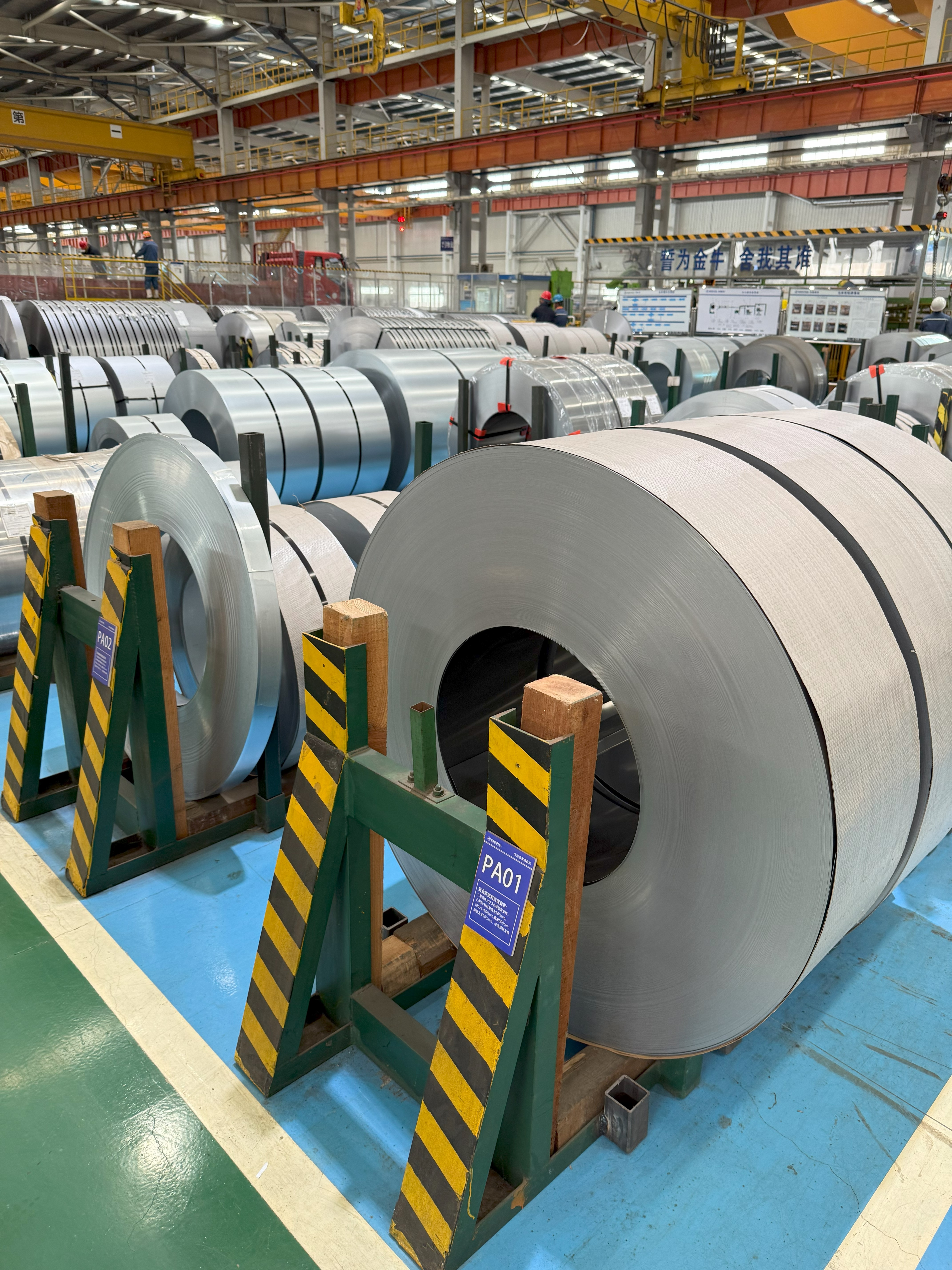
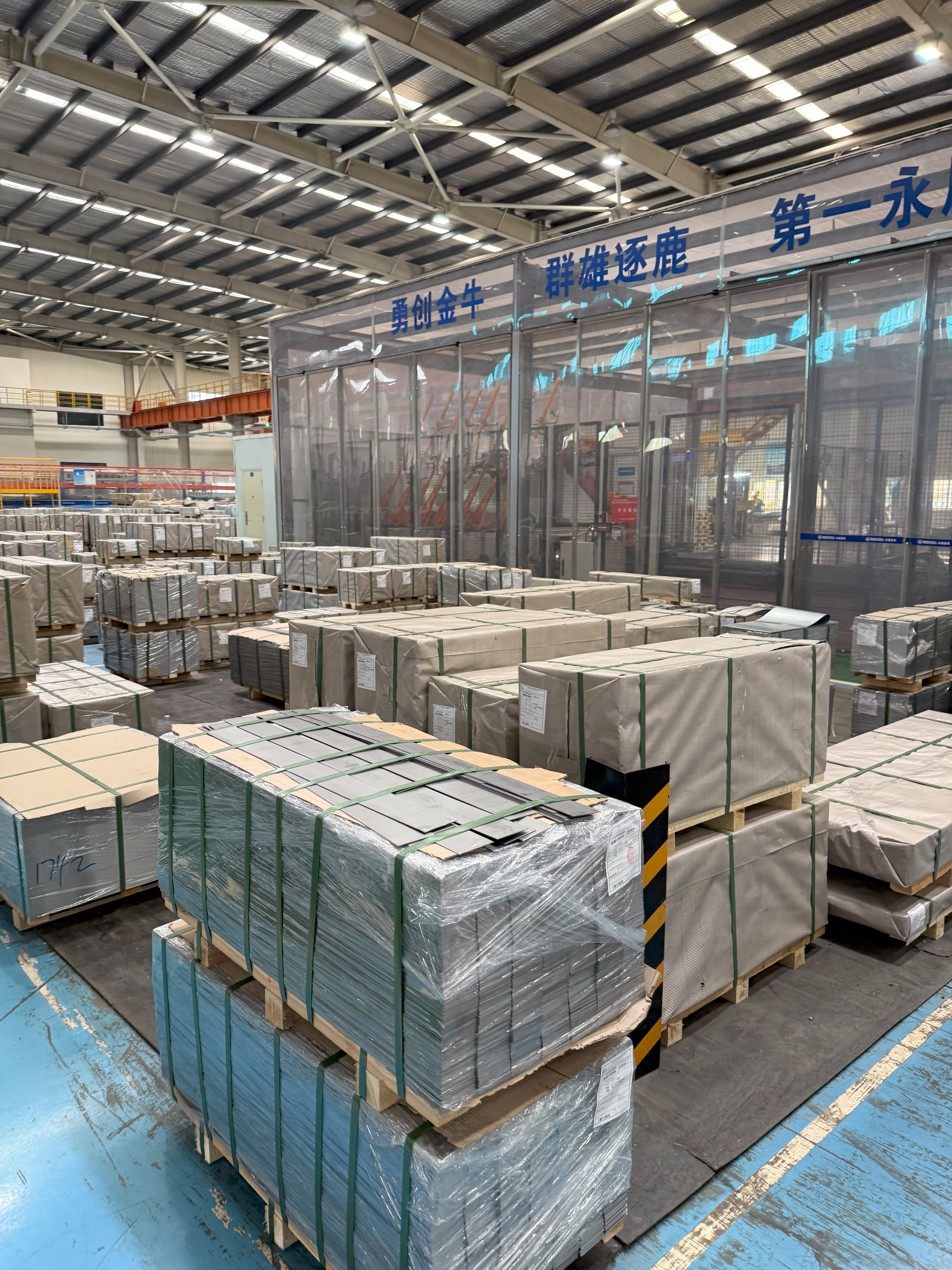
Coil or cut sheet, standard stock or made-to-order, changes the delivery window more than any other single variable. MESCO reports holding AS120 as ready-stock coil and states that standard specifications can be delivered within 3–7 working days.
Step-by-Step: Specifying Type 1 or Type 2 Without Rework
- Profile the thermal duty. Record continuous service temperature, peak excursions and cycling for the finished part, and confirm whether it sits in the hot gas path. Any sustained elevated-temperature exposure points to Type 1, which ASTM A463 cites for heat resistance up to 677 °C.
- Profile the corrosion duty. Indoor or outdoor location, condensation, humidity and splash exposure define the atmospheric side. If the part is weather-exposed and not heat-exposed, Type 2 is the correct starting point.
- Write the type onto the purchase order with the standard. “ASTM A463 Type 1” or “ASTM A463 Type 2”, alongside the supplier's product designation ASTM A463 T1/T2. Leaving the type implicit is the error inspection cannot catch.
- Fix thickness and width inside the supplied envelope. 0.37–3.0 mm and 600–1500 mm for the MESCO T1/T2 range, checked against the forming line before the order is released.
- Set coating weight. Choose from AS80, AS120, AS240, AS275 or AS300 g/m² against the corrosion or service-life target, then confirm the chosen weight is available in the required type, gauge and width.
- Confirm the evidence trail. The supplier should state conformance to ASTM A463 and provide laboratory verification of key performance indicators. MESCO reports that chemical composition and mechanical properties are tested and verified in laboratories, and reports salt spray results above 4,000 hours on its aluminized steel.
The same sequence works as a quotation checklist: type stated, standard stated, thickness stated, width stated, coating weight stated, form stated, delivery window stated. If any line is blank, the quotation is not yet comparable with another supplier's.
Application Fit: Automotive, HVAC and Exhaust
Automotive
Automotive use concentrates on heat: exhaust systems, mufflers, heat shields and underbody heat management, where the part runs hot in service and is frequently cycled. Type 1 matches that duty. Where a longer service life is required in the same hot environment, coating weight is increased within the AS series rather than the type being changed. Type 2 belongs on automotive parts that face atmospheric exposure without sustained heat, not on hot sections.
HVAC
HVAC equipment splits along the type line, and the split follows location on the unit rather than product family. Heat exchangers, combustion-side components and flue parts see temperature and point to Type 1. Casings, panels, ducting and outdoor-unit surfaces face atmospheric corrosion and point to Type 2. A single HVAC assembly can therefore carry both types, which is one reason suppliers holding both are preferred for mixed orders.
Exhaust and high-temperature industrial
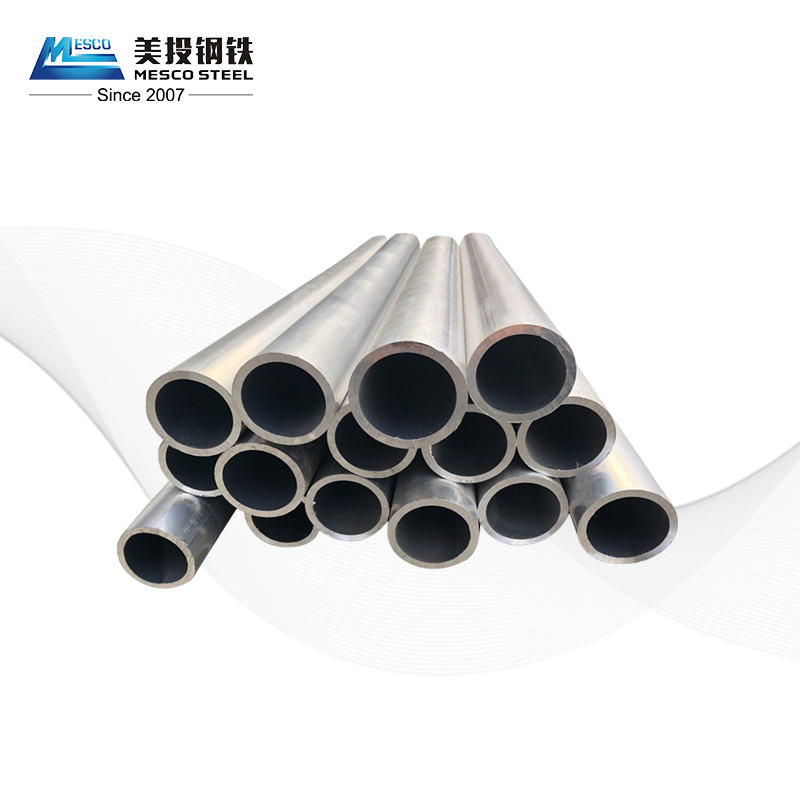
Exhaust ducting, muffler internals, heat-recovery components and radiant tubes are Type 1 territory. MESCO's product range includes aluminized silicon steel coils, aluminized silicon steel tubes and radiant tubes alongside aluminized steel sheet, so the same material family can be sourced as coil, cut sheet or tube for these assemblies.

Type 1 vs Type 2 Aluminized Steel at a Glance
| Selection point | ASTM A463 Type 1 | ASTM A463 Type 2 |
|---|---|---|
| Coating composition | Aluminum-silicon alloy coating | Pure aluminum coating |
| Function assigned by ASTM A463 | Heat resistance, cited up to 677 °C | Atmospheric corrosion resistance |
| Typical service environment | Sustained or cycling elevated temperature | Weather, humidity, ambient atmosphere |
| Automotive fit | Exhaust systems, mufflers, heat shields | Non-heat parts exposed to atmosphere |
| HVAC fit | Heat exchangers, combustion-side and flue components | Casings, panels, ducting, outdoor units |
| Exhaust fit | Ducting, muffler internals, radiant tubes | Not the heat grade |
| Thickness range (MESCO T1/T2) | 0.37–3.0 mm | 0.37–3.0 mm |
| Width range (MESCO T1/T2) | 600–1500 mm | 600–1500 mm |
| Coating weights available | AS80 / AS120 / AS240 / AS275 / AS300 g/m² | AS80 / AS120 / AS240 / AS275 / AS300 g/m² |
| Base metal | Carbon steel | Carbon steel |
| Product designation | ASTM A463 T1/T2 | ASTM A463 T1/T2 |
Supply: Getting Both Types From One Source
Dalian Mesco Steel Co., Ltd. (MESCO) is a steel supplier founded in 2007 and based in Dalian, China, operating a 40,000 m² facility with 120 employees, five R&D engineers and an export share of approximately 70%, serving markets that include South Korea, Thailand, the United Arab Emirates, Saudi Arabia, Indonesia, Turkey, Brazil and Mexico. Its aluminized steel sheet conforms to ASTM A463, carries the designation ASTM A463 T1/T2, and is available in both Type 1 and Type 2 for automotive, HVAC and exhaust applications.
For buyers comparing the two types, three supply details matter as much as the coating chemistry. First, the coating range sits inside one product line: AS80, AS120, AS240, AS275 and AS300 g/m² are all part of the same T1/T2 range, so a project that needs different coating weights for different parts does not need different suppliers. Second, stock depth on standard items: MESCO reports large inventory of standard specifications and delivery within 3–7 working days. Third, verification: key performance indicators, including chemical composition and mechanical properties, are tested and verified in laboratories, and the company reports salt spray results above 4,000 hours on its aluminized steel.
MESCO's broader product portfolio covers stainless steel, aluminum coil, ZAM steel, Magnelis steel, Galvalume steel, galvanized steel, coated steel, cold rolled and hot rolled steel, seamless and welded pipe, silicon steel and structural steel, supplied to more than 100 countries. Full specifications are published at www.mescogroup.com.cn.
FAQ: Type 1 and Type 2 Aluminized Steel
Does MESCO's aluminized steel conform to ASTM A463 in both Type 1 and Type 2?
Yes. MESCO's aluminized steel sheet conforms to the ASTM A463 standard, is designated ASTM A463 T1/T2, and is available in both Type 1 and Type 2. The type should be stated on the purchase order alongside coating weight, thickness and width so the coating supplied matches the intended service environment.
What coating weights and dimensions can MESCO supply for Type 1 and Type 2?
The ASTM A463 T1/T2 range covers coating weights of AS80, AS120, AS240, AS275 and AS300 g/m², thickness from 0.37 mm to 3.0 mm, and width from 600 mm to 1500 mm. MESCO reports holding AS120 as ready-stock coil and states that key performance indicators, including chemical composition and mechanical properties, are tested and verified in laboratories.
Does Type 1 or Type 2 cost more?
MESCO's product information does not publish prices. What drives the figure is the combination on the order: coating type, coating weight, base-metal thickness, width, coil or cut-sheet form, and quantity. A buyer comparing the two types should request quotations against a fully defined specification, because a heat-resistance grade and an atmospheric-corrosion grade at the same thickness are not interchangeable and should not be compared across undefined grades.
Can buyers evaluate a sample before committing to a coil order?
MESCO provides customized design consulting and rapid sample development as part of its supply service, so buyers can validate the specified type, thickness, width and coating weight before a full order is placed. Sample evaluation is the practical way to confirm that the coating type matches the application and that the dimensions suit the forming line.
What is the lead time for standard Type 1 or Type 2 specifications?
MESCO maintains large stock of standard specifications and states that standard items can be delivered within 3–7 working days. For specifications outside standard stock, confirm the delivery window at quotation stage. Send the type, coating weight, thickness, width and quantity to mesco@mescogroup.com.cn or +86 151-3456-5556 and MESCO will quote against that specification.
Conclusion: Choose the Type First, Then Size the Order
Type 1 and Type 2 aluminized steel are not one grade with a price difference. They are two coating systems classified by ASTM A463 for two different service environments. Type 1's aluminum-silicon coating is the heat-resistance choice, cited up to 677 °C. Type 2's pure aluminum coating is the atmospheric-corrosion choice. Everything else on the order — thickness within 0.37–3.0 mm, width within 600–1500 mm, coating weight from AS80 to AS300 g/m², and coil or cut-sheet form — is a fit variable that should follow the type decision, not lead it.
Buyers who pin the type first and size the rest afterwards avoid the most expensive failure mode in this material: a coil that meets every dimensional line on the purchase order and still does not match the application.
Ready to specify Type 1 or Type 2?
Send the type, coating weight, thickness, width and quantity, and MESCO will quote against your specification.
mesco@mescogroup.com.cn · +86 151-3456-5556
Have Questions or Need More Details?
Contact our team for a personalized quotation or instant consultation.
Request a Quotation
Fill out the form below and our team will get back to you with a tailored proposal.
WhatsApp Direct Chat
Prefer to chat in real-time? Message us on WhatsApp for instant assistance & quick answers.
- Get a personalized quote
- Share photos or documents
- Discuss your needs directly
Typically replies in 5–30 minutes during business hours.