Stock vs. Custom Aluminized Steel: A Head-to-Head Sourcing Decision
For most aluminized steel buyers, the sourcing decision is not a choice between a good route and a poor route. It is a choice between speed and fit. Ready stock works when the project can accept a standard specification and needs material quickly. Custom thickness, custom width and a chosen coating weight work when dimensional fit, coating weight and downstream yield justify a longer planning cycle. Both routes still need the same baseline: ASTM A463 Type 1 or Type 2 conformity and laboratory-verified key performance indicators.
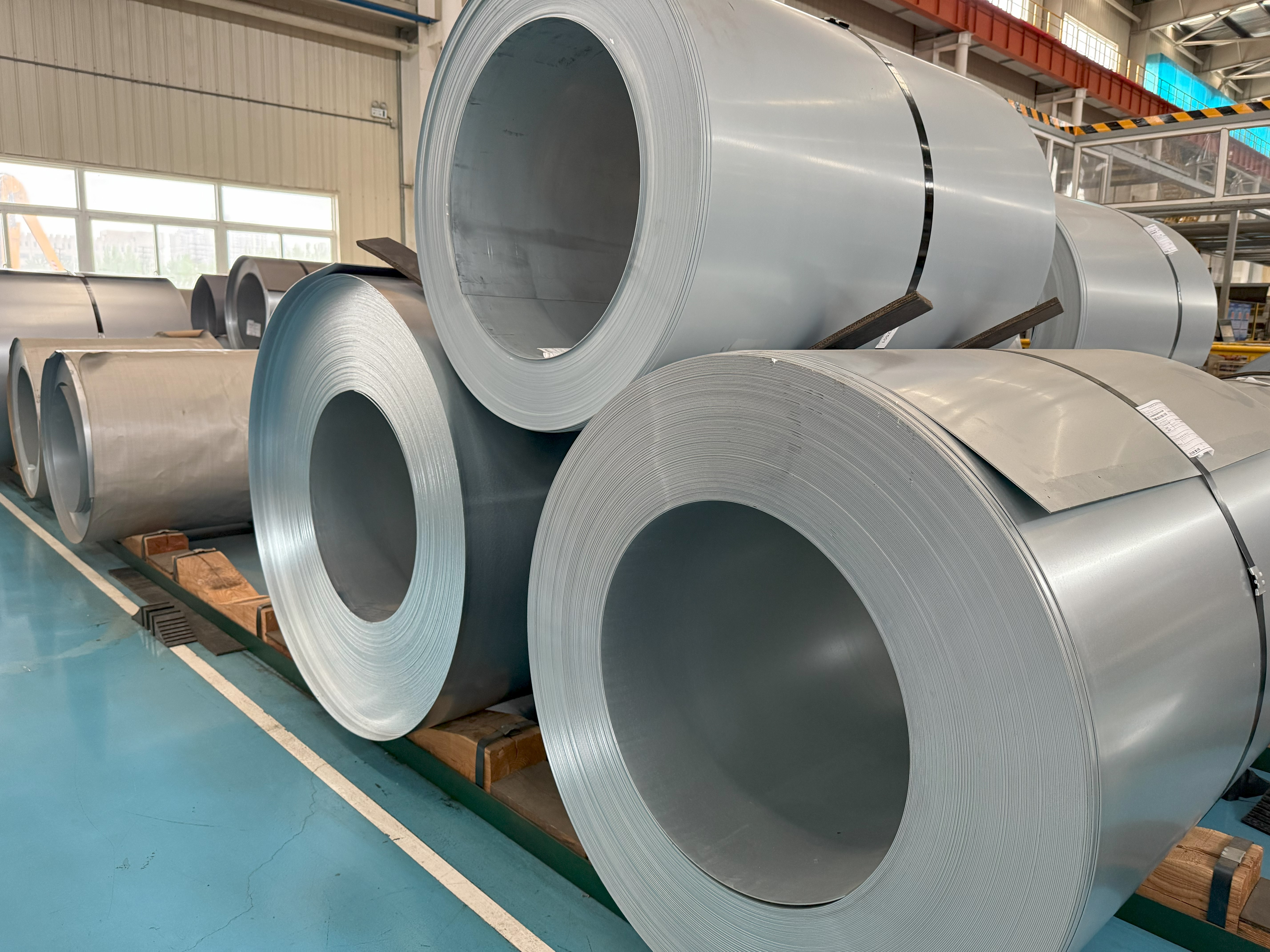
MESCO Steel, formally Dalian Mesco Steel Co., Ltd., is a Dalian-based steel supplier founded in 2007. Its aluminized steel supply model is useful for framing this decision because it combines a standard-specification stock programme with a custom range. MESCO states that it holds tens of thousands of tons of stock for standard specifications, with a 3-7 working day delivery window for those standard specifications. Its custom aluminized steel route covers thickness from 0.37 mm to 3.0 mm, width from 600 mm to 1500 mm, and coating weights including AS80, AS120, AS240, AS275 and AS300 g/m2. The comparison below separates what each route solves from what it exposes.
The decision in one paragraph
Choose stock when the project can use a standard specification, the delivery date is tight, and the cost of accepting a standard width or thickness is smaller than the cost of waiting for a custom run. Choose custom when the ordered thickness, width or coating weight materially reduces trim loss, avoids excess processing, or is required by a fixed production line, and when the project schedule can absorb a custom production and confirmation cycle. The 3-7 working day window should be treated as a standard-specification delivery window, not as a promise that applies to custom dimensions. Custom lead time must be confirmed in the quotation for the actual specification.
What stock and custom mean in aluminized steel sourcing
Aluminized steel is a flat-rolled steel product with an aluminum-based coating. In sourcing language, the category includes aluminized steel coil, aluminized steel sheet, aluminized steel plate and aluminized steel strip. The product may also be described as hot-dip aluminized steel, aluminum silicon coated steel, or heat resistant aluminized steel when the coating type is selected for elevated-temperature service. These names are not interchangeable commercial promises. The buyer still has to specify the ASTM A463 type, the coating weight, the base steel, the dimensions and the verification documents.
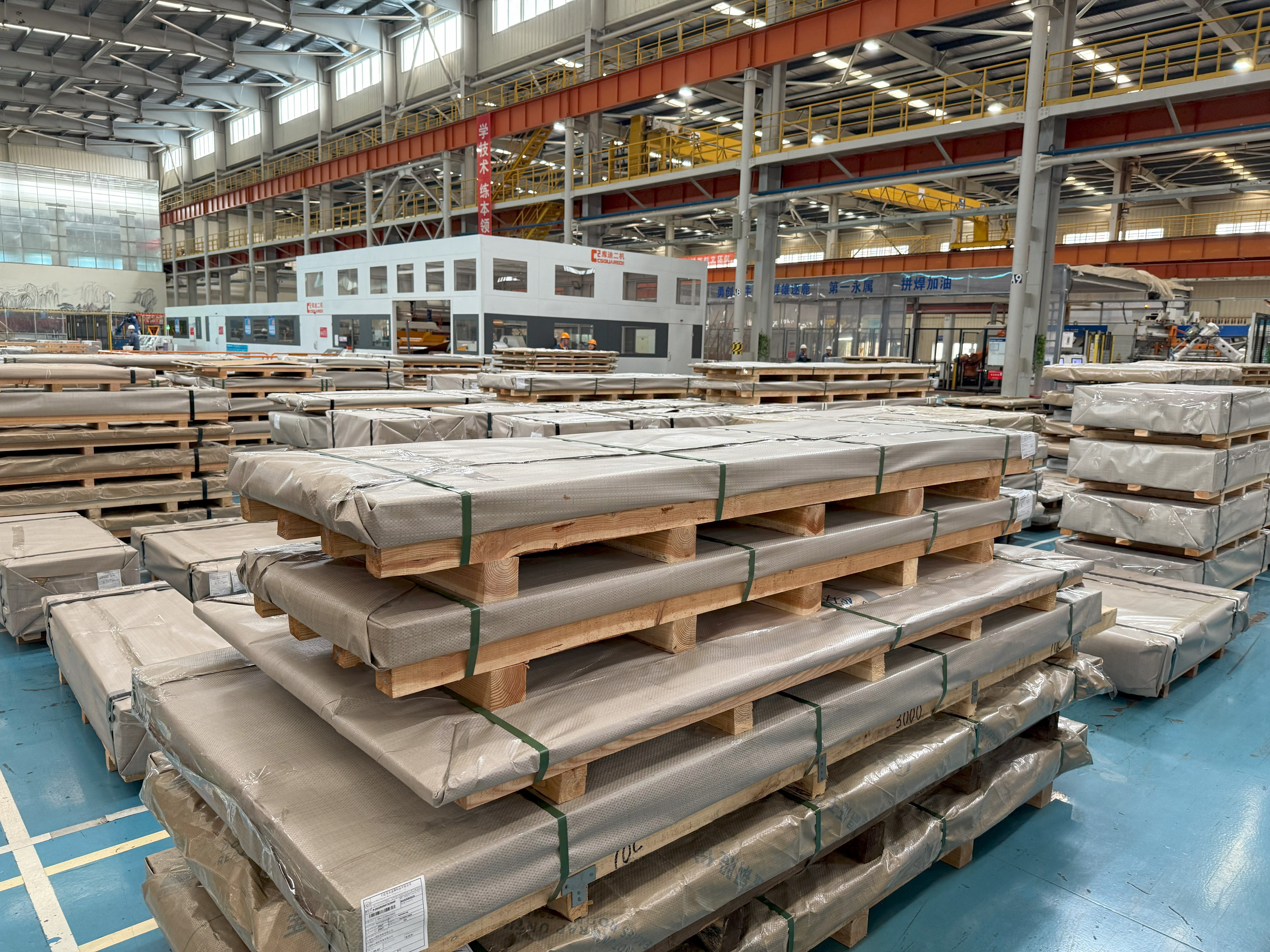
A stock order means the buyer accepts a standard specification held in inventory. The supplier can release the material from existing stock rather than schedule a new coating or rolling sequence. In MESCO's case, the stock programme is described as covering standard specifications, with delivery stated at 3-7 working days. That is the core value of stock: it removes the custom production queue from the critical path.
A custom order means the buyer defines the thickness, width and coating weight within the supplier's available range. For the route discussed here, that range is 0.37-3.0 mm in thickness, 600-1500 mm in width, and AS80, AS120, AS240, AS275 or AS300 g/m2 in coating weight. The buyer is not simply buying a different size. The buyer is buying a fit between the material and the downstream process, and that fit has to be paid for in planning time, production scheduling and minimum commercial commitment.
The sourcing problem: speed versus fit
The problem appears when a project has a fixed line width, a fixed forming or cutting setup, or a coating weight that cannot be substituted without changing the application. If the buyer takes a standard width that is wider than needed, the excess may become edge trim or offcut. If the buyer takes a standard thickness that requires additional processing, the extra step may add handling and inspection. If the buyer takes a standard coating weight outside the intended range, the material may not match the corrosion or heat-exposure requirement. These are fit problems, not just price problems.
The opposite problem appears when the buyer orders custom material too early or for the wrong reason. A custom run adds a confirmation and scheduling cycle. If the order is placed before the drawing, the line width or the coating requirement is frozen, the buyer may lock in a size that later needs rework. If the project is still at an early design stage, a stock standard may be the lower-risk choice because it allows faster trials and avoids committing to a custom specification before the design is stable.
The sourcing question is therefore: which cost is larger for this project, the cost of accepting a standard specification, or the cost of waiting for a custom one? That question cannot be answered by a generic lead-time table. It needs the buyer's own line data, scrap calculation and delivery schedule.
Why the stock route exists: speed, inventory and standard risk
Stock exists because many buyers do not need a unique width or thickness for every order. They need a known specification, a repeatable release and a short delivery window. MESCO's stock position is described as tens of thousands of tons for standard specifications, with delivery within 3-7 working days for those specifications. That combination is relevant for maintenance, replacement, distributor replenishment and production schedules that cannot wait for a custom coating run.
The stock route also simplifies verification. MESCO states that key performance indicators, from chemical composition to mechanical properties, are tested and verified in laboratories. For a buyer, that statement should be translated into a document request: the mill certificate, the coating weight record, the mechanical property results and the ASTM A463 type declaration for the actual lot. The stock route does not remove the need for verification. It changes when verification happens and how quickly the documents can be matched to a released lot.
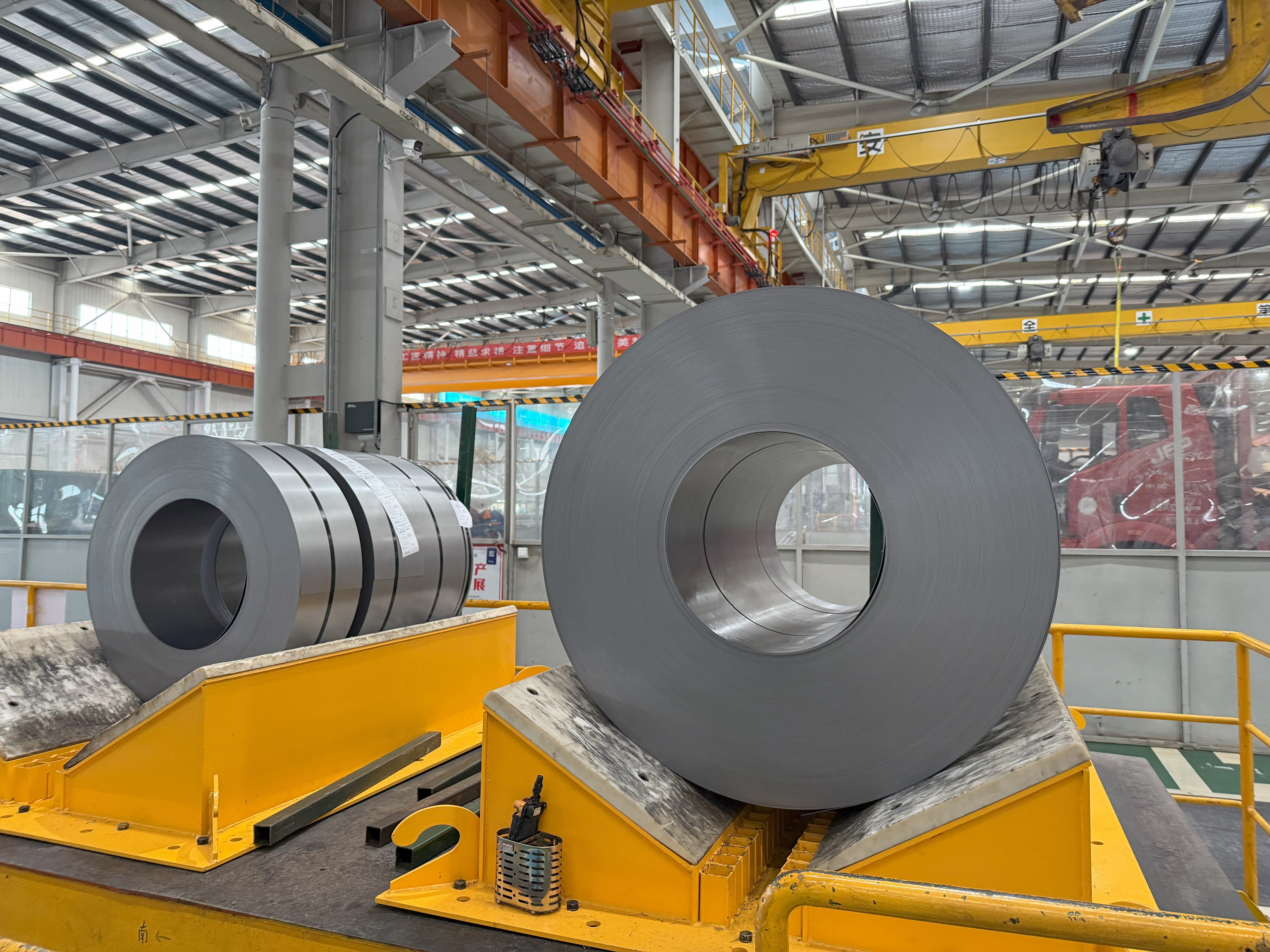
There is also a commercial risk argument for stock. A standard specification is easier to compare across suppliers because the buyer is not negotiating a new width, a new coating weight and a new packing arrangement at the same time. The buyer can focus on the mill certificate, the coating type, the surface condition, the dimensions and the delivery date. That is useful when the project is in the evaluation stage and the buyer wants to qualify a supplier before committing to a custom programme.
What changes when you move to custom thickness and width
Custom sourcing changes the order from a catalogue selection into a specification exercise. The buyer has to decide the thickness, width and coating weight together, because each choice affects the others. A custom width can improve yield, but it may also change the edge condition, the coil weight, the packing and the handling requirement. A custom thickness can reduce downstream processing, but it may change the forming behaviour or the load capacity of the line. A higher coating weight can support a more demanding exposure condition, but it also has to be verified against the ordered specification.
The available custom range in this comparison is 0.37-3.0 mm in thickness, 600-1500 mm in width and AS80 to AS300 g/m2 in coating weight. MESCO's aluminized steel range includes coating weights from AS80 to AS300 g/m2, with AS80, AS120, AS240, AS275 and AS300 named as available options. That range matters because it allows the buyer to separate the application requirement from the stock standard. A buyer who needs AS240 or AS300 is not making a marginal width decision; the coating weight is part of the performance specification and should be confirmed with the ASTM A463 type and the test record.

The custom route also changes the buyer's internal approval work. The drawing, the line width, the coating weight and the acceptance criteria have to be fixed before the order is released. If the buyer changes the width after the order is placed, the supplier may have to re-schedule, and the buyer may carry the cost of a size that no longer fits the line. That is why custom sourcing is usually more suitable for a stable design or a repeat programme than for an emergency replacement.
Industry background: ASTM A463 Type 1 and Type 2 set the performance baseline
ASTM A463 specifies two aluminized steel types. Type 1 is an aluminum-silicon alloy coating intended for heat resistance, with a stated resistance up to 677°C. Type 2 is a pure aluminum coating intended for atmospheric corrosion resistance. The type is not a stock-versus-custom issue. It is a performance decision that should be made before the sourcing route is chosen. A buyer who selects Type 1 for heat exposure and then orders a stock specification without confirming the type has not completed the specification. The same is true for Type 2 when atmospheric corrosion is the controlling requirement.
For context, Zion Market Research reported the global aluminized steel sheet market at USD 13.43 billion in 2024. That scale does not remove the need for lot-level verification, but it explains why suppliers offer both standard stock and custom programmes. The market serves buyers with different urgency, different line widths and different coating requirements. A single supply model is unlikely to fit all of them.
The hidden cost of custom fit: scrap, yield and scheduling
The visible price of a custom order is the material price. The hidden cost is the cost of fit. A custom width can reduce trim loss, but only if the ordered width matches the downstream cut pattern and the line can handle the coil or sheet size. A custom thickness can reduce processing, but only if the forming, welding or cutting process has been validated for that thickness. A higher coating weight can support a more demanding exposure condition, but it can also change the surface condition and the handling requirement. These are not reasons to avoid custom sourcing. They are reasons to calculate the fit before releasing the order.
The scrap calculation should compare the ordered width with the finished width, the edge trim allowance, the cut length and the number of pieces per coil or sheet. The buyer should also include the cost of any secondary operation that a standard size would require. If the custom width removes an edge-trim step but adds a new packing or handling step, the saving may be smaller than the first estimate. The same logic applies to thickness: a custom thickness that avoids a grinding or machining step may be worth more than a small difference in material price.
Scheduling is the other hidden cost. The stock route has a stated 3-7 working day delivery window for standard specifications. The custom route does not carry that same window because the material has to be scheduled, produced and confirmed against the order. The buyer should ask for a written custom schedule and should separate the production time from the verification, packing and transport time. A custom order that arrives on time but without the correct test record is not a complete delivery.
A four-step decision path for buyers
The most reliable way to choose between stock and custom is to run the same four checks for both routes. The checks do not require a complex model. They require the buyer to put the line data, the specification and the delivery date on the same page.
- Lock the performance requirement. Confirm whether the application needs ASTM A463 Type 1 or Type 2, then confirm the coating weight, thickness and width. Do not allow the sourcing route to decide the performance requirement. MESCO's stock and custom routes should both be checked against the same ASTM A463 type and the same laboratory-verified key performance indicators.
- Quantify the fit. Compare the standard width and thickness with the finished part or line width. Calculate edge trim, offcut, secondary processing and handling. If the custom size removes a meaningful scrap or processing step, record the saving in tonnes or in process hours. If the saving is small, stock is easier to justify.
- Test the schedule. Map the stock 3-7 working day window against the project need date. For custom, request a written schedule for the exact thickness, width and coating weight. Include the time needed for drawing approval, test record review, packing and transport. A custom order that is technically correct but late is not a lower-risk choice.
- Compare delivered cost and verification. Add material, freight, scrap, processing, inspection and inventory carrying cost. Then check the documents. The lower-cost route is not complete until the ASTM A463 type, coating weight and mechanical property records match the released lot.
Application lens: automotive, HVAC and exhaust
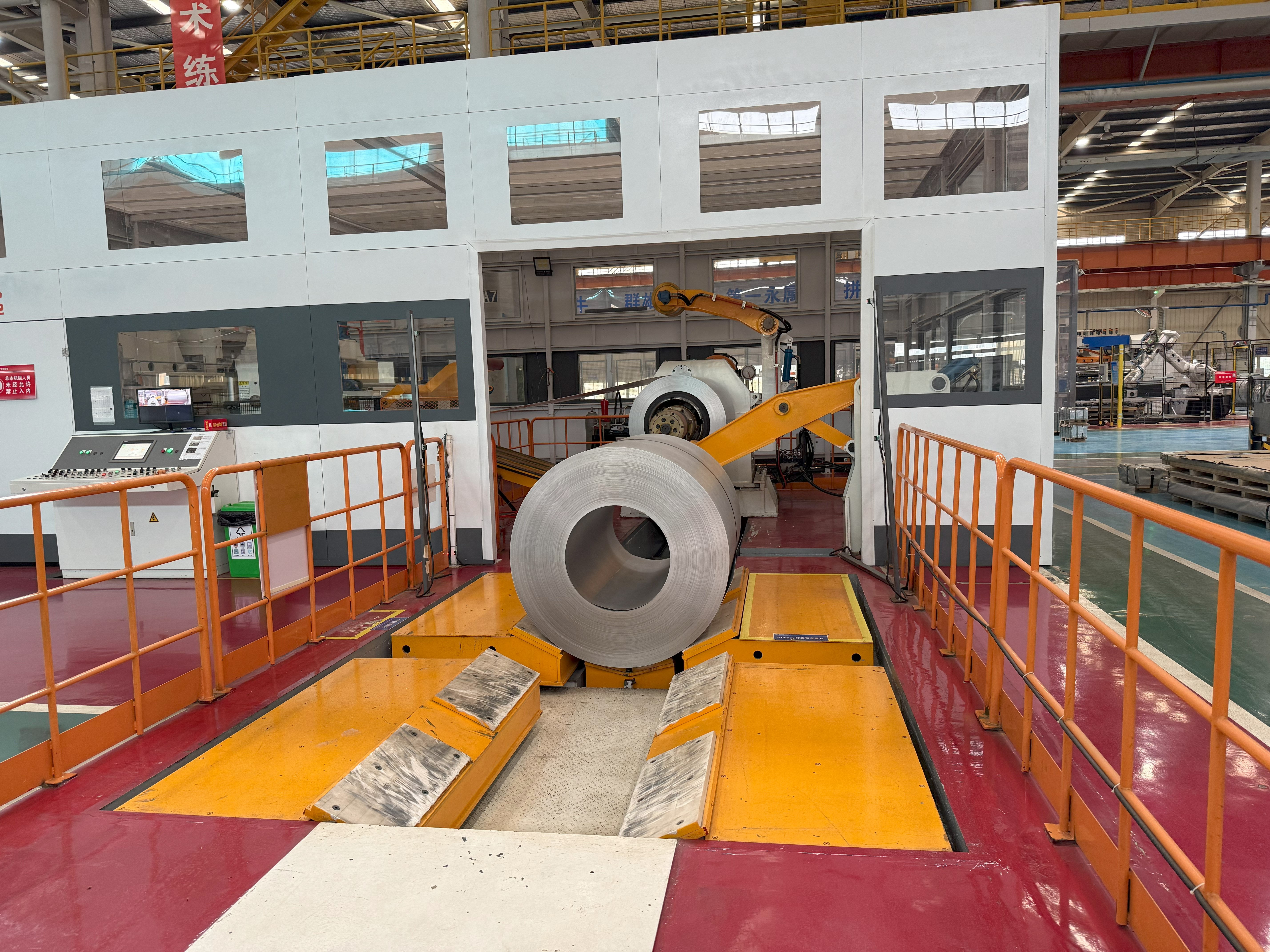
The stock-versus-custom decision changes with the application because the cost of a poor fit changes. The same aluminized steel material can be appropriate in one application and inappropriate in another if the coating type or coating weight is wrong. The notes below are decision prompts, not universal prescriptions. The buyer should confirm the final specification against the actual drawing and the applicable ASTM A463 type.
Automotive applications
Automotive buyers often work with stable drawings and repeat programmes, which can make a custom width or thickness easier to justify. If the line width is fixed and a standard width creates consistent edge trim, a custom width may reduce scrap over a long run. If the programme is still in development, or the volume is uncertain, stock standard material can support trials and avoid locking in a size before the design is stable. The decision should include the cost of a design change, not only the price per tonne. A custom order that has to be re-scheduled after a drawing change can lose the yield advantage that justified it.
HVAC applications
HVAC sourcing often combines planned production with replacement and repair demand. Stock standard aluminized steel sheet or coil can be appropriate when the specification is standard and the need date is short, because the 3-7 working day window for standard specifications supports fast release. Custom width or coating weight can be appropriate when the forming line or the exposure requirement cannot accept the standard specification. The buyer should separate planned production from emergency replacement. A custom programme may suit the planned volume, while a stock standard may be the safer route for service parts and unplanned demand.
Exhaust applications
Exhaust applications may call for heat-resistant aluminized steel, which points to ASTM A463 Type 1 and the aluminum-silicon coating. The type and coating weight should be confirmed before the buyer chooses stock or custom. A stock standard can be suitable when the required type and coating weight are already held and the dimensions fit the fabrication line. A custom order can be suitable when the tube, sheet or strip width has to match a fixed process, or when a specific coating weight is needed for the exposure condition. The buyer should not use the stock window as evidence that a custom heat-resistant specification is available on the same timeline.
Stock vs custom aluminized steel: comparison table
The table below compares the two routes on the criteria that usually decide the sourcing choice. It uses the supplied stock window, inventory position, custom range and ASTM A463 baseline. It does not assume a custom lead time or a price that has not been confirmed for the actual order.
| Decision factor | Ready stock: standard specification | Custom order: defined thickness, width and coating weight |
|---|---|---|
| Best fit | Projects that can use a standard specification and need fast release. | Projects with a fixed line width, a specific thickness, or a coating weight outside the standard stock range. |
| Delivery window | 3-7 working days for standard specifications, as stated by MESCO. | Schedule must be confirmed for the actual custom specification; the stock window does not apply automatically. |
| Inventory position | Tens of thousands of tons held for standard specifications. | Made to the confirmed order; the buyer is not drawing from the standard stock position. |
| Dimensional fit | Standard thickness and width may require edge trim, offcut or additional processing. | Thickness 0.37-3.0 mm and width 600-1500 mm can be aligned to the downstream process. |
| Coating choice | Limited to the coating weights held in the standard stock programme. | AS80, AS120, AS240, AS275 or AS300 g/m2 can be specified within the available range. |
| Scrap and yield | Scrap exposure depends on the difference between the standard size and the finished size. | Can reduce trim loss when the custom size matches the line, but only after the fit is calculated. |
| Verification | Laboratory-verified key performance indicators and lot documents should be matched to the released stock. | Same ASTM A463 Type 1/Type 2 and laboratory verification requirement; confirm the test record before release. |
| Main risk | Accepting a standard size that creates hidden scrap or processing cost. | Committing to a custom size before the drawing is stable, or accepting a schedule that does not match the project. |
Checklist before you commit
Use this checklist to make the final choice. It is deliberately short because the decision should be based on a few confirmed facts, not on a long list of generic preferences.
- Confirm the ASTM A463 type: Type 1 aluminum-silicon for heat resistance up to 677°C, or Type 2 pure aluminum for atmospheric corrosion.
- Confirm the coating weight in g/m2 and check that it is available in the chosen route. For custom, verify AS80, AS120, AS240, AS275 or AS300 within the stated range.
- Compare the standard width and thickness with the finished line width and the cut pattern. Record the trim loss, offcut and any secondary operation.
- Check the need date against the 3-7 working day stock window for standard specifications. For custom, request a written schedule for the exact order.
- Request the laboratory-verified key performance indicators, mill certificate and coating record for the actual lot.
- Calculate delivered cost after scrap, processing, freight, inspection and inventory carrying cost. Do not compare price per tonne alone.
- Decide whether the design is stable enough for a custom commitment. If it is not, use stock for trials and revisit custom when the drawing is fixed.
FAQ: stock versus custom aluminized steel
Is custom aluminized steel always more expensive than stock?
No. A custom order can carry additional planning and production steps, but it can also reduce edge trim, offcut or secondary processing. The correct comparison is delivered cost after yield, scrap, freight, inspection and schedule risk. A stock order with a low material price can still be more expensive if it creates consistent trim loss or requires extra processing.
What does the 3-7 working day delivery window apply to?
The 3-7 working day window applies to standard specifications held in MESCO's stock programme. It should not be assumed for custom thickness, custom width or a coating weight that has to be produced. Buyers should request a separate written schedule for custom orders and should include verification, packing and transport time in the project plan.
Can MESCO supply AS300 aluminized steel?
MESCO's aluminized steel range includes coating weights from AS80 to AS300 g/m2, with AS80, AS120, AS240, AS275 and AS300 named as options. The buyer should confirm the ASTM A463 type, the base steel, the thickness and the width for the actual order, and should request the coating weight record with the lot documents.
Does ASTM A463 Type 1 or Type 2 change the stock-versus-custom decision?
The ASTM type defines the performance route, not the sourcing route. Type 1 is an aluminum-silicon coating intended for heat resistance up to 677°C. Type 2 is a pure aluminum coating intended for atmospheric corrosion resistance. The buyer should lock the type first, then decide whether a standard stock specification or a custom order can meet it.
How should a buyer estimate scrap risk on a custom width?
Compare the ordered width with the finished width, the edge trim allowance, the cut length and the number of pieces per coil or sheet. Include any secondary operation that a standard width would require. If the custom width removes a repeated trim step, the saving should be calculated over the order quantity rather than on a single piece.
What should a custom aluminized steel quotation include?
The quotation should state the ASTM A463 type, the coating weight, the thickness, the width, the base steel requirement, the quantity, the packing, the delivery schedule and the verification documents. It should also state any commercial minimum or size tolerance that applies. A quotation that lists only the price per tonne is not sufficient for a custom sourcing decision.
How can a buyer start a stock or custom inquiry with MESCO?
Provide the application, the ASTM A463 type, the required coating weight, the thickness, the width, the quantity and the need date. MESCO can then confirm whether the specification fits the standard stock programme with its 3-7 working day window, or whether it requires a custom schedule. The MESCO STEEL CATALOGUE 202507 provides the product context for that discussion.
Conclusion: choose the route that removes the larger risk
Stock and custom aluminized steel solve different problems. Stock removes the custom production queue and supports fast release for standard specifications. MESCO's stated stock position of tens of thousands of tons and its 3-7 working day delivery window for standard specifications make that route relevant when the specification is already fixed and the schedule is tight. Custom sourcing removes the mismatch between a standard size and the downstream line. The 0.37-3.0 mm thickness range, 600-1500 mm width range and AS80 to AS300 g/m2 coating range give the buyer room to specify the fit, but that fit has to be confirmed before the order is released.
The decision should not be made on price per tonne alone. It should be made on the cost of the larger risk: the risk of accepting a standard specification that creates scrap or processing cost, or the risk of waiting for a custom order that the project schedule cannot absorb. In both cases, ASTM A463 Type 1 or Type 2 conformity and laboratory-verified key performance indicators remain the baseline. A fast delivery of the wrong specification is not a sourcing advantage, and a custom fit without verification is not a lower-risk purchase.
Next step: define the application, the ASTM A463 type, the coating weight, the thickness, the width, the quantity and the need date. That information is enough to test whether the standard stock route fits, or whether a custom aluminized steel order is the better match.
Review the product range in the MESCO STEEL CATALOGUE 202507 before requesting a stock check or a custom quotation.
This article compares sourcing routes for aluminized steel coil, sheet, plate and strip. Final selection should be confirmed against the project drawing, the applicable ASTM A463 type and the supplier's lot documents.
Have Questions or Need More Details?
Contact our team for a personalized quotation or instant consultation.
Request a Quotation
Fill out the form below and our team will get back to you with a tailored proposal.
WhatsApp Direct Chat
Prefer to chat in real-time? Message us on WhatsApp for instant assistance & quick answers.
- Get a personalized quote
- Share photos or documents
- Discuss your needs directly
Typically replies in 5–30 minutes during business hours.