ASTM A463 Type 1 vs Type 2 Aluminized Steel: A Head-to-Head Decision Guide

Under ASTM A463/A463M, aluminized steel is designated either Type 1 (aluminum-silicon alloy coating) or Type 2 (pure aluminum coating). That designation is not a marketing label on a catalogue page — it names the coating chemistry that is applied to the carbon steel base, and it is what your purchase order line item and mill certificate will carry. For a buyer in the research and evaluation stage, the T1/T2 decision rests on four constraints: the type named in the engineering requirement, the coating weight class, the dimensional envelope, and whether that type can actually be produced and delivered at the volume and lead time you need.
Problem Definition: What the Type 1 vs Type 2 Choice Actually Changes
The recurring failure mode in T1/T2 sourcing is specification drift, not defective steel. An engineering drawing names one type. The sourcing team then works from a supplier listing where the product appears as a single item under the model designation ASTM A463 T1/T2 — which is technically accurate, because the standard does cover both types — and a quotation comes back that conforms to the standard number but not to the coating chemistry the drawing requires. The gap usually surfaces at incoming inspection or at the coating line, when rework, re-qualification or a replacement shipment is already on the critical path.
Three things genuinely change with the type designation:
- Coating chemistry. Type 1 is an aluminum-silicon alloy coating; Type 2 is a pure aluminum coating, as defined in ASTM A463/A463M.
- The identity of the material. The type designation is what appears on the mill certificate and in the purchase order. Two coils can share the same thickness, the same width and the same coating weight class and still be different materials.
- The sourcing route. Availability differs by type and by region. MESCO reports that only Type 1 (T1) aluminized steel is produced in China and that Type 2 (T2) is not available from the Chinese supply base.
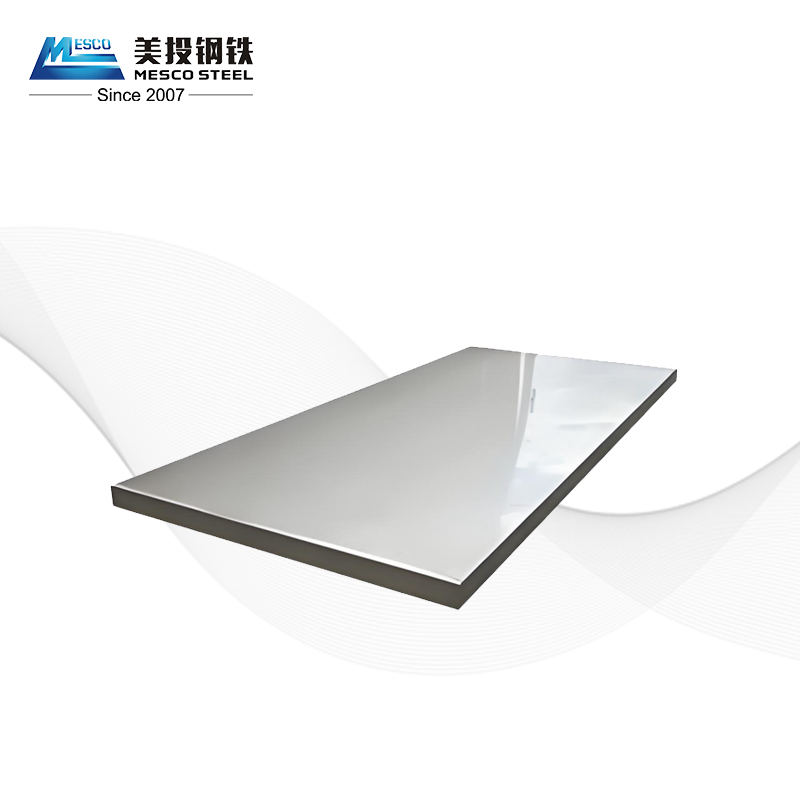
What does not change is the surrounding specification envelope. MESCO's aluminized steel sheet — the product carrying the ASTM A463 T1/T2 model designation — is specified as carbon steel base metal with an Al-Si coating, in thicknesses from 0.37 to 3.0 mm and widths from 600 to 1500 mm, with coating weights of AS80, AS120, AS240, AS275 and AS300 g/m², for automotive, HVAC and exhaust applications.
Industry Background: Where Aluminized Steel Demand and Supply Stand
Aluminized steel is not a niche line item. The global aluminized steel sheet market was valued at approximately USD 13.43 billion in 2024, according to Zion Market Research. A separate analysis by Dataintelo projects the aluminized steel sales market reaching USD 18.7 billion by 2034, growing at a CAGR of 5.7% from 2026; the same source estimated the 2025 market at USD 11.4 billion. The two sets of figures diverge because they define the market differently, so any single market-size number should be treated as directional rather than exact.
Demand is concentrated in Asia Pacific, which held a 41.8% revenue share in 2025 (Dataintelo). On the product side, the alloy-coated designation is clearly the mainstream: Type 1 hot-dip silicon-alloy coated steel held the largest product share at 62.3% of the aluminized steel market in 2025 (Dataintelo). For a buyer weighing T1 against T2, that figure is the most useful single background fact, because it shows which coating chemistry the global supply base is built around.
Two standards govern the category. ASTM A463/A463M is the governing standard for aluminum-coated steel sheets produced by the hot-dip process, and it specifies Type 1 (Al-Si alloy) and Type 2 (pure Al) coatings. EN 10346 is the European standard for continuously hot-dip coated steel flat products and covers aluminized steel (AS) coatings — relevant whenever a European project cites EN rather than ASTM, and a good reason to confirm which standard your drawing references before the first quote is issued.
Type 1 is also where current product development is concentrated. Nippon Steel's AS-L grade, launched in 2024, claims a 30% improvement in inter-coat adhesion for automotive applications. Major global producers of aluminized steel include ArcelorMittal, Nippon Steel Corporation, POSCO and AK Steel (Cleveland-Cliffs). The practical reading for a buyer is straightforward: if your requirement is Type 1, you are specifying into the deepest and most competitive part of the market; if it is Type 2, you are specifying into a thinner one.
The Two ASTM A463 Designations, Side by Side
The table below compares the two designations only on variables that are documented in ASTM A463/A463M, in MESCO's product specification, or in the third-party sources cited above. Where the two types are governed by the same rule, the table says so rather than inventing a difference between them.
| Decision Variable | Type 1 | Type 2 |
|---|---|---|
| Coating chemistry per ASTM A463/A463M | Aluminum-silicon alloy coating | Pure aluminum coating |
| Governing standard | ASTM A463/A463M | ASTM A463/A463M |
| European standard coverage | EN 10346 covers continuously hot-dip coated steel flat products including aluminized steel (AS) coatings | EN 10346 covers continuously hot-dip coated steel flat products including aluminized steel (AS) coatings |
| Global product share, 2025 (Dataintelo) | 62.3% of the aluminized steel market — largest product share | No separate Type 2 share is published in the sources used here |
| Production availability in China | Produced; MESCO reports Type 1 is the only aluminized steel type made in China | MESCO reports Type 2 is not produced in China |
| Model designation on the MESCO product line | ASTM A463 T1/T2 | ASTM A463 T1/T2 |
| Coating weight classes specified | AS80 / AS120 / AS240 / AS275 / AS300 g/m² | Same designated classes, subject to the producing mill's availability |
| Thickness | 0.37–3.0 mm | 0.37–3.0 mm |
| Width | 600–1500 mm | 600–1500 mm |
| Base metal | Carbon steel base metal | Carbon steel base metal |
| Stated application industries | Automotive, HVAC, exhaust | Automotive, HVAC, exhaust |
| Lead time for standard specifications from MESCO stock | 3–7 working days | Not offered from MESCO's Chinese supply base; source outside China |
Two readings of this table matter more than the rest. First, the type designation is a chemistry decision, not a quality tier: ASTM A463 defines both types under one standard, and neither is a downgrade of the other. Second, the coating weight class is a separate variable from the type. AS80, AS120, AS240, AS275 and AS300 g/m² describe how much coating metal is applied per unit area, and that class has to be named on the purchase order alongside the type.
What MESCO Supplies Under the ASTM A463 T1/T2 Designation
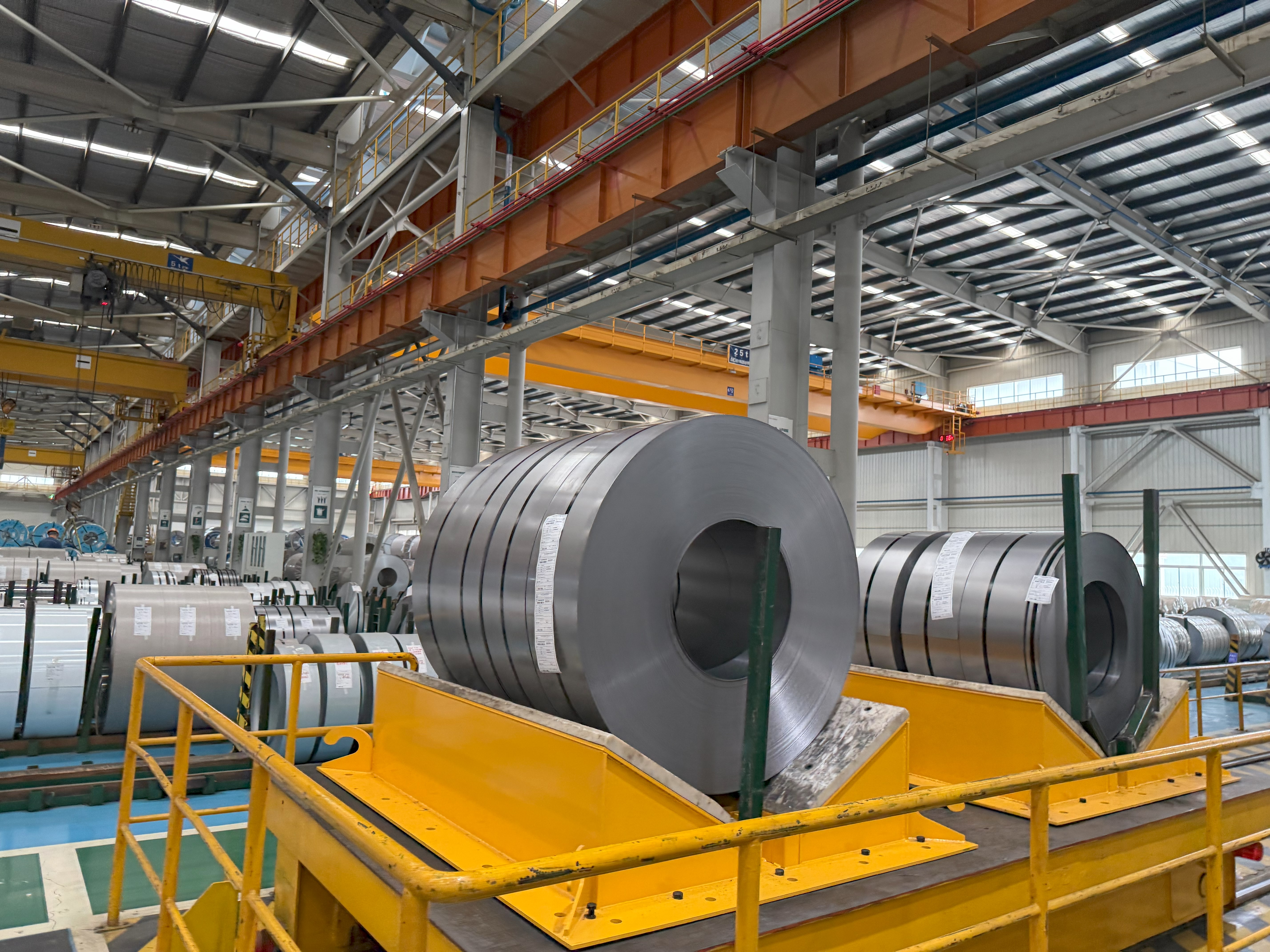
Dalian Mesco Steel Co., Ltd. (MESCO STEEL) is a Chinese steel exporter founded in 2007 and based in the Dalian Economic and Technological Development Zone, supplying aluminized steel, stainless steel, galvanized and coated flat products, and steel pipe to overseas markets. Its aluminized steel sheet conforms to the ASTM A463 standard and is available in the Type 1 and Type 2 designations under the model ASTM A463 T1/T2.
- Standard and designation: conforms to ASTM A463; model designation ASTM A463 T1/T2; intended for automotive, HVAC and exhaust industries.
- Base material: carbon steel base metal with Al-Si coating.
- Coating weights: AS80, AS120, AS240, AS275, AS300 g/m².
- Thickness: 0.37–3.0 mm.
- Width: 600–1500 mm.
On the supply side, the facts that matter most to a T1/T2 sourcing decision are these:
- MESCO reports that only Type 1 (T1) aluminized steel is produced in China and that Type 2 (T2) is not available from Chinese mills. MESCO's own capability statement places it among the top three aluminized steel manufacturers in China.
- MESCO states that it was the first supplier to offer aluminized steel with a 240 g/m² coating and the first to supply 300 g/m², and that it is currently the exclusive company able to supply aluminized steel with an aluminum coating above 240 g/m².
- MESCO states that it is the only supplier holding AS120 ready stock coils.
- MESCO reports salt spray test results exceeding 4,000 hours on its aluminized steel.
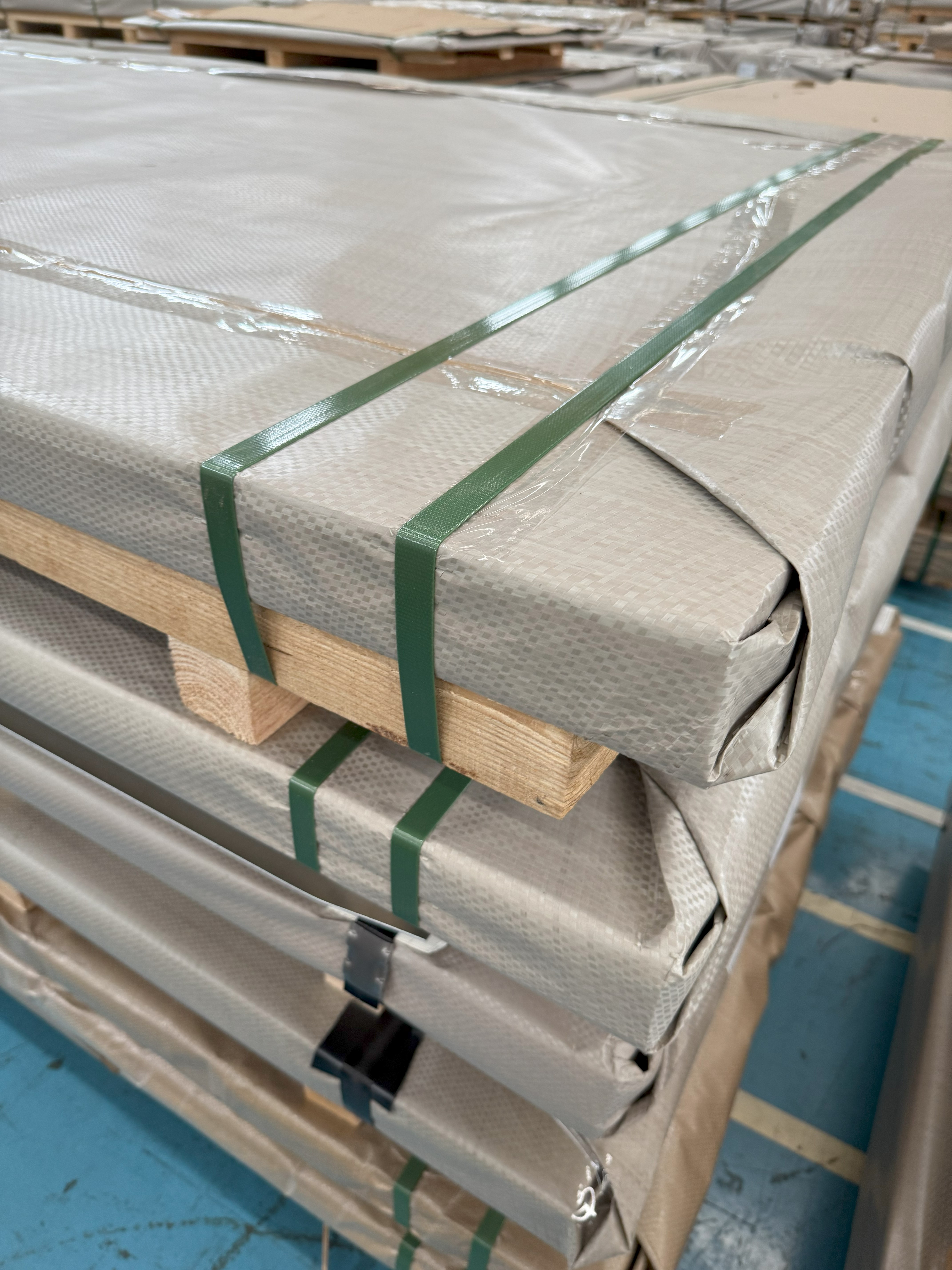
- Standard specifications are held in stock — described as 4,000 tons of daily stock across nearly all grades — supporting delivery within 3–7 working days.
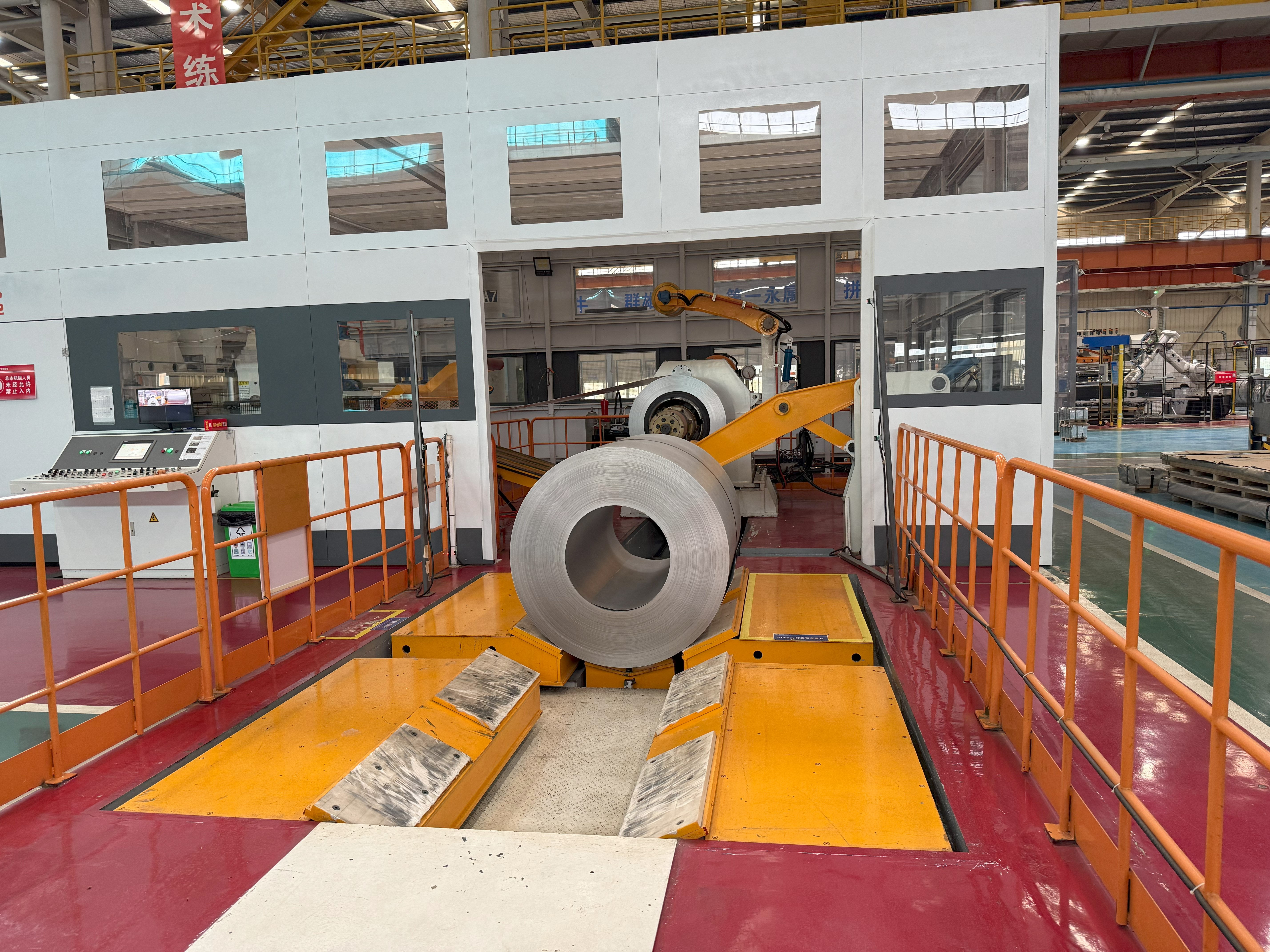
Company-level context reinforces the supply argument: MESCO exports to more than 100 countries and regions and serves over 700 customers, with an export ratio of 70%, operating from a 40,000 m² facility with a stated focus on customized design consulting, rapid sample development, on-time delivery and after-sales service. Third-party industry coverage of Chinese aluminized steel manufacturers also references MESCO's export footprint in this category.
Step-by-Step: Qualifying a Type 1 or Type 2 Order
The sequence below is the order in which the decision should be locked. Reversing steps — quoting first and confirming the designation later — is what produces the specification drift described at the start of this guide.
- Read the drawing before the catalogue. Confirm whether the engineering requirement names Type 1 or Type 2, or cites ASTM A463 without naming a type. If no type is named, the designation has to be confirmed with engineering before a purchase order is raised — a quotation cannot resolve that ambiguity for you.
- Confirm which standard governs. ASTM A463/A463M and EN 10346 both cover aluminized coatings, but they are different frameworks. Requirements written against EN 10346 should have the coating designation mapped before quoting, particularly for European projects.
- Fix the coating weight class. AS80, AS120, AS240, AS275 and AS300 g/m² are distinct classes. Two offers are only comparable when the class matches on both sides of the comparison.
- Check the dimensional envelope. The standard specification range is 0.37–3.0 mm in thickness and 600–1500 mm in width. If a part requires anything outside those limits, the standard-spec range does not apply and the deviation should be raised early, not discovered at order confirmation.
- Test availability against the type. This is where the two designations diverge most sharply for a China-sourced order, because MESCO reports Type 1 is the only aluminized steel type produced in China. If Type 2 is mandatory, plan for supply outside China and a longer qualification cycle. If the application accepts Type 1, coating weights up to AS300 g/m² are available from MESCO, and AS120 ready stock coils can ship quickly.
- Validate on a sample before releasing volume. MESCO provides rapid sample development, and key performance indicators from chemical composition through mechanical properties are tested and verified in laboratories. Ask for the coating weight verification and test documentation to accompany the first article.
- Lock lead time into the contract, not the conversation. MESCO's standard-specification stock supports delivery within 3–7 working days. Non-standard coating weights, widths or thicknesses should be quoted with their own production schedule rather than assumed to follow the stock lead time.
Where Each Designation Fits: Automotive, HVAC and Exhaust
MESCO's aluminized steel sheet specification lists automotive, HVAC and exhaust as the applicable industries. Those three contexts pull the T1/T2 decision in different directions, and in each case the deciding input is the customer's own engineering document rather than a supplier preference.
Automotive
Automotive is where Type 1 product development is most visible: Nippon Steel's AS-L grade, launched in 2024, claims a 30% improvement in inter-coat adhesion for automotive applications, and Type 1 holds the largest product share of the aluminized steel market at 62.3% (Dataintelo, 2025). For an automotive program, the practical steps are to confirm the type and coating class named in the OEM specification, then validate the adhesion protocol on the first-article sample before volume release. MESCO supplies coating weights from AS80 through AS300 g/m².
HVAC
HVAC demand runs on dimensional fit and replenishment speed more than on exotic coating classes. The specification envelope of 600–1500 mm width and 0.37–3.0 mm thickness covers the coil and sheet formats typically required, and the decision usually becomes a supply-continuity question: which type can be re-ordered on a short cycle. For Type 1, MESCO's standard-specification stock supports delivery within 3–7 working days, including AS120 ready stock coils.
Exhaust
Exhaust is one of the three application areas named in the specification. Because the type designation determines the coating chemistry, exhaust programs should confirm which type their engineering document actually names instead of treating T1 and T2 as interchangeable siblings, and should request the supporting test documentation — MESCO reports salt spray test results exceeding 4,000 hours on its aluminized steel — as part of the qualification file.
Frequently Asked Questions
Does aluminized steel have to be ordered to ASTM A463, and what does each type designation mean?
ASTM A463/A463M is the governing standard for aluminum-coated steel sheets produced by the hot-dip process, and it specifies Type 1 (aluminum-silicon alloy coating) and Type 2 (pure aluminum coating). MESCO's aluminized steel sheet conforms to the ASTM A463 standard and is available in the Type 1 and Type 2 designations under the model ASTM A463 T1/T2. European projects may alternatively cite EN 10346, the standard for continuously hot-dip coated steel flat products, which covers aluminized steel (AS) coatings — in that case confirm how the coating designation maps before issuing the purchase order.
Can a Type 2 aluminized steel order be filled from China?
According to MESCO, only Type 1 (T1) aluminized steel is produced in China, and Type 2 (T2) is not available from the Chinese supply base. Buyers whose specifications name Type 2 should therefore plan for a non-Chinese source and the longer qualification cycle that implies, or verify with engineering whether Type 1 is acceptable. Where Type 1 is acceptable, MESCO supplies coating weights from AS80 to AS300 g/m², in thicknesses from 0.37 to 3.0 mm and widths from 600 to 1500 mm, for automotive, HVAC and exhaust applications.
How should Type 1 and Type 2 offers be compared commercially?
Offers for aluminized steel coil are only comparable when the material is defined the same way on both sides: the type designation, the coating weight class, the thickness and the width. The coating class is a weight per unit area — AS80, AS120, AS240, AS275 and AS300 g/m² each describe a different amount of coating metal applied per square meter of steel — so a quote written against one class is not a quote for another. MESCO quotes per project rather than from a published price list. Stock position also shapes the commercial picture: MESCO holds AS120 ready stock coils and describes 4,000 tons of daily stock across nearly all grades, which supports delivery within 3–7 working days for standard specifications.
What can be verified on a sample before a full Type 1 aluminized steel order?
MESCO provides rapid sample development, and key performance indicators — from chemical composition to mechanical properties — are tested and verified in laboratories. MESCO reports salt spray test results exceeding 4,000 hours on its aluminized steel. For a T1/T2 evaluation, ask the supplier to state the type designation, the coating weight class and the verification method on the sample documentation, so that the sample record and the production order describe the same material.
What lead time applies to a standard Type 1 aluminized steel coil order?
MESCO maintains tens of thousands of tons of stock for standard specifications — described as 4,000 tons of daily stock across nearly all grades — which supports delivery within 3–7 working days. Stock covers standard specifications including AS120 ready stock coils. Coating weights other than the standard classes, or thicknesses and widths outside 0.37–3.0 mm and 600–1500 mm, should be quoted with their own production schedule. To confirm availability against a specific ASTM A463 Type 1 requirement, review the MESCO STEEL catalogue and send the requirement through for a specification-matched quotation.
Conclusion: A Constraint Match, Not a Ranking
Type 1 and Type 2 aluminized steel are two coating chemistries defined by a single standard, and the decision between them is a constraint-matching exercise rather than a performance ranking. Match the type to the drawing, match the coating weight class to the engineering requirement, confirm the dimensional envelope, and then confirm that the type you specified can actually be produced and delivered in your sourcing region. For a China-sourced Type 1 order, that final check is straightforward: MESCO supplies ASTM A463 Type 1 aluminized steel in coating weights from AS80 to AS300 g/m², in thicknesses from 0.37 to 3.0 mm and widths from 600 to 1500 mm, with standard specifications deliverable in 3–7 working days and test documentation available for qualification.
If your engineering document names a type and a coating class, send both with the required thickness and width. That is enough for a specification-matched quotation and a stock check, and it removes the ambiguity that causes T1/T2 sourcing problems in the first place.
Next Step: Confirm Type 1 Availability for Your Requirement
Download the full MESCO STEEL product catalogue for coating weights and dimensional ranges, or send your ASTM A463 requirement directly for a stock check and sample arrangement.
Dalian Mesco Steel Co., Ltd. (MESCO STEEL) — www.mescogroup.com.cn
Contact: Max
Email: mesco@mescogroup.com.cn
Tel / WhatsApp: +86 151-3456-5556
Address: Liaohezhonger Road 5, Development Zone, Dalian City, Liaoning Province, China
Have Questions or Need More Details?
Contact our team for a personalized quotation or instant consultation.
Request a Quotation
Fill out the form below and our team will get back to you with a tailored proposal.
WhatsApp Direct Chat
Prefer to chat in real-time? Message us on WhatsApp for instant assistance & quick answers.
- Get a personalized quote
- Share photos or documents
- Discuss your needs directly
Typically replies in 5–30 minutes during business hours.