ASTM vs. EN Material Compliance: Navigating Steel Standards for Construction Projects
ASTM and EN are two separate compliance systems, and a designation written in one system does not automatically satisfy a requirement written in the other. For a construction project, the decisive question is not which standard is stricter — it is which standard governs the contract, and whether the supplier can document conformance to that standard, that edition, and that grade, batch by batch. This guide decodes four designations that appear most often in mixed-standard specifications — Q235B, ASTM A53, DX51D and S350GD — and sets out a practical procedure for turning a material designation into a compliant purchase order.
Why ASTM and EN Cannot Be Traded One-for-One
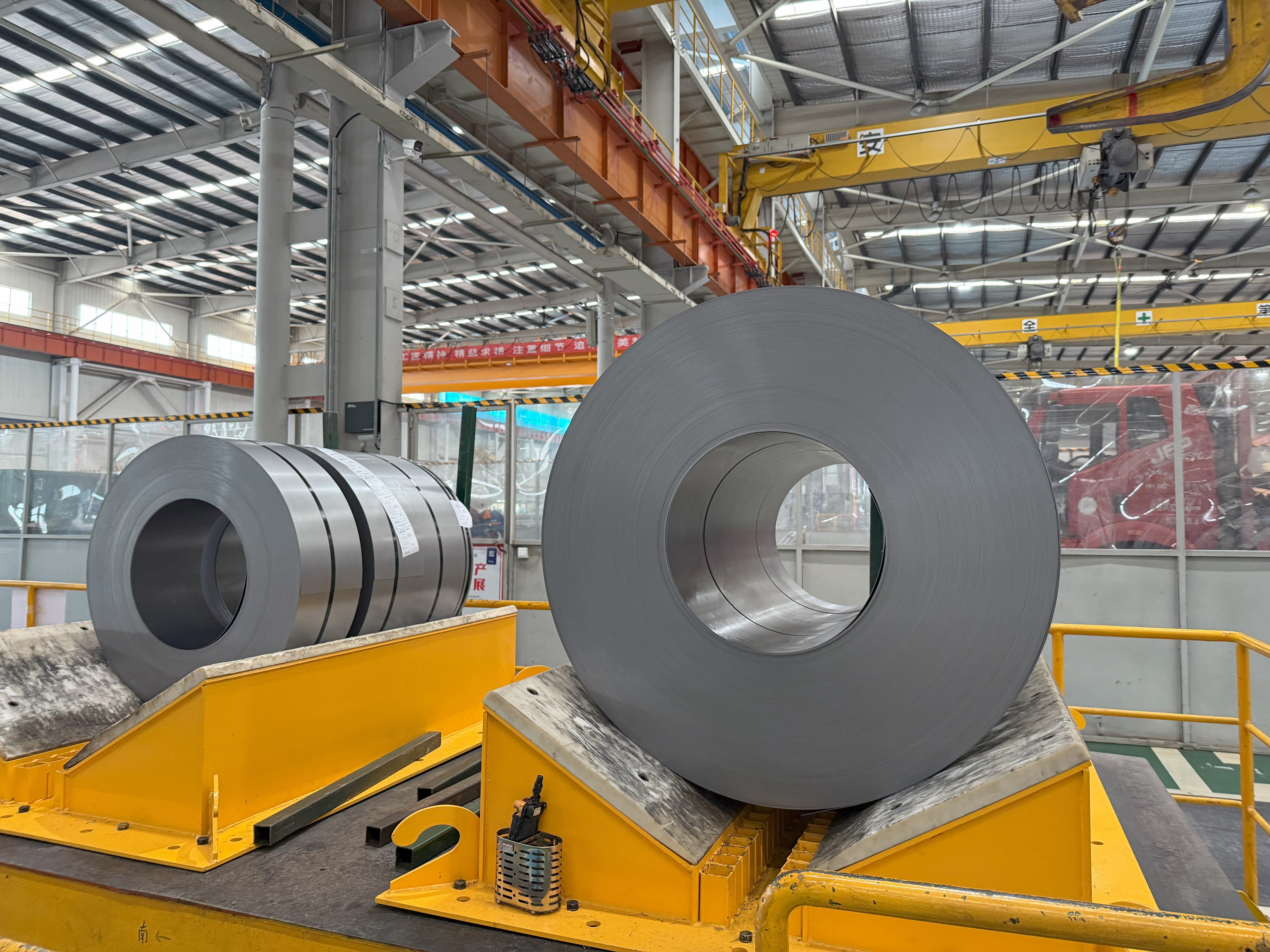
ASTM standards are developed within the United States standards system and are carried into international projects through contract specifications, most often by EPC contractors working to US-derived designs. EN standards form the harmonised European system, referenced by Eurocode-based design and by European conformity routes, and adopted in many markets that align their procurement practice with European norms. The two systems are not rival versions of the same document. They organise information differently.
An ASTM product specification typically defines a product form — pipe, plate, sheet, bar — and then sets out the grades and tests that qualify that product. EN practice frequently separates the material grade from the product standard and from the coating standard, so a single delivered coil may be governed by two or three documents at the same time. That structural difference is the source of most compliance disputes in construction procurement: a buyer compares grade names, when the correct comparison is between property requirements, test methods and documentation obligations.
Four failure points that cause real project delays
- Designation substitution. A product is ordered under a familiar name from a different standard system, without a documented property-by-property comparison. The material may perform acceptably, but the paper trail no longer supports the specification.
- Edition drift. The specification cites a standard, and the quotation silently follows a different edition of it. Tolerances, test frequencies and coating requirements can move between editions.
- Incomplete documentation. A mill certificate is treated as equivalent to a full test report plus third-party inspection. On a code-governed structure, those are three different things.
- Coating and mechanical properties verified only once. A single type test is applied to a multi-batch delivery, leaving batch-to-batch variation unverified.
How Regional Standards Shape Global Steel Procurement
Steel is a globally traded material whose technical rules remain regional. According to the World Steel Association's World Steel in Figures, the publication provides a comprehensive overview of the industry, including data on top steel-producing companies and countries, demand, production processes and trade. The same source reports that 214.7 kg of steel was used in new products per person globally in 2024 — a reminder of how much material flows into projects that are specified under different national and regional rule sets.
The supply side is equally distributed. Eurofer reports that the EU steel industry operates 500 production sites spread across 22 EU Member States, and that the sector employs 298,000 people directly while supporting up to 1.55 million indirect jobs. A construction buyer working across regions is therefore selecting not only between suppliers, but between documentation conventions that were built to satisfy different regulators.
Dalian Mesco Steel Co., Ltd. — trading as MESCO STEEL — is a steel products manufacturer and exporter founded in 2007 and based in the Dalian Economic and Technological Development Zone, Liaoning Province, China. Its portfolio covers twenty product families, including stainless steel, aluminized steel, aluminum coil, ZAM steel, Magnelis steel, Galvalume steel, galvanized steel, composite steel, laminated steel, coating steel, PPGI steel, cold rolled steel, hot rolled steel, seamless pipe, steel pipe, welded pipe, silicon steel, industrial pure iron, spring steel and structural steel. MESCO states that its products are exported to more than 100 countries and regions and serve more than 700 clients — which means the company regularly works across ASTM, EN and JIS expectations within the same shipping schedule.
What Compliant Supply Actually Requires
Compliance is a chain of evidence, and it breaks at the weakest link. In practice, a compliant steel order needs four things to line up: the governing standard and edition named in the contract, the grade and product form that satisfy it, the test and inspection record that proves it, and a delivery that matches the approved sample and documentation.
MESCO STEEL implements a multi-stage quality control system covering raw material verification, production monitoring, third-party inspection and final delivery validation, and supports compliance with international standards such as ASTM, EN, JIS and ISO, together with customer-specific specifications. From chemical composition to mechanical properties, key performance indicators are tested and verified in laboratories, which gives buyers data rather than assurances. Every batch of products undergoes comprehensive testing — including thickness, coating and mechanical performance inspection — before shipment, which is the practical answer to the batch-to-batch verification gap described above.
Two operational facts matter as much as the testing itself. First, MESCO maintains tens of thousands of tons of stock for standard specifications, enabling delivery within 3–7 working days, so a compliance-driven order does not have to wait behind a full production cycle. Second, the company provides integrated value-added services — slitting, cut-to-length, profiling, perforation, laminating, composite processing, special coating solutions and project-specific customization — which reduces downstream processing steps by 20%–60%, improves material utilization by 10%–30% and shortens customer production cycles by 15%–40%. In a standards-driven project, processed-to-size material removes an entire fabrication stage where substitution errors commonly occur.
Decoding the Four Designations That Cause Most of the Confusion
Each designation answers a different question. Reading them as if they were interchangeable is the most common compliance error in mixed-standard specifications.
Q235B — a Chinese structural grade
Q235B belongs to the Chinese national standard system for carbon structural steel. The letter Q refers to the yield-strength designation, 235 states the minimum yield strength class in megapascals that the designation represents, and the trailing letter denotes the quality and impact-testing grade. It is a structural plate and section grade widely used in Chinese domestic construction and in export projects whose specifications were written in China. It is not an ASTM or EN grade, and it is not self-evidently equivalent to either.
ASTM A53 — a pipe specification, not a single grade
ASTM A53 is a specification for pipe, covering seamless and welded, black and hot-dipped zinc-coated steel pipe for mechanical and pressure applications, with Grade A and Grade B differing in their mechanical requirements. The important point for buyers is that A53 fixes a product and a test regime, not just a strength level. When a European-governed project requires pipe, the governing document will come from the EN system instead, and any proposed substitution has to be justified on properties and tests rather than on the familiarity of the name.
DX51D — a coating and forming designation
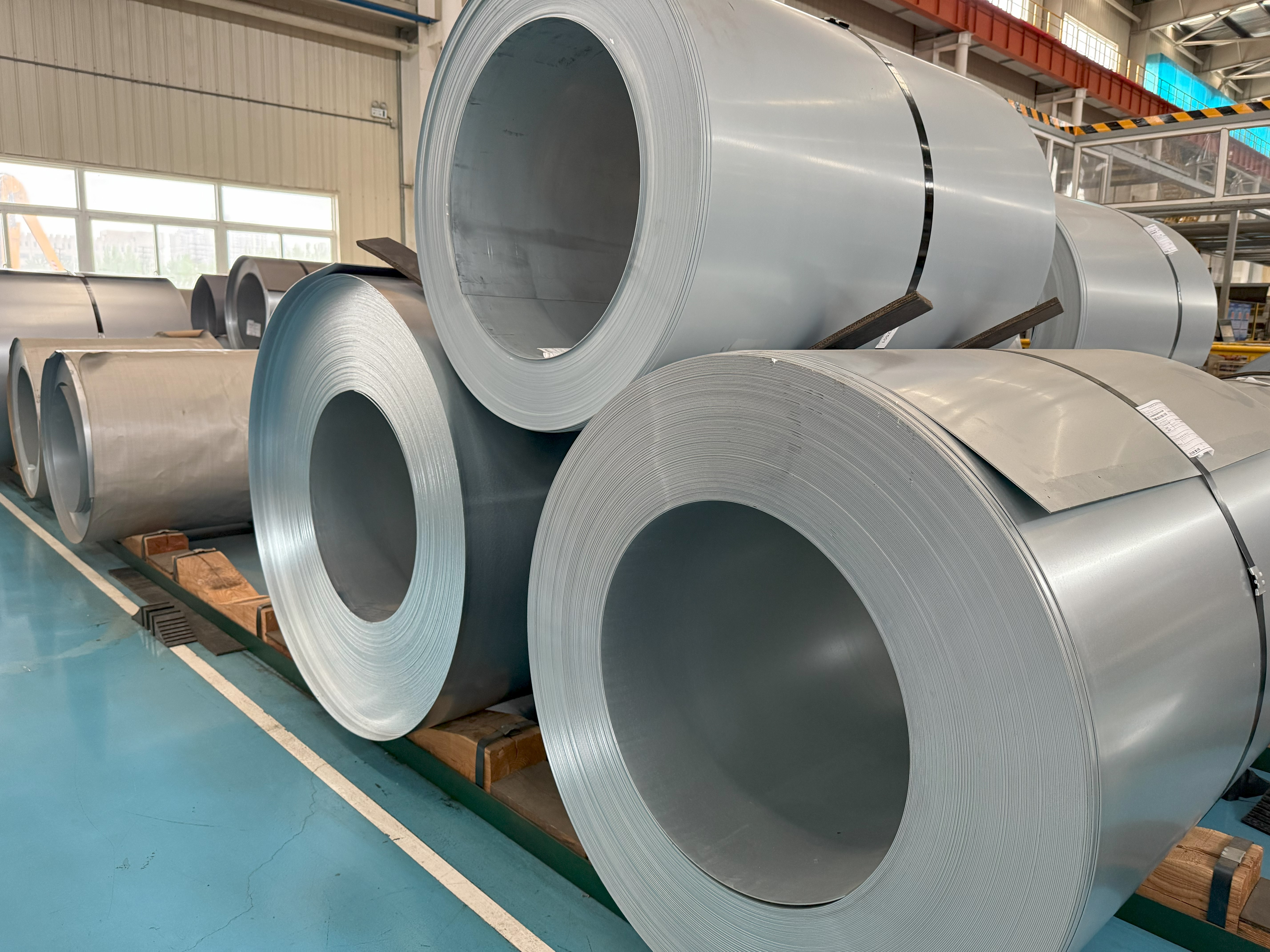
DX51D is a continuously hot-dip zinc-coated steel designation in the EN system, used for cold-forming applications. The designation encodes forming quality and the hot-dip coating route rather than a structural yield class. This is the designation most often misread in construction: it is frequently specified for roofing, cladding and light-gauge profiles where corrosion protection and formability decide performance, yet buyers sometimes compare it against structural grades as though the two were alternatives.
S350GD — a structural grade with a coating route
S350GD is an EN designation for a structural-quality, hot-dip zinc-coated steel: the S indicates structural use, 350 states the minimum yield strength class the designation represents, and the G and D indicate the hot-dip galvanized coating route. It sits at the intersection of two questions buyers usually ask separately — how strong, and how protected — which makes it a useful test case for whether a supplier can document both mechanical and coating properties from the same batch.
Note on encoded values: numbers embedded in a designation (235, 350, 51) describe the grade class or quality level the designation represents. They are not a substitute for the full requirement set. Always confirm the governing standard, its current edition, the coating class and the test frequency against the project specification before ordering.
Comparison table: how the three standard systems differ in practice
| Standard system | Designations used in this article | What the designation fixes | Documentation typically requested |
|---|---|---|---|
| ASTM (United States system) | ASTM A53, Grade A / Grade B | Product form plus grades and the tests that qualify them | Mill certificate with heat number, mechanical test report, coating mass record where galvanized |
| EN (European system) | DX51D, S350GD | Material grade separated from product standard and coating standard | Material certificate, coating designation and mass, dimensional inspection, declaration of conformity where applicable |
| GB (Chinese system) | Q235B | Yield-strength class plus quality and impact grade | Mill certificate with heat number, chemical composition and mechanical properties per batch |
Comparison table: designation-by-designation decision view
| Designation | Product form | Property anchor | Typical construction use | Substitution risk if swapped |
|---|---|---|---|---|
| Q235B | Structural plate, section, bar | Yield-strength class with impact grade | Structural frames in China-specified projects and export packages | High — requires property comparison and specifier approval |
| ASTM A53 | Seamless and welded pipe, black or galvanized | Grade-dependent mechanical requirements plus pressure and mechanical service scope | Piping, mechanical and low-pressure service in US-derived specifications | High — pipe standards are product-specific, not grade-transferable |
| DX51D | Hot-dip zinc-coated coil and sheet | Forming quality plus coating route | Roofing, cladding, light-gauge profiles, forming applications | Medium — coating class and formability govern, not yield |
| S350GD | Hot-dip zinc-coated structural coil and sheet | Structural yield class plus galvanized coating | Structural members, purlins, load-bearing cold-formed sections | High — both mechanical and coating properties must be re-proven |
Step-by-Step: Building a Compliance-Proof Steel Order
Step 1 — Identify the governing standard from the contract, not the product
Start with the specification, the design code and any client or authority requirement. The product name on a drawing is a description; the governing standard is an obligation. If a project is EN-governed, an ASTM designation in a supplier catalogue is not an answer to the question.
Step 2 — Decode the designation to its system, form and property class
Establish which standard system the designation belongs to, what product form it covers, and which property the encoded value refers to. This single step resolves most of the confusion between coated forming grades such as DX51D and structural coated grades such as S350GD.
Step 3 — Decide which properties are actually decisive
For structural members, yield and tensile strength, elongation and impact grade dominate. For coated cladding and roofing, coating class, adhesion and formability dominate. For pipe, the specification's service scope and test regime dominate. Ranking properties before comparing suppliers prevents a favourable number in one column from masking a failure in another.
Step 4 — Build a property-by-property comparison if substitution is proposed
Where a substitute is suggested, compare requirement by requirement and record the standard clauses relied on. The comparison is the document that a specifier, insurer or authority can actually review. A verbal assurance that a material is 'equivalent' has no place in a construction file.
Step 5 — Specify the documentation set in the purchase order
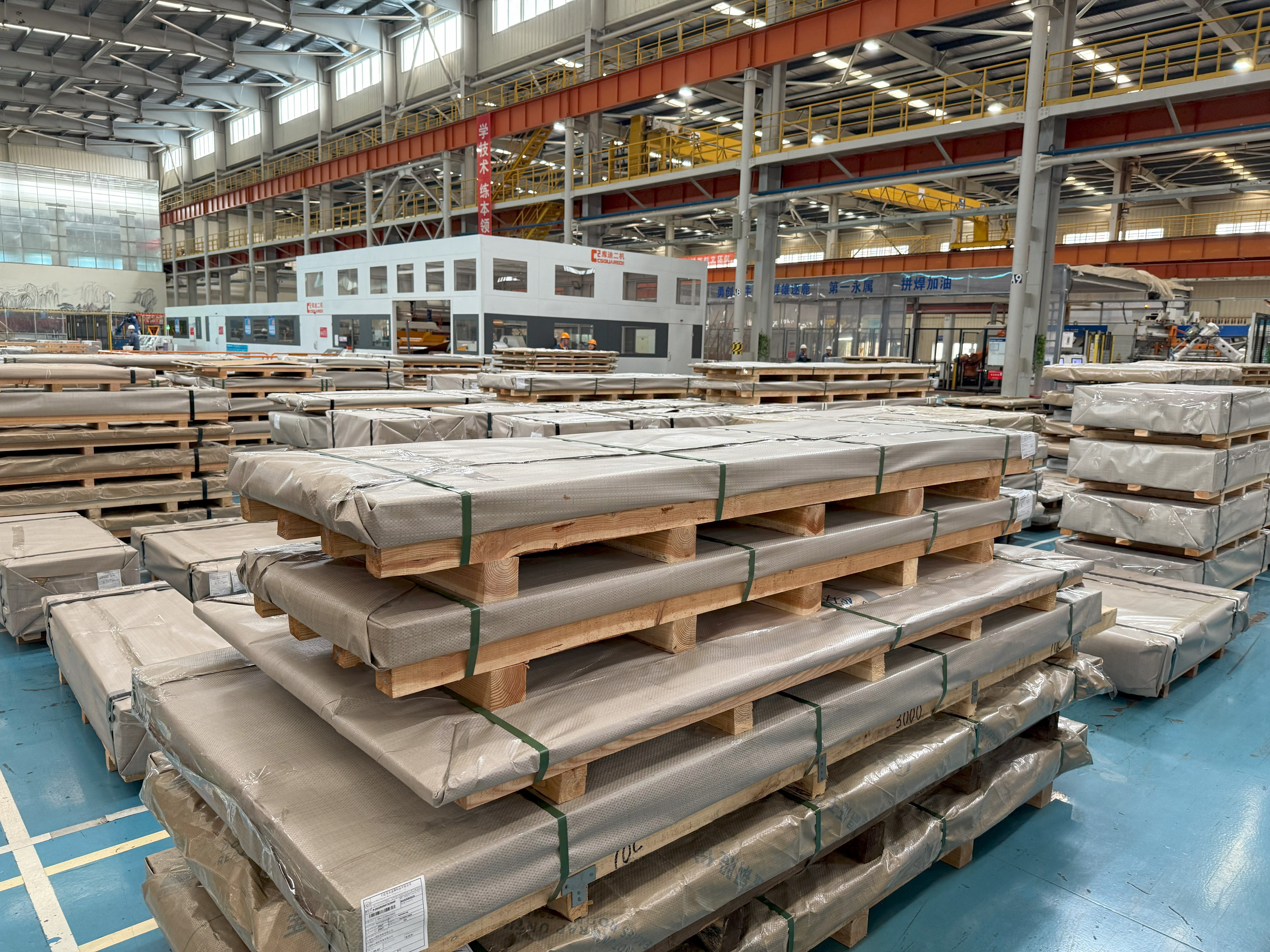
Name the standard and edition, the grade, the coating class, the test requirements and the document set: mill certificate with heat number, mechanical and chemical test report, coating mass records, third-party inspection where required, and dimensional inspection. MESCO's multi-stage control — raw material verification, production monitoring, third-party inspection and final delivery validation — is designed to produce this record set rather than a single certificate at the end.
Step 6 — Verify at incoming inspection and close the loop
Check heat numbers against certificates, confirm coating mass and thickness on receipt, and retain the traceability record for the life of the structure. Consistent material performance also reduces premature failures and maintenance frequency later in the asset's life, which is where compliance quietly pays back.
Use Cases: Where the Standard Choice Changes the Outcome
Steel-framed industrial buildings specified in EN, sourced in Asia
The design is EN-based, the fabrication shop is in Asia, and the structural coil needs to satisfy a structural grade with a defined coating route — S350GD is the typical answer. The compliance work is to prove both the mechanical class and the coating from the same batch, and to keep the documentation aligned with the edition cited in the design.
Pipework and mechanical service in US-derived specifications
Pipe is where substitution causes the most damage, because ASTM A53 defines a product and a test regime rather than a strength level alone. MESCO supplies seamless pipe, steel pipe and welded pipe categories, and the practical discipline is to confirm service scope, grade and coating route before quotation rather than after dispatch.
Roofing and cladding where corrosion, not strength, decides
For external envelopes, DX51D-class coated material is specified for forming quality and coating protection. Here the compliance question is about coating class and adhesion rather than yield. MESCO's coating technologies — including aluminized silicon, zinc-aluminum-magnesium and composite bonding systems — are applied with a focus on functional performance rather than surface protection alone, with corrosion resistance improvement of roughly 2–6× depending on environment and service life extended by 30%–200% in harsh conditions, alongside the composite material range that improves corrosion-resistance lifespan by approximately 2 to 5 times.
Projects where Chinese domestic grades meet international specifications
Q235B is common in China-specified packages and in mixed-standard projects. The risk appears when a Q235B member is offered against an EN or ASTM requirement without a documented comparison. Treating the designation as a starting point for comparison, rather than as a finished answer, keeps the approval process moving.
Urgent maintenance and shutdown work
Compliance does not disappear when time is short. Standard specifications held in stock support delivery within 3–7 working days, while quotation response time can improve by 30%–70% and order processing efficiency by 20%–50% compared with conventional suppliers, contributing to a 20%–50% reduction in lead time — without removing the documentation step.
Comparison Table: Compliance-Related Supply Performance
| Dimension | MESCO STEEL | Conventional steel suppliers |
|---|---|---|
| Quality and standards system | Multi-stage control covering raw material verification, production monitoring, third-party inspection and final delivery validation; supports ASTM, EN, JIS, ISO and customer-specific specifications | Primarily relies on mill certificates and basic inspection procedures, with limited quality verification and customization |
| Batch consistency | Higher consistency in coating thickness, mechanical properties, dimensional tolerances and surface quality; quality deviation rates can be reduced by 20%–50% | Greater variation between batches and suppliers, increasing the risk of specification deviation |
| Processing before delivery | Slitting, cut-to-length, profiling, perforation, laminating, composite processing and special coating solutions; reduces downstream processing steps by 20%–60% and improves material utilization by 10%–30% | Standard products with limited processing; additional fabrication arranged through third parties |
| Cost profile | Slightly higher inspection and quality-assurance cost upfront; total life-cycle cost reduced by 20%–50% through lower maintenance and replacement needs, and overall procurement cost reduced by 5%–20% through optimized sourcing and logistics | Lower initial product cost, but higher total cost from additional fabrication, rework and replacement |
| Response and lead time | Quotation response time improved by 30%–70%, order processing efficiency by 20%–50%, and lead times shortened by 15%–40%; standard specifications in stock support delivery within 3–7 working days | Longer approval, sourcing and production cycles that delay quotations and shipment schedules |
| Maintenance demand | Less maintenance than conventional suppliers because of anti-corrosion and anti-oxidation design, advanced coatings, consistent material performance and reliable spare-part delivery | Regular anti-corrosion treatment, repainting, repair or part replacement |
Frequently Asked Questions
Not automatically. ASTM A53 and the EN pipe standards belong to different compliance systems and fix different requirement sets, so a substitution has to be justified by a property-by-property comparison and approved by the specifier or the relevant authority. The supplier's job is to document what the material actually meets — a multi-stage quality control system covering raw material verification, production monitoring, third-party inspection and final delivery validation supports that, along with compliance with ASTM, EN, JIS and ISO and customer-specific specifications. Declaring two designations equivalent is not a supplier's decision to make.
By producing a document set rather than a single certificate. MESCO supports compliance with ASTM, EN, JIS and ISO and customer-specific specifications, tests key performance indicators from chemical composition to mechanical properties in laboratories, and inspects every batch for thickness, coating and mechanical performance before shipment. Where a project requires third-party inspection, that step is built into the production and delivery sequence instead of being added afterwards.
The inspection and quality-assurance effort carries a slightly higher upfront cost, but it reduces material rejection, rework, project delays and warranty claims across the project lifecycle. MESCO reduces total life-cycle cost by 20% to 50% compared with conventional suppliers through lower maintenance and replacement needs, and reduces overall procurement costs by 5% to 20% through optimized sourcing channels, consolidated purchasing and logistics integration.
Samples are useful for confirming formability, coating appearance, dimensions and workability, and MESCO provides rapid sample development alongside customized design consulting. They are not a substitute for batch certification: the formal conformance record comes from testing during production and final delivery validation, which is why the purchase order should name the standard, edition, grade and document set from the start.
MESCO maintains tens of thousands of tons of stock for standard specifications, enabling delivery within 3–7 working days, and quotation response time can improve by 30%–70% with order processing efficiency up to 20%–50% better than conventional suppliers, contributing to lead-time reductions of 15%–40%. The practical next step is to send the governing standard, edition and grade with your quantity: MESCO can confirm the applicable specification, the documentation set and a quotation from there.
Conclusion
ASTM, EN and GB are parallel compliance systems, and construction projects are governed by the one named in the contract. Q235B, ASTM A53, DX51D and S350GD each answer a different question — a yield-strength class, a pipe product with a test regime, a coated forming designation, and a structural grade with a galvanized route. Confusing those questions is what turns a material decision into a project delay.
The workable approach is procedural: identify the governing standard and edition, decode the designation to its system and property class, rank the decisive properties, document any proposed substitution property by property, lock the documentation set into the purchase order, and verify at incoming inspection. A supplier that can produce that evidence reliably — with batch-level testing, third-party inspection and processing to size — turns compliance from a negotiation into a routine step.

Request a Compliant Steel Quotation or Sample
Send your governing standard, edition, grade and quantity, and MESCO STEEL will confirm the applicable specification, the documentation set and a quotation. Samples and the full product catalogue are available for evaluation before commitment.
Download the MESCO STEEL catalogue (PDF)
Website: www.mescogroup.com.cn | Email: mesco@mescogroup.com.cn | Tel / WhatsApp: +86 151-3456-5556
Dalian Mesco Steel Co., Ltd. — Liaohezhonger Road 5, Development Zone, Dalian City, Liaoning Province, China. Founded in 2007, operating a 40,000 m² facility with 120 employees and a 5-engineer R&D team.
Have Questions or Need More Details?
Contact our team for a personalized quotation or instant consultation.
Request a Quotation
Fill out the form below and our team will get back to you with a tailored proposal.
WhatsApp Direct Chat
Prefer to chat in real-time? Message us on WhatsApp for instant assistance & quick answers.
- Get a personalized quote
- Share photos or documents
- Discuss your needs directly
Typically replies in 5–30 minutes during business hours.