Aluminized Steel 101: Carbon Steel Base, Al-Si Coating, and ASTM A463 Types Explained
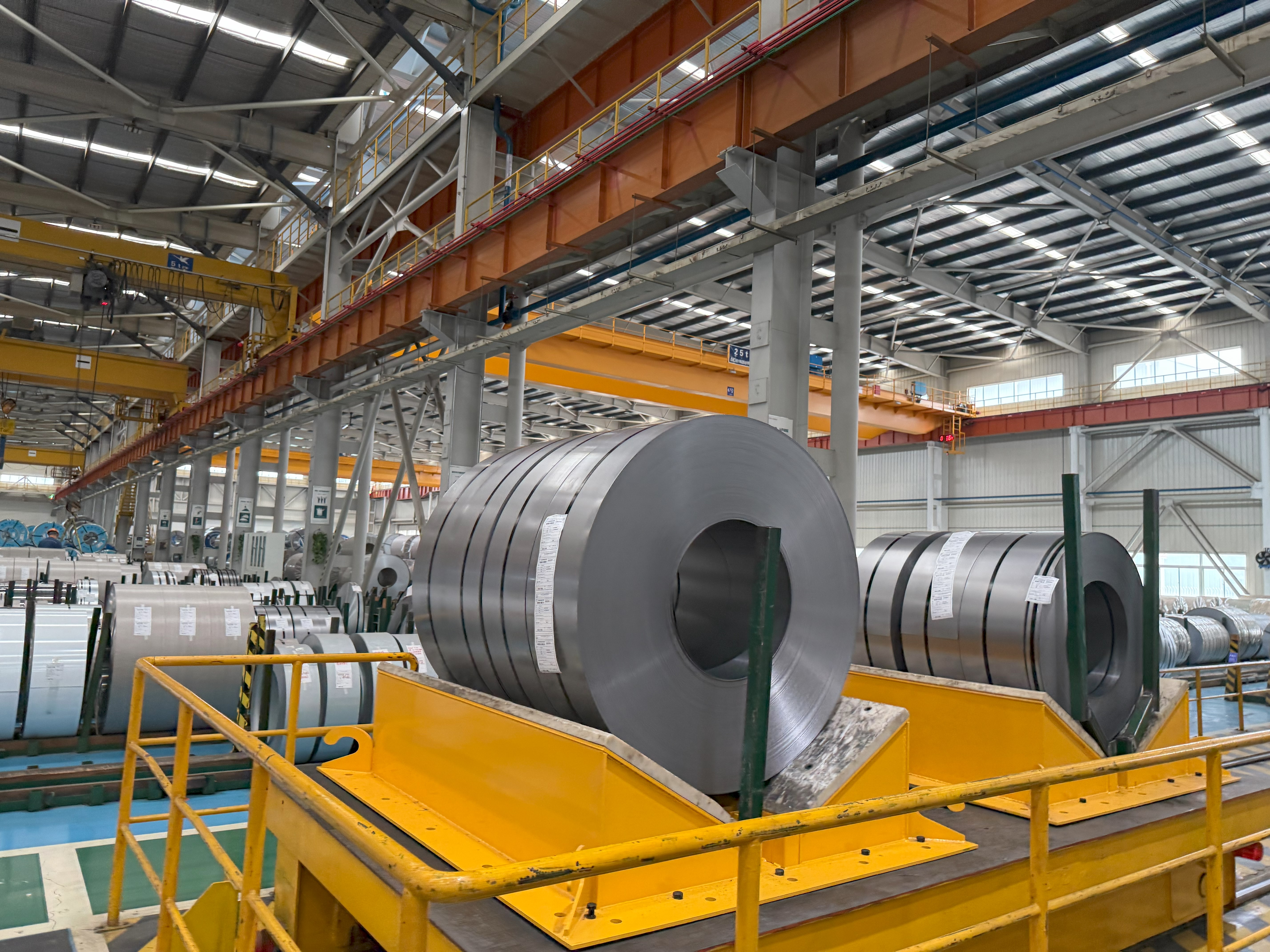
Aluminized steel combines a carbon steel base with a hot-dip aluminum-silicon coating.
Aluminized steel is a carbon steel base metal that has been hot-dip coated with an aluminum-silicon alloy. The steel core provides strength and formability; the Al-Si coating provides heat resistance, heat reflectivity, and atmospheric corrosion protection. Under ASTM A463, the product is defined in two forms — Type 1, an aluminum-silicon alloy coating, and Type 2, a commercially pure aluminum coating — and buyers normally specify it by coating weight, thickness, and width before it reaches the forming line.
This guide walks through the material from the base metal outward: what the carbon steel core contributes, what the Al-Si coating does, how ASTM A463 Type 1 and Type 2 differ, and which standard thickness, width, and coating-weight ranges buyers order most often.
What Aluminized Steel Actually Is
Aluminized steel is a flat-rolled, coated steel product — not an alloy. The base is carbon steel, produced by conventional hot rolling and pickling, or by cold rolling and annealing. The coating is applied by continuously passing the strip through a molten aluminum-silicon bath on a hot-dip line. The result is a metallurgically bonded coating, not a painted or laminated layer.
Because the two layers do different jobs, aluminized steel behaves differently from both plain carbon steel and stainless steel. The carbon steel base delivers the yield strength and ductility needed for bending, roll forming, stamping, and welding. The aluminum-silicon coating takes over at the surface, where heat, oxidation, and atmospheric attack occur.
It is worth separating aluminized steel from its more common relative, galvanized steel. Galvanized steel uses a zinc coating and is optimized for atmospheric corrosion protection. Aluminized steel uses an aluminum-based coating and is optimized for heat resistance and heat reflection. The two are not interchangeable in high-temperature service, even though both are supplied as coated coil and sheet.
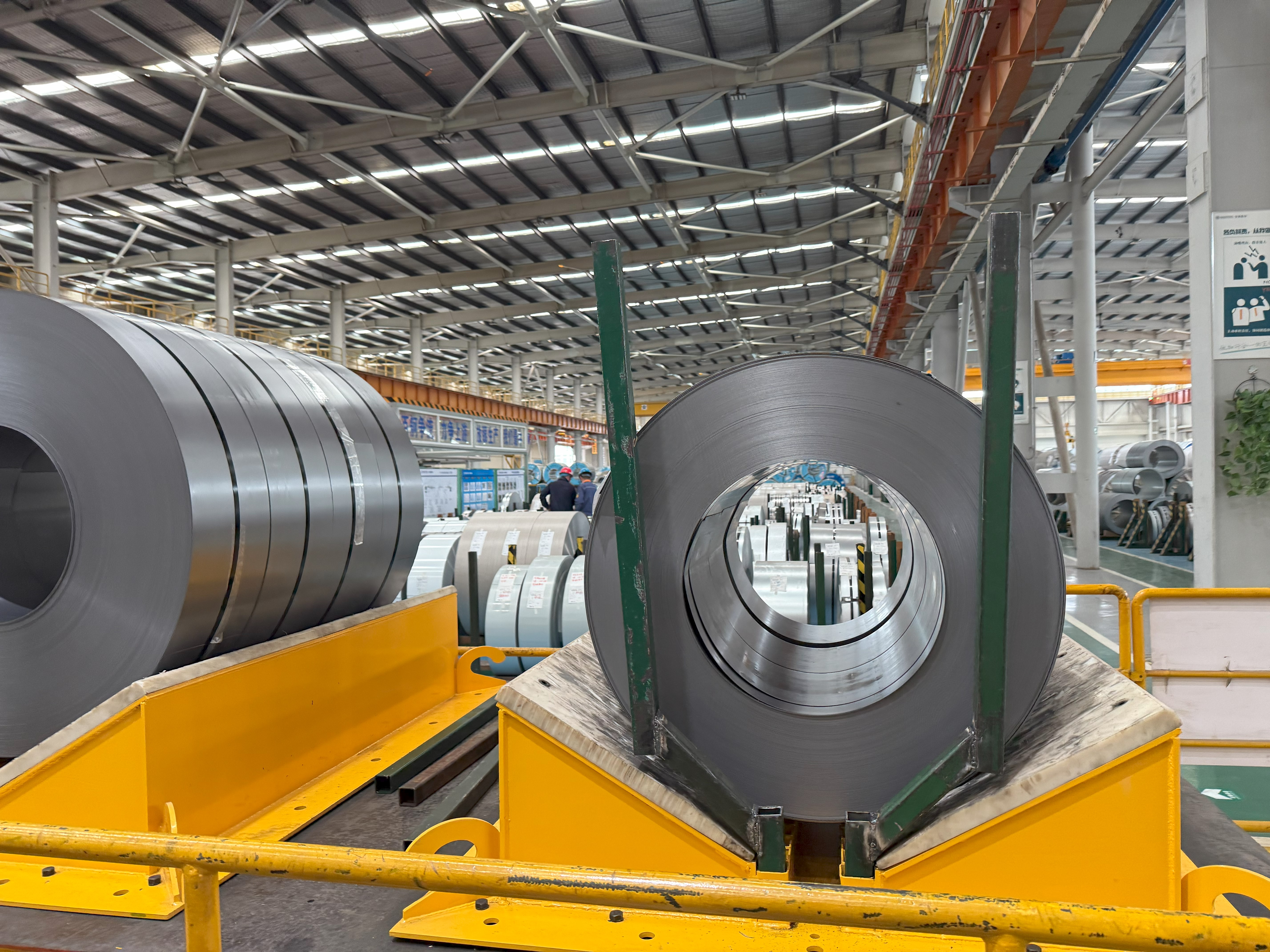
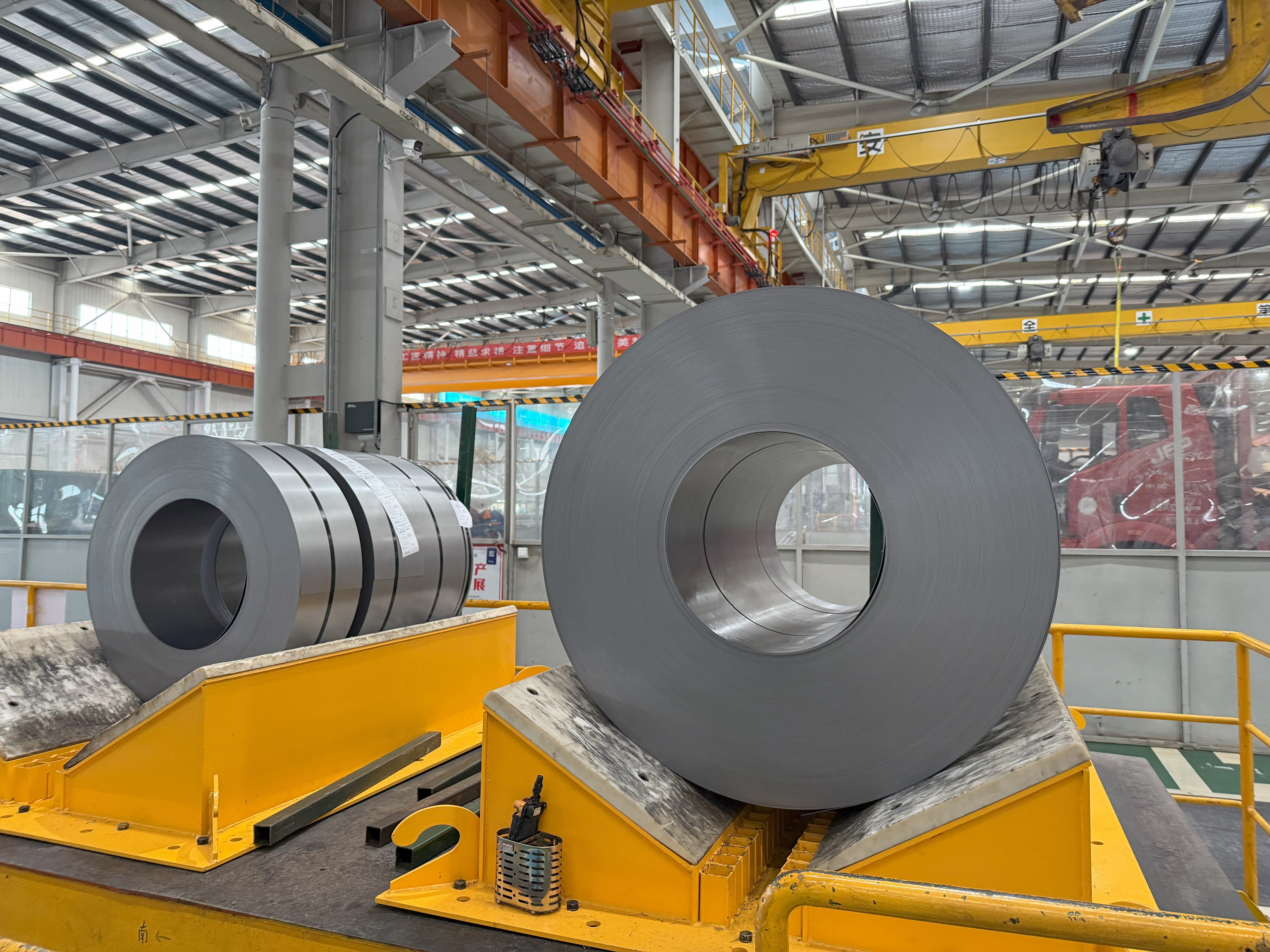
Coated steel production: the base metal and the coating are engineered as one product.
The Problem: “Aluminized Steel” Is Not a Specification
Most sourcing problems with this material begin with an incomplete specification. A purchase order that simply says “aluminized steel coil” leaves at least five decisions open: coating type, coating weight, base metal grade, thickness, and width. Two suppliers can both ship something correctly described as aluminized steel and still deliver material that performs differently in the same application.
The failure modes are predictable. A part designed around Type 1 heat resistance may arrive as Type 2 and underperform at elevated temperature. A line set up to run 0.5 mm sheet may receive a heavier gauge and jam. A buyer who expected a high coating weight may receive a lighter one and see service life fall short of the projection used in the original design.
The fix is not complicated — it just has to happen before the order is placed. Defining type, coating designation, thickness, and width turns aluminized steel from a vague material name into a reproducible purchase specification that any qualified supplier can quote against.
Industry Background: Where Aluminized Steel Sits Today
Aluminized steel sheet sits inside the broader coated flat-products market, and demand is tied to industries that need heat resistance without paying stainless steel prices. Reported global market size for aluminized steel sheet reached USD 13.43 billion in 2024, with forecasts extending across the following decade.
Two forces keep the material relevant. The first is cost. In applications with moderate temperature exposure, aluminized steel is a lower-cost alternative to heat-resistant stainless grades. The second is performance. The coating reflects a large share of radiant heat — reported at roughly 80% below 427 °C — which keeps the base metal cooler than an uncoated part would run under the same conditions.
That combination explains why the material appears in exhaust systems, HVAC equipment, and appliance components rather than in general structural work. It is chosen where heat, oxidation, and cost all matter at the same time — which is a narrower and more specific role than most coated steels fill.
The Carbon Steel Base: What It Contributes to the Finished Product
The carbon steel core is the part of the product that carries mechanical responsibility. It sets tensile strength, yield strength, elongation, and hardness — the properties that determine whether the material survives roll forming, bending, deep drawing, or welding without cracking.
Base metal chemistry also affects high-temperature behavior. Carbon, manganese, and residual elements influence how the steel performs as service temperature rises. This is why a specification that names only the coating type is incomplete: two coils with identical coatings but different base chemistries can behave differently in the same furnace or exhaust line.
The base metal also sets the practical processing window. Lower-carbon, more ductile grades form more easily; higher-strength grades hold their shape better under load. The right choice depends on whether the buyer is optimizing for formability, strength, or a balance of the two.
The Al-Si Coating: Heat Resistance and Heat Reflectivity
The aluminum-silicon coating is applied by hot-dipping, which bonds the coating to the steel surface. During service, the aluminum in the coating reacts with oxygen to form a dense aluminum oxide layer. That oxide layer is the reason aluminized steel resists scaling and oxidation at temperatures where bare carbon steel would degrade quickly.
Two coating properties drive most application decisions:
- Heat resistance — the coating delays oxidation and scaling, extending service life in exhaust, furnace, and appliance components.
- Heat reflectivity — the bright aluminum surface reflects radiant heat back toward the source, which lowers the temperature the base metal actually experiences in a radiant-heat environment.
Corrosion resistance is a secondary benefit. Aluminized steel offers atmospheric corrosion protection, but it is not a substitute for a purpose-designed corrosion coating in aggressive environments.
ASTM A463 Type 1 and Type 2: The Core Technical Split
ASTM A463 is the standard specification that defines aluminum-coated steel sheet, and it sets out two coating types with different compositions and different intended uses.
Type 1 uses an aluminum-silicon alloy coating. Type 1 is the heat-resistant grade, specified where the material must survive elevated temperatures. It is the type commonly associated with heat resistance up to 677 °C.
Type 2 uses a commercially pure aluminum coating. Type 2 is specified primarily for atmospheric corrosion resistance rather than for high-temperature service.
Choosing between them is a function of the service environment, not of personal preference. If the part sees sustained heat, Type 1 is the relevant grade. If the part sees weather, moisture, and ambient-temperature exposure, Type 2 is the relevant grade. Specifying the wrong type is one of the most common — and most avoidable — errors in aluminized steel procurement.
Standard Thickness, Width, and Coating Weights
Beyond type, three numbers define an aluminized steel order: thickness, width, and coating weight.
- Thickness for common aluminized steel sheet generally falls between 0.37 mm and 3.0 mm.
- Width for standard coil and sheet is typically supplied in the 600 mm to 1500 mm range, subject to the supplier's slitting and processing capability.
- Coating weight is expressed as a designation. The designations most frequently ordered are AS80, AS120, AS240, AS275, and AS300, with the number reflecting coating weight in grams per square metre.
Coating weight is often the variable with the largest effect on both cost and service life. Lighter coatings such as AS80 and AS120 suit formability-focused and moderate-exposure applications. Heavier coatings such as AS240, AS275, and AS300 are specified where longer service life at temperature is the priority — and they are also the designations that are hardest to source on short notice, because fewer lines can apply them consistently.
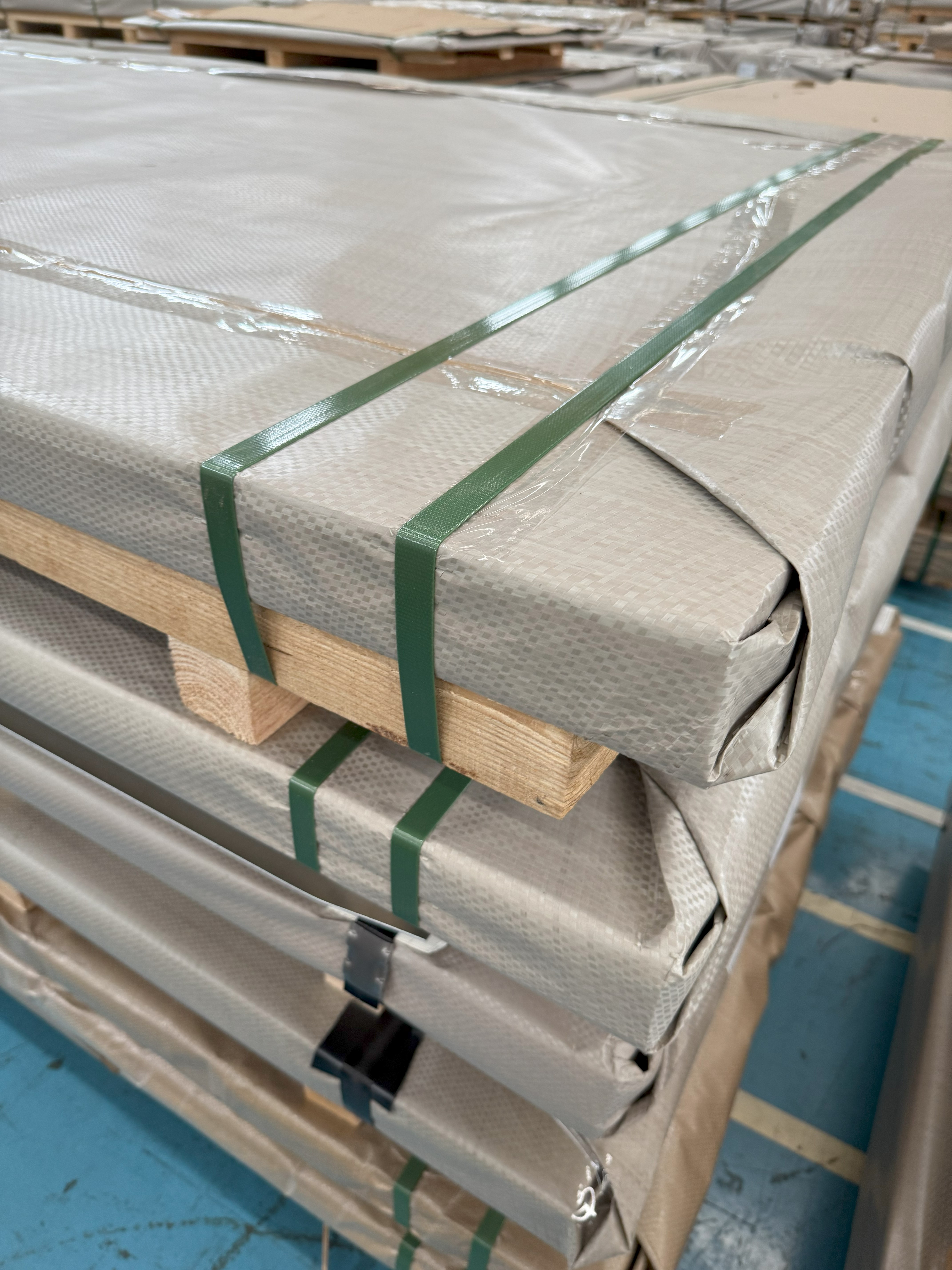
Standard specifications held in stock shorten the gap between specification and delivery.
Step-by-Step: How to Specify Aluminized Steel for a Project
- Define the service environment first. Establish the maximum continuous service temperature, the presence of radiant heat, and the atmospheric exposure. This single step determines whether the project needs a heat-resistant type or a corrosion-resistant type.
- Select the coating type. Use Type 1 (aluminum-silicon alloy) for heat resistance and Type 2 (pure aluminum) for atmospheric corrosion resistance.
- Set the coating weight. Match the designation to the required service life — AS80 and AS120 for moderate duty; AS240, AS275, or AS300 where extended high-temperature life is required.
- Fix thickness and width. Confirm the forming equipment’s limits before locking a gauge. A thickness that is technically available may still fall outside a specific press or roll former’s capability.
- Confirm the base metal grade. State the required mechanical properties — tensile, yield, elongation — not just the coating.
- Validate with a sample. Form and, where relevant, heat-test a sample before committing to a production run. Sample validation is the cheapest way to catch a specification error.
- Lock the specification into the purchase order. Type, coating designation, thickness, width, and base grade should all appear explicitly so the quotation and the delivered material can be compared line by line.
Where Aluminized Steel Is the Preferred Material
Aluminized steel tends to win in applications where heat resistance and cost efficiency matter more than maximum corrosion performance. The most common application categories, in rough order of how often the material is specified, are:
- Automotive exhaust systems — the classic application for Type 1. Exhaust components see sustained heat and thermal cycling, and aluminized steel tolerates both at a cost below stainless.
- HVAC equipment — heat exchangers, flue components, and ductwork where moderate heat and atmospheric exposure combine.
- Appliances and heating products — furnaces, water heaters, and oven components, where the coating’s heat reflectivity and oxidation resistance extend service life.
- Industrial heat equipment — where radiant heat reflection helps control the temperature of the structural base metal.
In each of these, the specification logic is identical: a heat-resistant type, a coating weight matched to service life, and a thickness and width matched to the forming process.
Aluminized Steel Compared With Other Options
The comparison below summarizes the standard-defined split between the two ASTM A463 types. It is a choice between heat service and atmospheric service, not a quality ranking.
| Attribute | ASTM A463 Type 1 | ASTM A463 Type 2 |
|---|---|---|
| Coating composition | Aluminum-silicon alloy | Commercially pure aluminum |
| Primary function | Heat resistance | Atmospheric corrosion resistance |
| Reported heat resistance | Up to 677 °C | Not specified for high-temperature service |
| Typical application focus | Automotive exhaust, furnaces, industrial heat equipment | Atmospheric-exposure components |
| Governing standard | ASTM A463 | ASTM A463 |
A second comparison is useful when the alternative being considered is stainless steel. Reported comparison data places aluminized steel and 304 stainless steel against each other on heat resistance and cost:
| Comparison Dimension | Aluminized Steel | Stainless Steel 304 |
|---|---|---|
| Radiant heat reflection | Reported at roughly 80% of radiant heat below 427 °C | Not the primary selection driver for this material |
| Cost positioning | Lower-cost option | Significantly higher cost |
| Corrosion performance | Atmospheric protection; not for aggressive environments | Higher corrosion resistance |
| Selection logic | Heat resistance plus cost efficiency | Corrosion-critical or high-temperature-critical duty |
MESCO: Standard Aluminized Steel Specifications in Stock, Shipped in 3–7 Working Days
Dalian Mesco Steel Co., Ltd. (MESCO) is a steel supplier and exporter based in the Dalian Economic and Technological Development Zone, founded in 2007. The company operates from a 40,000 m² facility with 120 employees and exports approximately 70% of its output, serving markets that include South Korea, Thailand, the Philippines, the United Arab Emirates, Saudi Arabia, Indonesia, Turkey, Brazil, Pakistan, Malaysia, Peru, India, Mexico, Russia, Singapore, Bangladesh, Nigeria, Chile, and South Africa.
For aluminized steel buyers, the practical points are:
- Coating range — MESCO supplies aluminized silicon steel coil and sheet across coating weights from 80 g/m² to 300 g/m², covering the AS80, AS120, AS240, AS275, and AS300 designations.
- High-coating capability — coating weights above 240 g/m² and up to 300 g/m² are supplied, which are typically the designations hardest to source on short notice.
- Stock and lead time — standard specifications are held in inventory, supporting delivery within 3–7 working days and reducing the schedule risk that comes with made-to-order coatings.
- Quality verification — key performance indicators, from chemical composition to mechanical properties, are tested and verified in the laboratory, providing data support for incoming inspection.
- Process coverage — export handling runs from quotation and production through international logistics and customs clearance, so lead time and documentation are managed by one party.
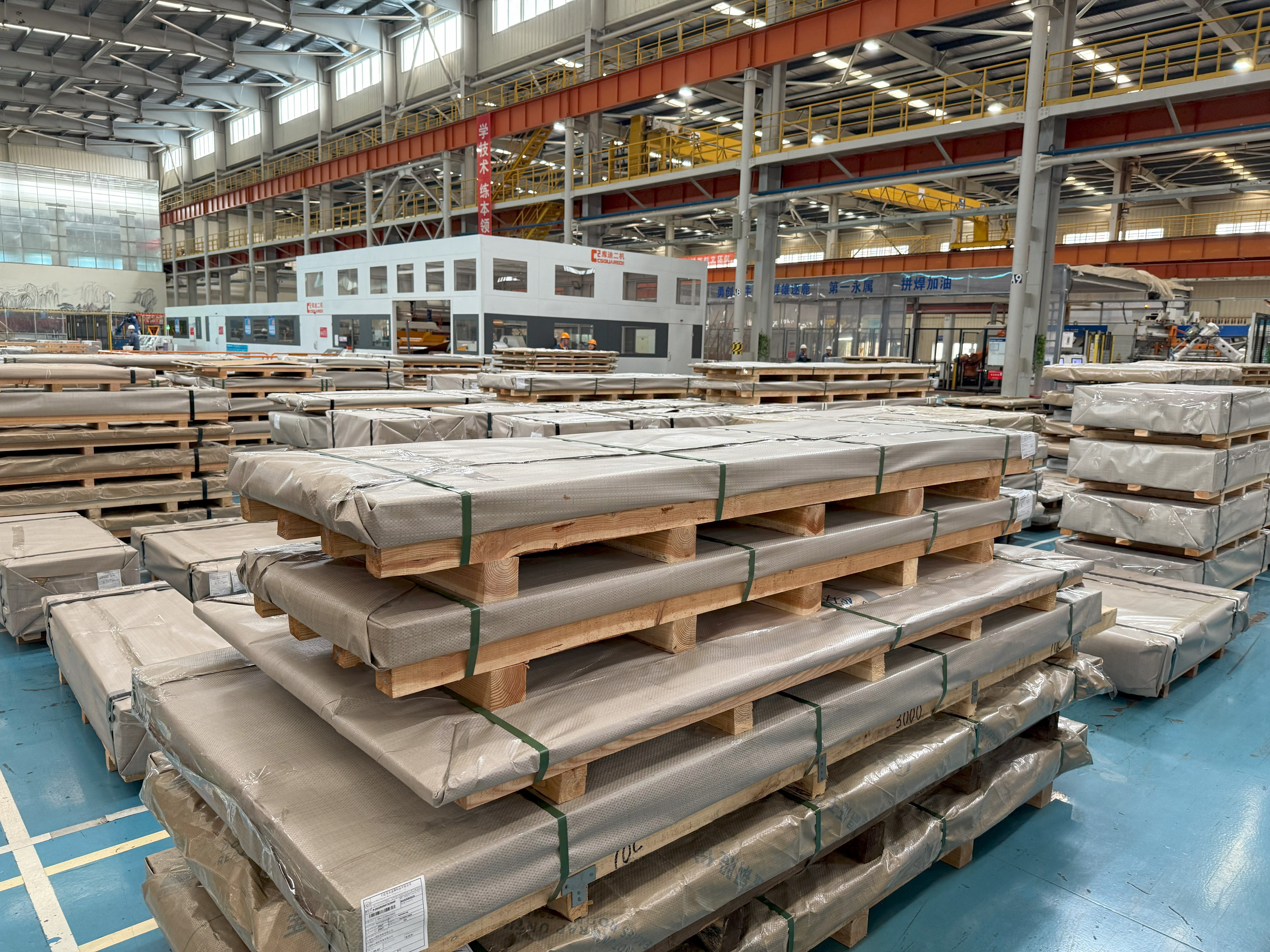
Inventory-backed supply is what shortens lead time for standard aluminized steel specifications.
Frequently Asked Questions
Does aluminized steel conform to an international standard?
Yes. Aluminum-coated steel sheet is specified under ASTM A463, which defines two coating types: Type 1, an aluminum-silicon alloy coating used for heat resistance up to 677 °C, and Type 2, a commercially pure aluminum coating used primarily for atmospheric corrosion resistance. Buying against a named standard — rather than against the generic term “aluminized steel” — is the most reliable way to make sure the delivered material matches the design intent.
What thickness, width, and coating weights are available?
Typical aluminized steel sheet runs from 0.37 mm to 3.0 mm in thickness and 600 mm to 1500 mm in width. Coating weights are specified by designation, with AS80, AS120, AS240, AS275, and AS300 g/m² among those most commonly ordered. MESCO supplies coating weights from 80 g/m² up to 300 g/m², including the heavier designations above 240 g/m².
Is aluminized steel more cost-effective than stainless steel?
In heat-service applications where the temperature is moderate, aluminized steel is generally the lower-cost option compared with heat-resistant stainless grades. Reported comparison data places aluminized steel significantly below 304 stainless steel on cost, while offering strong radiant-heat reflection at moderate temperatures. The trade-off is corrosion performance: in aggressive or highly corrosive environments, stainless steel remains the appropriate choice.
Can samples be provided before a production order?
Sample validation should happen before a production run, because it is the cheapest way to catch a specification error. MESCO supports rapid sample development as part of its service model, allowing buyers to form the material — and, where relevant, heat-test it — before committing to volume.
What is the lead time for standard aluminized steel specifications?
MESCO maintains large inventory for standard specifications, enabling delivery within 3–7 working days. That lead time applies to standard specifications held in stock; heavier coating weights and non-standard thickness or width combinations may follow a different schedule, so the specific designation should be confirmed before a project timeline is locked. To check availability for a particular specification, send your requirement to mesco@mescogroup.com.cn and request a quotation.
Conclusion
Aluminized steel becomes straightforward once its layers of definition are separated. The carbon steel base supplies strength and formability. The aluminum-silicon coating supplies heat resistance, heat reflectivity, and atmospheric corrosion protection. ASTM A463 supplies the language that makes the material orderable, splitting it into Type 1 for heat resistance and Type 2 for atmospheric corrosion.
The specification work that follows is short but decisive: choose the type by service environment, choose the coating weight by required service life, and set thickness and width by the forming process. Getting those three right before the order is placed removes most of the variability buyers experience with this material.
For buyers who need standard specifications without a long lead time, MESCO stocks aluminized silicon steel coil and sheet across the AS80 to AS300 coating range, with delivery in 3–7 working days.
Need a Standard Specification, Fast?
Download the MESCO STEEL product catalogue for the full aluminized steel specification range, or send your coating type, thickness, and width requirement for a quotation.
Email: mesco@mescogroup.com.cn | Tel / WhatsApp: +86 151-3456-5556 | Web: www.mescogroup.com.cn
Have Questions or Need More Details?
Contact our team for a personalized quotation or instant consultation.
Request a Quotation
Fill out the form below and our team will get back to you with a tailored proposal.
WhatsApp Direct Chat
Prefer to chat in real-time? Message us on WhatsApp for instant assistance & quick answers.
- Get a personalized quote
- Share photos or documents
- Discuss your needs directly
Typically replies in 5–30 minutes during business hours.