HVAC, Exhaust or Automotive Project Stalled? Solving Aluminized Steel Spec Confusion
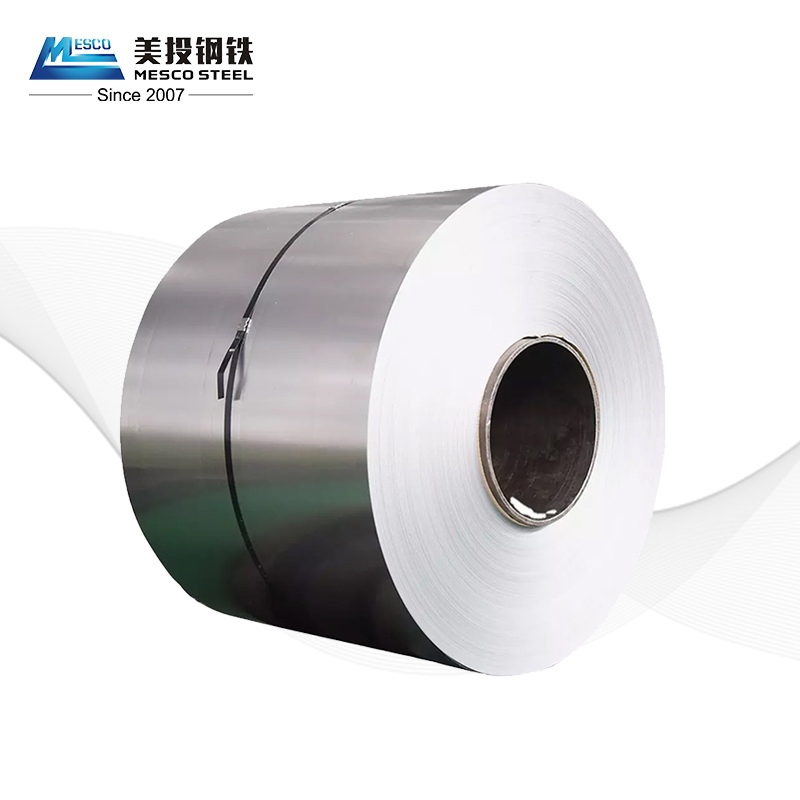
Aluminized steel is a carbon steel base metal carrying an aluminum-silicon coating, supplied to the ASTM A463 Type 1 specification.
A project can clear design review, clear budget approval and clear supplier shortlisting, then stop dead on one line of the specification: aluminized steel. The drawing is signed, the tooling is booked, the purchase order is drafted — and nobody can agree whether the material should be ASTM A463 Type 1 or Type 2, or which coating weight the application actually requires.
This is a specification problem, not a supply problem. It is resolved before the order is released, by settling four variables in a fixed sequence: coating type, coating weight, thickness and width. The walkthrough below is written for project teams in automotive, HVAC and exhaust manufacturing that are at exactly that point — ready to buy, unable to release the order.
The Problem: Three Variables Left Open on the Spec Sheet
When an aluminized steel order stalls, the drawing is rarely wrong. It is usually incomplete in the same three places.
1. The word aluminized is treated as one material. ASTM A463 covers two different coatings under one family name. Type 1 carries an aluminum-silicon alloy coating and is specified for heat resistance, with a service reference of up to 677 °C. Type 2 carries a commercially pure aluminum coating and is specified for atmospheric corrosion resistance. A specification that says only aluminized steel does not identify which of the two the project needs.
2. The coating weight is left as standard or blank. Coating weight is the mass of aluminum-silicon applied per unit area, and it is the single variable that most directly defines how much protective reserve the finished part carries. Suppliers offer it in defined steps — AS80, AS120, AS240, AS275 and AS300 g/m² — and each step is a different product, not a tolerance band around one product.
3. The dimensional envelope is stated but not tied to the process. Thickness and width decide how the coil behaves in the press, the roll former and the weld cell. If those figures are inherited from an older drawing rather than matched to the current process, the material may meet the chemistry requirement and still fail in production.
There is a fourth, quieter variable: whether the supplier actually holds the specified coating weight as ready stock, or whether it must be produced. That difference alone can move a release date by weeks.
| What the spec sheet says | What it usually means | Resolution path |
|---|---|---|
| Aluminized steel, no type | ASTM A463 Type 1 and Type 2 are not interchangeable | Confirm heat duty versus atmospheric corrosion duty, then fix the type |
| Coating weight blank or marked standard | Corrosion and heat reserve is undefined | Select from AS80, AS120, AS240, AS275 or AS300 g/m² |
| Thickness copied from an older drawing | Strength, formability and weld schedule not re-checked | Re-confirm within the 0.37–3.0 mm range |
| Width left to the mill | Slitting and blank yield not planned | Set within the 600–1500 mm range against the blanking layout |
| Availability assumed | Heavier coating weights are not always held in stock | Separate ready-stock items from production items before the order date is promised |
Industry Background: Why the Confusion Is Structural
Aluminized steel is a hot-dip coated product: a carbon steel base metal passes through a molten aluminum-silicon bath, and the resulting aluminum-silicon coated steel combines the mechanical behaviour of steel with a surface that resists oxidation at elevated temperature and atmospheric attack at ambient temperature. That dual character is exactly why the material is used in automotive exhaust systems, heat shields, HVAC heat exchangers and furnace components — and exactly why a single word is not enough to buy it.
The commercial weight behind the material is significant. Zion Market Research reports that the global market for aluminized steel sheet reached USD 13.43 billion in 2024, with a forecast period running to 2034. Demand at that scale is served through standard-based specifications, which is why the specification question, not the material question, is what delays projects.
There is a second structural reason for the confusion, and it is a sourcing fact rather than a metallurgical one. Aluminized steel in the Chinese supply market is predominantly Type 1. Dalian Mesco Steel Co., Ltd. (MESCO) states that only Type 1 is produced in China and that Type 2 is not available there. Teams that write Type 2 into a drawing for an atmospheric corrosion application, and then search the Chinese market, are searching for a product that is not in front of them — which is a very effective way to stall a project.
The Solution: Convert the Drawing Into a Purchasable Specification
The fix is to translate a vague material callout into a fully specified, orderable item. MESCO supplies aluminized steel to the ASTM A463 T1/T2 designation, with a carbon steel base metal and an aluminum-silicon coating, in a defined commercial envelope: coating weights of AS80, AS120, AS240, AS275 and AS300 g/m², thickness from 0.37 mm to 3.0 mm, and width from 600 mm to 1500 mm, aimed at automotive, HVAC and exhaust applications.
Dalian Mesco Steel Co., Ltd. is a steel supplier founded in 2007 and based in the Dalian Economic and Technological Development Zone, Liaoning Province, China. MESCO operates a 40,000 m² facility with 120 employees and a five-engineer R&D team, and exports steel products to more than 100 countries and regions, serving more than 700 clients, including 9 Fortune Global 500 companies. Exports account for roughly 70% of output, with established markets including South Korea, Thailand, the Philippines, the United Arab Emirates, Saudi Arabia, Indonesia, Turkey, Brazil, Pakistan, Malaysia, Peru, India, Mexico, Russia, Singapore, Bangladesh, Nigeria, Chile and South Africa.
Three capability facts matter for a stalled specification, because each one closes a variable that a generic supplier cannot close.
- Coating weight headroom. MESCO is the only supplier in China providing aluminized steel with coating weights above 240 g/m², and supplies up to 300 g/m². Projects that were told elsewhere that AS240 or AS300 was not available in the region have a defined source.
- Ready stock at a mid-range coating weight. MESCO is the only supplier holding AS120 ready-stock coils, which matters when the specified coating weight is the one that decides whether the release date holds.
- Verified performance data. Chemical composition and mechanical properties are tested and verified in the laboratory, and MESCO reports salt spray test results exceeding 4,000 hours on its aluminized steel.
Delivery is the fourth closed variable. MESCO maintains tens of thousands of tons of stock for standard specifications, which supports delivery within 3–7 working days for standard-specification items and keeps a project schedule intact when the specification is finally agreed.
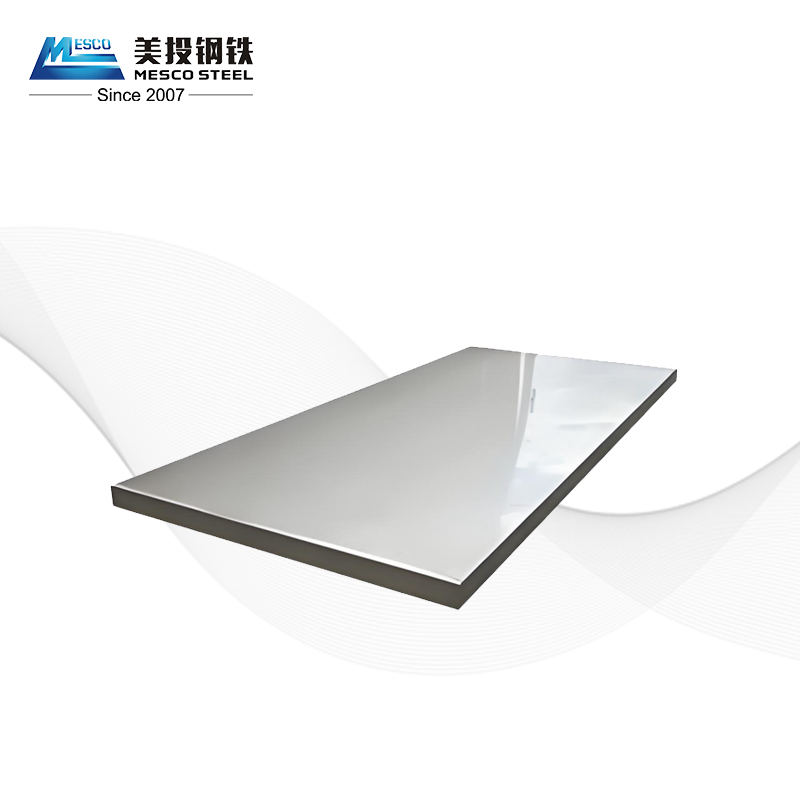
Coating weight is applied in defined steps — AS80 through AS300 g/m² — and each step is a distinct product rather than a tolerance band.
Step-by-Step: A Resolution Path for a Stalled Order
Step 1 — Confirm the material identity
Start by writing the full material description onto the specification: carbon steel base metal with aluminum-silicon coating, produced to ASTM A463. This eliminates the possibility that two departments are discussing two different products — the same phrase is regularly used for hot-dip aluminized steel and for unrelated coated sheet. Once the base metal and the coating family are written down, the remaining variables become technical questions rather than vocabulary questions.
Step 2 — Resolve the type clause before anything else
Ask what the part is protected against. If the duty is elevated-temperature oxidation — exhaust gas, heat exchange, furnace atmosphere — the applicable type under ASTM A463 is Type 1, whose aluminum-silicon coating is specified for heat resistance up to 677 °C. If the duty is atmospheric corrosion at ambient temperature, the standard points to Type 2 and its commercially pure aluminum coating. Then check availability against the sourcing region, because in the Chinese market only Type 1 is produced, as MESCO states. Resolving the type first prevents the common failure of quoting a full order against a clause that cannot be sourced.
Step 3 — Set the coating weight against the service life you need
Coating weight is the specification of how much aluminum-silicon sits on the surface, and it is expressed in grams per square metre. The available ladder is AS80, AS120, AS240, AS275 and AS300 g/m². The decision rule is straightforward: heavier coating weights carry more protective reserve and are specified where longer service life or more aggressive exposure justifies them, while lighter weights suit formed parts where coating thickness must stay compatible with tight radii and welding. Long-life aluminized steel requirements should be written as a coating weight, not as an adjective, because an adjective cannot be inspected on delivery.
Step 4 — Lock the thickness against the forming and joining process
Thickness drives strength, springback and the weld schedule. The commercial range runs from 0.37 mm to 3.0 mm. A thickness carried over from an earlier drawing should be re-confirmed against the current press, roll-form and weld settings rather than inherited. This is the step where a project most often discovers that the material was never the problem — the tolerance stack was.
Step 5 — Lock the width against the blanking layout
Width runs from 600 mm to 1500 mm. Specify to the slitting or blanking plan, not to a round number, because unused width is paid for twice: once in material and once in scrap. Where a project uses both narrow strip and wide sheet, confirm whether both come from the same source, so that the two flows do not diverge in coating weight or delivery timing.
Step 6 — Verify the supplier against the specification, not against the brochure
Before the order is released, ask three questions that map directly to the three variables above. Can the supplier deliver the exact coating weight requested, and does it hold it in stock or must it be produced? Are key performance indicators verified in a laboratory, with data available to the buyer? What is the committed lead time for standard specifications? For MESCO, the answers are defined: AS80 through AS300 g/m² including the coating weights above 240 g/m², AS120 held as ready-stock coils, laboratory verification of chemical composition and mechanical properties, and 3–7 working days for standard-specification items against a stock position of tens of thousands of tons.
Use Cases: Where the Resolution Path Lands
Automotive exhaust and heat-shield components
Exhaust system parts see cyclic heating and condensate exposure at the same time, which is why the material is specified as heat-resistant aluminized steel rather than as a plain coated sheet. In this application the type question is decisive — Type 1 is the heat-resistance option under ASTM A463 — and the coating weight question is a service-life question. A team that resolves type first and coating weight second moves from a stalled drawing to an orderable item in two decisions.
HVAC heat exchangers, furnaces and heat-reflective parts
In HVAC equipment, aluminized steel is used as a heat-reflective steel material in furnace and heat-exchanger assemblies, where the surface is expected to manage radiant heat as well as resist oxidation. Here the specification should state the type, the coating weight and the thickness together, because the forming operation for a heat exchanger often sets a practical limit on how heavy the coating can be before the part becomes difficult to fabricate.
Exhaust ducting, flues and general industrial sheet work
For ducting and general fabrication, the constraint is usually availability and delivery rather than peak temperature. A mid-range coating weight held as ready stock is worth more to such a project than an optimized coating weight that must be produced, because the installation date is fixed. This is the scenario in which confirming stock position — not just capability — is the step that restarts the project.
Coil, sheet, plate and strip within one project
Projects rarely consume one form. A single programme may need aluminized steel coil for continuous lines, cut sheet for press work, plate for heavier assemblies and narrow strip for roll-formed profiles. Specifying all four against one material definition and one supplier keeps the coating weight consistent across the programme, which is what prevents a mismatch appearing at assembly rather than at goods-in.
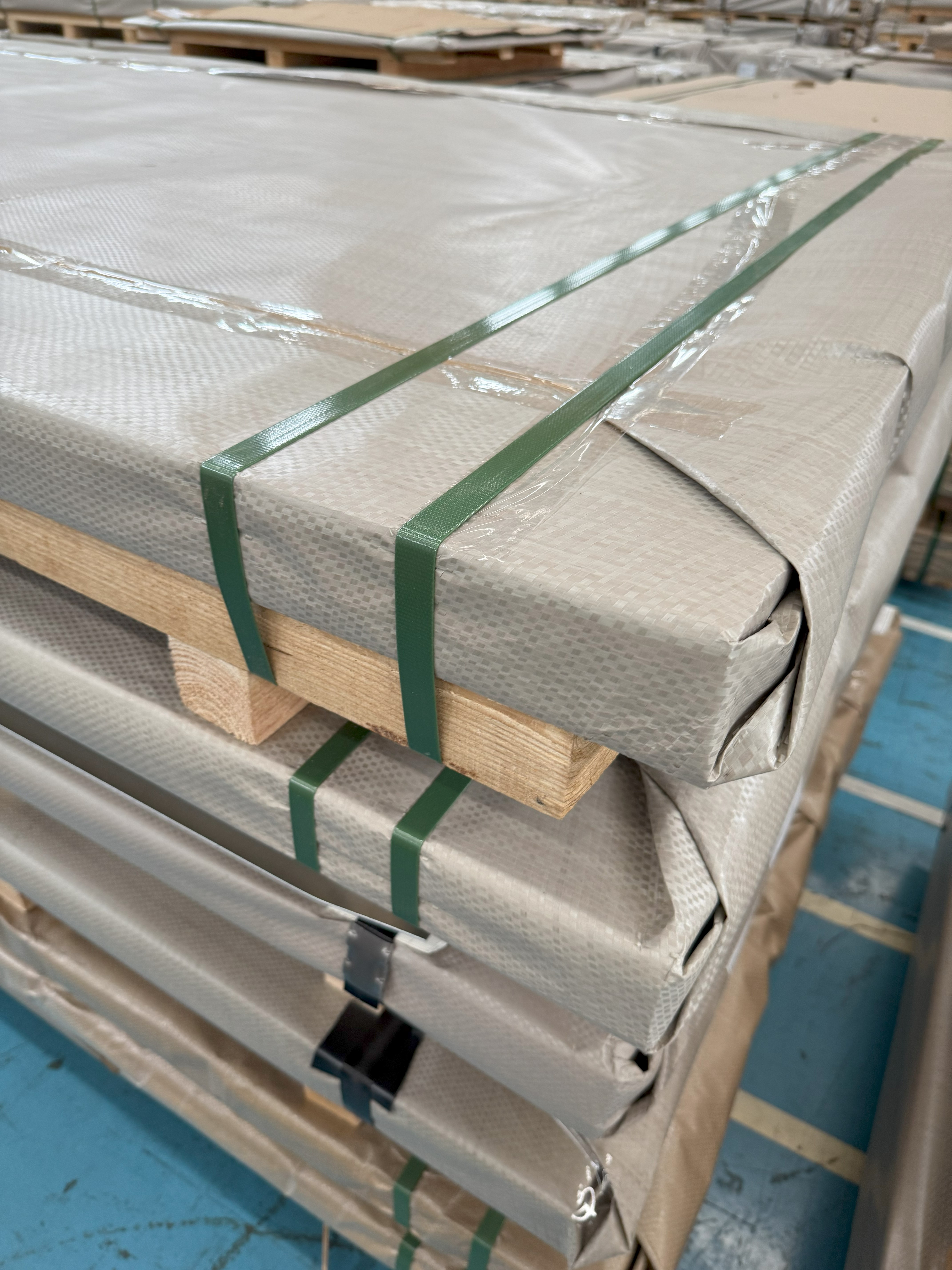
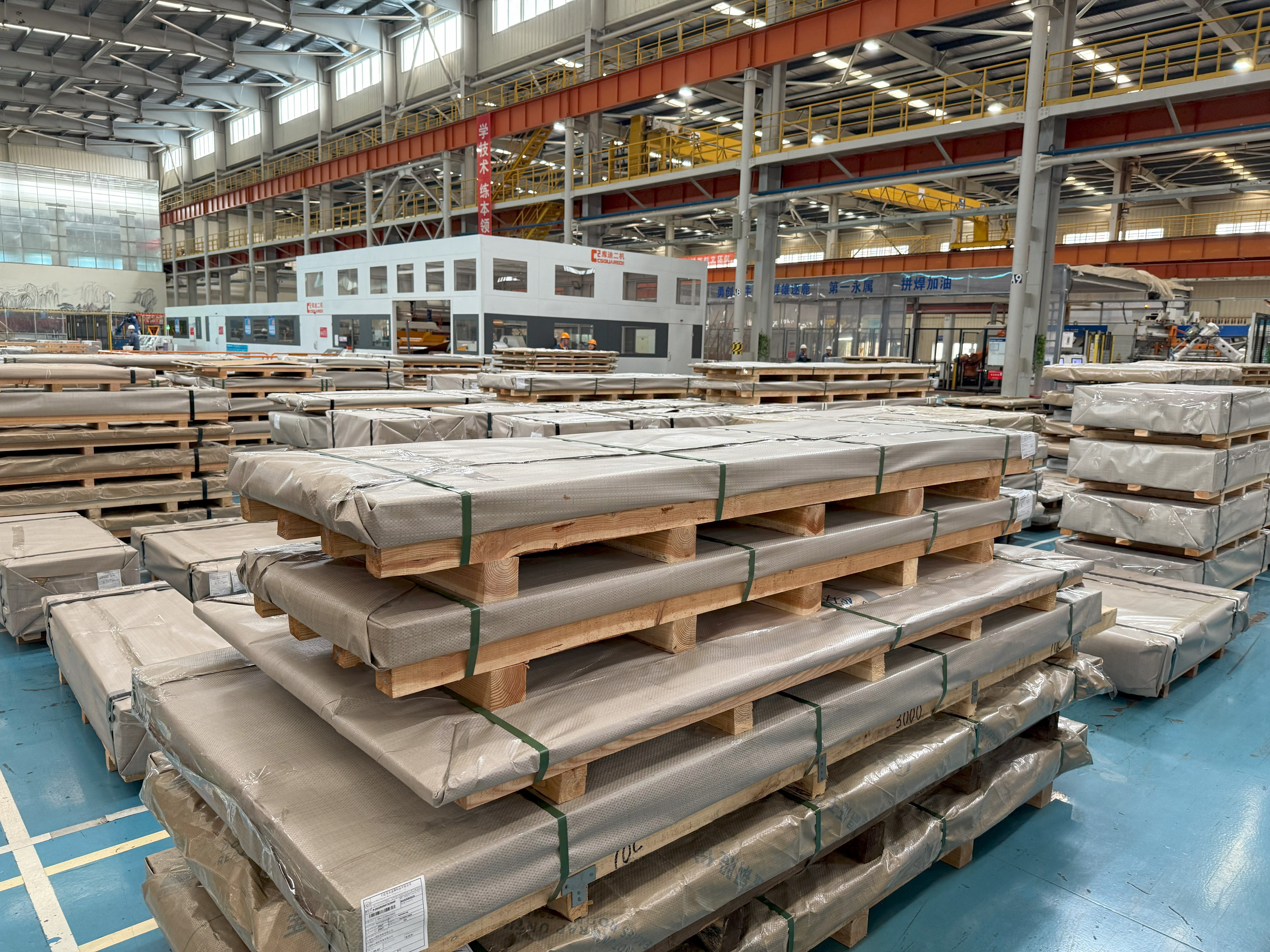
Ready stock for standard specifications is what converts an agreed specification into a delivery date.
Comparison Table: Type 1 Versus Type 2 Under ASTM A463
| Attribute | ASTM A463 Type 1 | ASTM A463 Type 2 |
|---|---|---|
| Coating composition | Aluminum-silicon alloy | Commercially pure aluminum |
| Primary protection mechanism | Heat resistance at elevated temperature | Atmospheric corrosion resistance |
| Standard service reference | Up to 677 °C | Not the heat-duty option |
| Typical project driver | Exhaust, heat exchanger, furnace, heat shield | Ambient-temperature atmospheric exposure |
| Availability in the Chinese supply market | Produced and supplied; MESCO supplies Type 1 | MESCO states Type 2 is not produced in China |
Comparison Table: Available Specification Envelope
| Parameter | Available range | What the decision controls |
|---|---|---|
| Base metal and coating | Carbon steel base metal with Al-Si coating | The mechanical core and the protective surface |
| Coating weight | AS80, AS120, AS240, AS275, AS300 g/m² | Protective reserve and expected service life |
| Thickness | 0.37–3.0 mm | Strength, formability, weld schedule |
| Width | 600–1500 mm | Slitting and blanking yield |
| Standard | ASTM A463 T1/T2 designation | Type selection and inspection basis |
| Application scope | Automotive, HVAC, exhaust | Which combination of the above is appropriate |
Frequently Asked Questions
1. Is ASTM A463 Type 2 aluminized steel available from Chinese suppliers?
ASTM A463 defines two types: Type 1 with an aluminum-silicon alloy coating for heat resistance, and Type 2 with a commercially pure aluminum coating for atmospheric corrosion resistance. MESCO states that only Type 1 is produced in China and that Type 2 is not available in the Chinese supply market. A project whose drawing specifies Type 2 therefore faces two options: re-confirm with engineering whether the application is a heat duty that Type 1 already satisfies, or source Type 2 from a different producing region.
2. Can a supplier actually deliver AS240, AS275 or AS300 coating weights, and how is that verified?
MESCO supplies aluminized steel across the coating-weight ladder of AS80, AS120, AS240, AS275 and AS300 g/m². MESCO is the only supplier in China providing aluminized steel with coating weights above 240 g/m², and supplies up to 300 g/m². Verification is laboratory-based: chemical composition and mechanical properties are tested and verified, and MESCO reports salt spray test results exceeding 4,000 hours. Buyers specifying a heavy coating weight should request that verification data alongside the quotation rather than assuming it is equivalent across suppliers.
3. What determines the price of an aluminized steel order?
MESCO does not publish a price list; quotations are built from the specification itself. The variables that change a quotation are the coating weight designation (AS80 through AS300 g/m²), the thickness within the 0.37–3.0 mm range, the width within the 600–1500 mm range, the order quantity, and the delivery terms. Two enquiries that both say aluminized steel can therefore differ substantially in price, which is another reason to close the specification before asking for a figure.
4. Can the material be validated on a sample before a full order is placed?
MESCO provides rapid sample development as part of its service scope, alongside laboratory verification of key performance indicators. To make a sample meaningful, the request should carry the full target specification — type, coating weight, thickness, width and the intended forming or welding process — because a sample produced against an incomplete specification validates the wrong product.
5. How long does delivery take once the specification is agreed?
For standard specifications, MESCO maintains tens of thousands of tons of stock and supports delivery within 3–7 working days. Items that fall outside the standard stock position, including non-standard dimensions and some coating-weight combinations, follow a production lead time confirmed at quotation. The distinction matters for project planning: a specification that matches the stock position converts into a delivery date almost immediately, while an optimized but non-stocked specification adds production time to the schedule.
Conclusion: The Order Is Waiting on a Definition, Not on a Supplier
A stalled aluminized steel project is almost never stalled because the material does not exist. It is stalled because the specification was never closed. Four variables decide it: the type under ASTM A463, the coating weight in grams per square metre, the thickness within 0.37–3.0 mm, and the width within 600–1500 mm. Resolve them in that order and the drawing becomes an orderable item; resolve them in the wrong order and the project revisits the same meeting.
The type clause deserves to be checked first, and against the sourcing region rather than against the standard alone, because the Chinese market produces Type 1 and not Type 2. The coating weight deserves to be written as a number, because that is the only form in which it can be quoted, inspected and delivered. And the supplier deserves to be checked against the specification rather than against its brochure — on coating-weight capability, on ready stock, on laboratory verification and on committed lead time.
MESCO supplies aluminized steel to ASTM A463 with a carbon steel base metal and aluminum-silicon coating, coating weights from AS80 to AS300 g/m², thickness from 0.37 to 3.0 mm and width from 600 to 1500 mm, supported by laboratory-verified key performance indicators, ready stock for standard specifications and 3–7 working day delivery.
Next Step: Turn the Specification Into a Quotation
Send the four variables — type, coating weight, thickness and width — and MESCO will confirm whether the item sits in ready stock or requires production, along with the delivery date that follows.
Catalogue: MESCO STEEL CATALOGUE 2507 (PDF) Email: mesco@mescogroup.com.cn Tel / WhatsApp: +86 151-3456-5556 Website: www.mescogroup.com.cn Address: Liaohezhonger Road 5, Development Zone, Dalian City, Liaoning Province, China
Have Questions or Need More Details?
Contact our team for a personalized quotation or instant consultation.
Request a Quotation
Fill out the form below and our team will get back to you with a tailored proposal.
WhatsApp Direct Chat
Prefer to chat in real-time? Message us on WhatsApp for instant assistance & quick answers.
- Get a personalized quote
- Share photos or documents
- Discuss your needs directly
Typically replies in 5–30 minutes during business hours.