High-Reputation Steel Suppliers: Application Fit Ratings
A high-reputation steel supplier is only high-reputation for a defined job. The supplier that is a strong match for a structural frame can be a weak match for an exhaust system, a transformer core or a municipal water main. Steel reputation is built from grade coverage, coating systems, dimensional range, inspection evidence and delivery reliability — and none of those transfer automatically from one application to another. This guide turns those criteria into star-rated application fit scores for seven project environments: construction, water, gas, automotive, transformer and motor, appliance, and high-temperature service.
Dalian Mesco Steel Co., Ltd. (MESCO STEEL) is a steel manufacturer and exporter founded in 2007 and based in the Dalian Economic and Technological Development Zone, China. The company exports to more than 100 countries and regions and serves over 700 customers, including 9 Fortune Global 500 companies, under a business philosophy of integrity, professionalism, efficiency and innovation. Its documented product programme spans twenty steel families, from carbon steel pipe and structural sections to silicon steel, spring steel, stainless and a wide range of coated products — the range that makes an application-by-application assessment possible in the first place.
The Risk Is Usually Grade–Application Mismatch, Not Supplier Size
Steel sourcing failures rarely begin with buying from a small company. They begin with a product that satisfied the purchase order but not the service condition. A galvanized sheet is specified where an aluminium-silicon coating was needed to survive heat. A welded pipe is used where pressure containment required a seamless pipe. A general cold rolled grade is pushed into a high-strength or deep-drawing duty it was never intended for. Each of these looks like a quality complaint after the fact; each is a specification error before it.
That is why supplier reputation has to be read application by application. What a supplier can document for one condition — a grade, a wall thickness, a coating mass, a test regime, a processing step — says something specific about that condition and very little about the next one. A buyer comparing high-reputation steel suppliers is therefore not really comparing names. The comparison is between documented capability and the actual service environment, and the relevant question is narrow: which of this supplier's verified product families covers my application, and where does the documented evidence stop?
How the Steel Supply Chain Shapes Supplier Reputation
A steel purchase passes through several hands before it reaches a site: melting and rolling, coating, stockholding, processing such as slitting, cut-to-length or pipe-end finishing, and export logistics. Every handoff is a point where the delivered material can drift away from the ordered material. In global sourcing, specification matching, quality consistency, lead-time predictability and cost stability are exactly the points where projects tend to fail — not because steel is difficult to buy, but because the chain between mill and site has too many unverified steps.
Buyers consequently end up judging suppliers on four kinds of evidence. First, specification coverage: the grades and dimensions actually produced or held, stated with units. Second, consistency: whether inspection happens on incoming material, during production, and on the finished product. Third, schedule reliability: stock depth and stated lead times for stock, standard and custom production. Fourth, adaptation: whether thickness, width, length, surface treatment, colour, coating or pipe end can be changed to a project drawing. A supplier that can document all four is a candidate. A supplier that can document all four for your application is a match.
MESCO STEEL operates a 40,000 m² facility with 120 employees and five R&D engineers, and reports a 70% export ratio across markets including South Korea, Thailand, the Philippines, the United Arab Emirates, Saudi Arabia, Indonesia, Turkey, Brazil, Pakistan, Malaysia, Peru, India, Mexico, Russia, Singapore, Bangladesh, Nigeria, Chile and South Africa. The company also operates six subsidiaries covering steel, UV coatings, robotic automation, modular housing and construction machinery — relevant here only because coating development and processing capability are the two functions that most often decide whether a coated or fabricated product actually suits a given site.
How the Application Fit Ratings Work
Each application below receives a star rating from 1.0 to 5.0. The score answers one question: how completely does MESCO STEEL's documented product range cover the requirements that this application typically states? Five inputs feed the score — grade coverage against the application's usual standards, dimensional and coating range, availability of the required processing step, stock and lead-time support, and the existence of a documented project precedent in that application.
- 5.0 ★★★★★ — documented grades, dimensions, processing and stock support cover the application's stated requirements, and at least one documented project exists in that application.
- 4.5 ★★★★☆ — the core requirement is covered, but one specification element (a lining standard, a PSL designation, an OEM approval) has to be confirmed project by project.
- 4.0 ★★★★☆ — the relevant product families exist, but a key engineering limit is not published in the documented range and must be fixed at enquiry stage.
Construction: Structural Frames, Roofing and Cladding — 5.0 ★★★★★
Construction projects usually combine three different steel duties in one package: load-bearing members, weather-exposed roofing and cladding, and decorative or architectural surfaces. Each has a different failure mode — structural capacity, corrosion and thermal ageing, or colour and finish durability — so a supplier that covers only one of the three forces a buyer into multiple vendors and multiple quality regimes.
The documented MESCO range addresses all three. Structural Steel is offered in Q235 and Q355 with ASTM A36, S355JR and Q355B grades, at 2–100 mm thickness, 1000–3500 mm width and 6–12 m length, in black or galvanized surface. Hot Rolled Steel covers Q235, SS400 and A36 for general structural and bridge work. For the envelope, Galvanized Steel in DX51D, SGCC and ASTM A653 handles general cladding; Galvalume Steel in DX51D+AZ and SGLCC adds heat reflection for roofing in hot climates; PPGI in SGCC and DX51D provides colour stability where appearance matters; and the Zn-Al-Mg family — ZAM and Magnelis in S250GD and S350GD — targets structures exposed to sustained humidity, salt spray or ammonia. Aluminum Coil in 1050, 1060, 3003 and 5052 covers curtain wall and façade panels where weight reduction is the driver.
Documented precedents include a 5,000 MT structural steel supply to a steel structure EPC contractor in Chile for an industrial workshop with a 30+ year service expectation, a 6,000 MT hot rolled supply to a Brazilian infrastructure contractor for bridge structure, and a 2,500 MT galvanized steel order for structural framing in Vietnam. A UAE commercial curtain wall project used aluminium coils processed into façade panels under high UV and desert conditions, and a Saudi industrial building project used Galvalume roofing to reduce roof surface temperature and improve indoor cooling efficiency.
Boundary condition: the supply scope is material. Connection design, weld procedure qualification, seismic detailing and any fire-rating requirement remain the project's responsibility, and a material supplier's specification sheet does not transfer those obligations.

Structural steel in Q235 and Q355 with ASTM A36, S355JR and Q355B grades for building, bridge and steel structure work.
Water: Transmission and Municipal Pipeline — 4.5 ★★★★☆
Water transmission is a corrosion problem wrapped around a pressure problem. The pipe has to hold its working pressure, weld cleanly on site, keep a stable roundness for jointing, and resist internal and external attack for the life of the network. Documented municipal projects in this segment commonly target 15–20 year service horizons, which makes coating specification more decisive than nominal grade.
MESCO STEEL Steel Pipe is offered in Q235B and ASTM A53 across welded and seamless construction, with ERW, SSAW, LSAW, hot rolled and cold drawn processes, outer diameter from 10.3 mm to 3048 mm and wall thickness from 0.5 mm to 80 mm. Lengths of 5.8 m, 6 m, 11.8 m and 12 m are standard with customised lengths available. Pipe ends can be plain, bevelled or threaded. Surface options include black painting, oiling, galvanizing, 3PE coating, FBE coating and pickling, with zinc coating from 30 g/m² to 600 g/m², and standards spanning ASTM, API, EN, DIN, JIS and GB. Welded Pipe in API 5L, Q195 and Q345 covers structural and utility duty within the same network.
A documented reference is a 3,500 MT steel pipe supply to a water supply contractor in Nigeria for a municipal water pipeline, where the reported outcome was reliable fluid transportation with reduced maintenance frequency over a 15–20 year horizon.
Why 4.5 and not 5.0: the documented range defines external coating systems and galvanizing precisely, but potable-water contact requirements — internal lining specification and hygiene approvals — depend on the project's own water-quality standard. Confirm the lining and the acceptance standard before order, rather than assuming the external coating specification covers the inside of the pipe.
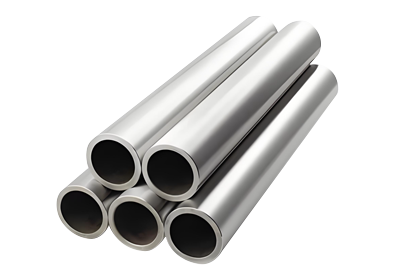
Carbon steel pipe in Q235B and ASTM A53, available with 3PE, FBE, galvanized and pickled surface treatment.
Gas and Oil & Gas Transmission — 4.5 ★★★★☆
Gas service raises the technical bar quickly. Pressure containment depends on uniform wall thickness and consistent mechanical properties, and the acceptance regime — ultrasonic testing, hydrostatic testing, anti-corrosion treatment — becomes part of the product specification rather than an optional extra. This is the clearest case where a welded pipe and a seamless pipe are not interchangeable, and where the choice has to be justified by the pressure class rather than by price.
MESCO STEEL Seamless Pipe is produced to API 5L, ASTM A106 and A53, with outer diameter from 10.3 mm to 1219 mm and wall thickness from 1.5 mm to 80 mm. Manufacturing routes include hot rolled, cold drawn and cold rolled; sections can be round, square or rectangular on request. End types are plain, bevelled or threaded, and surface treatment options cover black painting, oiling, sand blasting, pickling, galvanizing and anti-corrosion coating. For lower-pressure and utility lines, the Welded Pipe range in API 5L, Q195 and Q345 provides an alternative within the same supply relationship.
Two documented references are relevant. A 2,200 MT seamless pipe supply to an oil and gas company in Kazakhstan supported an oil transportation pipeline with a 20+ year service expectation under extreme pressure and low-temperature conditions, with strict inspection standards applied. Separately, an oil and gas transmission project in the UAE used seamless pipes for crude oil and natural gas lines connecting offshore production to onshore processing, with ultrasonic testing and hydrostatic testing, plus anti-corrosion surface treatment for desert and coastal exposure.
Why 4.5 and not 5.0: product level (PSL) designation, impact-test temperature and third-party inspection scope are not published in the general product data. These are project-level requirements that must be written into the enquiry and confirmed against the ordered heat, not inferred from the product family name.

Seamless pipe to API 5L, ASTM A106 and A53, with outer diameter up to 1219 mm and wall thickness up to 80 mm.
Automotive: Body Panels, Exhaust and Suspension — 4.5 ★★★★☆
Automotive demand splits into three unrelated material problems. Body and structural parts need formability, flatness and tight thickness tolerance. Exhaust systems need oxidation resistance under continuous thermal cycling. Suspension components need fatigue resistance and stable heat-treatment response. A supplier that covers only one of the three cannot serve a vehicle programme, which is why this application is assessed against all three.
Cold Rolled Steel is offered in SPCC, SPCD and DC01, with material grades including Q235, Q255, Q275, SS400, A36, SM400A, St37-2, SA283Gr, S235JR, S235J0 and S235J2, thickness from 0.2 mm to 500 mm, width from 1000 mm to 4000 mm, and standards under ASTM, AISI, JIS, GB, DIN and EN. Documented advantages include supplying DC04 grade below 0.4 mm thickness, experience with automotive steel above 900 MPa tensile strength, and cold rolled supply for drum applications. For the hot end, Aluminized Steel to ASTM A463 T1/T2 is positioned for mufflers, exhaust pipes and heat shields. Spring Steel in 65Mn, SUP9 and 5160 covers suspension and elastic components, while Stainless Steel in 304, 316, 201 and 430 is available where corrosion resistance outranks cost.
A documented reference is a 1,500 MT aluminized steel supply to an automotive parts factory in Mexico producing exhaust systems. The project specified heat resistance above 600 °C, required coating adhesion and forming performance for automated stamping and welding lines, and reported a raw material cost reduction of nearly 30% by replacing part of the stainless steel usage while maintaining long-term durability. A second reference covers 1,300 MT of spring steel supplied to a Polish automotive spring manufacturer for suspension springs over a 15+ year horizon. A 1,100 MT cold rolled supply to a Japanese precision equipment factory targeted flatness and thickness tolerance for stamping yield.
Why 4.5 and not 5.0: programme-level approvals and part approval documentation are buyer-specific. Whether a given grade is acceptable for a named vehicle programme depends on the OEM's own qualification route, which is agreed per project rather than published in a product catalogue.

Aluminized steel to ASTM A463 T1/T2 for high-temperature exhaust components and heat shields.
Transformer and Motor Cores — 5.0 ★★★★★
Electrical steel is a specification-driven purchase in the strictest sense: the design sets a core-loss target, and the grade has to deliver the magnetic induction and insulation coating that meet it. Two product families normally decide the outcome — grain-oriented and non-oriented silicon steel for laminations, and high-purity iron for electromagnets, relays and precision magnetic components.
MESCO STEEL Silicon Steel covers CRGO and CRNGO in thickness from 0.15 mm to 1.00 mm and width from 20 mm to 1250 mm, with coil weights of 2–10 MT and inner diameters of 508 mm or 610 mm. Surface finish is bright with insulated coating, available in C2, C3, C4 and C5 insulation classes, with mill edge or slit edge. Magnetic induction is specified at 1.50 T to 1.95 T with low core loss and tensile strength of 300–500 MPa, under ASTM, JIS, EN and GB standards. Industrial Pure Iron in DT4 and DT4A is offered from 0.5 mm to 50 mm thickness and 20 mm to 1500 mm width for electromagnet, transformer and relay applications.
Documented references include a 950 MT silicon steel supply to a transformer manufacturer in India for transformer cores with lower energy loss, and a 600 MT industrial pure iron supply to an electromagnetic equipment factory in Germany requiring high magnetic permeability for precision components. A domestic transformer project used grain-oriented silicon steel for core laminations under continuous high-frequency electromagnetic conditions.
Why 5.0: the documented range states the parameters that decide this application — thickness band, coating class, induction range and edge condition — and the project references sit in the same application. The remaining step is ordinary engineering matching: confirm the specific grade against the design's loss curve using the mill certificate for the ordered coil.

Silicon steel in CRGO and CRNGO grades, 0.15–1.00 mm thickness, with C2 to C5 insulation coating classes.
Appliance and Decorative Panels — 4.5 ★★★★☆
Appliance manufacturing is an appearance-and-consistency business. Surface quality, colour stability, scratch resistance and cleanability matter as much as mechanical properties, and the material has to run through automated forming lines without raising the rejection rate.
Laminated Steel in DX51D and SGCC uses a galvanized or stainless base with PET or PVC film, 0.3–1.5 mm thickness and 600–1250 mm width, in matte, glossy or wood-grain surface, under ASTM, JIS or EN standards for home appliance, decoration and furniture use. Coating Steel in DX51D and SGCC is offered at 0.3–3 mm thickness and 600–1500 mm width with PE, PVDF or SMP coating for roofing and wall panels, while the wider functional pre-painted programme covers powder-coated, high-temperature resistant and antibacterial color-coated steel for special environments. Cold Rolled Steel and Stainless Steel in 304, 316, 201 and 430 complete the interior and food-contact side of the segment.
Documented references include 1,800 MT of laminated steel supplied to a Turkish home appliance manufacturer for refrigerator panels, and 2,000 MT of precision stainless steel supplied to an Italian kitchen equipment manufacturer exporting to Europe, where consistent thickness tolerance and polishing performance were reported to reduce the rejection rate compared with the previous supplier.
Why 4.5 and not 5.0: food-contact and hygiene compliance depends on the specific grade, finish and destination market regulation rather than on the product family. State the applicable standard in the enquiry instead of assuming that a stainless designation settles the question.
High-Temperature Service — 4.0 ★★★★☆
High-temperature demand is narrower than the other applications and less forgiving. The material has to resist oxidation and scale formation under continuous thermal cycling, and the coating system — not the base grade alone — usually determines service life.
Aluminized Steel to ASTM A463 T1/T2 is the primary documented family here, with the aluminium-silicon coating providing the oxidation resistance that ordinary galvanized steel does not. The functional pre-painted programme adds high-temperature resistant pre-painted steel for special environments, and radiant tubes appear in MESCO STEEL's documented product programme for furnace-related duty.
The clearest reference is the Mexican automotive exhaust project, which specified heat resistance above 600 °C alongside stable coating adhesion and formability on automated stamping and welding lines.
Why 4.0 and not 5.0: a continuous service-temperature ceiling is not published for every product in this group. Different coatings and thicknesses behave differently at temperature, so the applicable limit has to be confirmed for the specific product and duty at enquiry stage rather than extrapolated from one exhaust reference.
Application Fit Comparison
The table below consolidates the ratings. The specification column states the documented parameter that carries the most weight in each application, so the score can be checked rather than accepted.
| Application | Primary MESCO product family and grade | Decisive documented specification | Fit rating |
|---|---|---|---|
| Construction — frames, roofing, cladding | Structural Steel Q235/Q355; Hot Rolled Q235/SS400/A36; Galvanized DX51D/SGCC; Galvalume DX51D+AZ; PPGI; ZAM; Magnelis | Structural 2–100 mm thickness, 6–12 m length; ASTM A36 / S355JR / Q355B grades | ★★★★★ 5.0 |
| Water — municipal and transmission pipeline | Steel Pipe Q235B/ASTM A53; Welded Pipe API 5L/Q195/Q345 | OD 10.3–3048 mm; WT 0.5–80 mm; zinc coating 30–600 g/m²; 3PE / FBE | ★★★★☆ 4.5 |
| Gas and oil & gas transmission | Seamless Pipe API 5L/ASTM A106/A53; Welded Pipe API 5L | OD 10.3–1219 mm; WT 1.5–80 mm; plain, bevelled or threaded ends | ★★★★☆ 4.5 |
| Automotive — body, exhaust, suspension | Cold Rolled SPCC/SPCD/DC01; Aluminized ASTM A463 T1/T2; Spring Steel 65Mn/SUP9/5160; Stainless 304/316/201/430 | DC04 below 0.4 mm; automotive steel above 900 MPa tensile experience | ★★★★☆ 4.5 |
| Transformer and motor cores | Silicon Steel CRGO/CRNGO; Industrial Pure Iron DT4/DT4A | 0.15–1.00 mm thickness; C2–C5 coating; 1.50–1.95 T induction | ★★★★★ 5.0 |
| Appliance and decorative panels | Laminated Steel DX51D/SGCC; Coating Steel DX51D/SGCC; Cold Rolled; Stainless | PET/PVC film; 0.3–1.5 mm thickness; matte, glossy or wood grain | ★★★★☆ 4.5 |
| High-temperature service | Aluminized Steel ASTM A463 T1/T2; high-temperature resistant pre-painted steel; radiant tubes | Aluminium-silicon coating for oxidation resistance under thermal cycling | ★★★★☆ 4.0 |
Supply Capabilities That Decide Whether a Fit Rating Holds
A product match that cannot be delivered on schedule is not a match. The table below sets out the operational evidence behind MESCO STEEL's ratings, because stock depth, capacity and lead time change a project's risk profile as much as grade selection does.
| Criterion | Documented MESCO STEEL position | Why it matters to a project buyer |
|---|---|---|
| Stock depth | Tens of thousands of tons held for standard specifications | Reduces exposure when a specification is confirmed late in the schedule |
| Stock lead time | Stock materials within 3–7 working days | Supports urgent replacement and phased construction release |
| Standard lead time | 7–15 days | Sets a realistic baseline for confirmed standard orders |
| OEM production | 15–30 days | Applies when thickness, coating or pipe end must be changed to drawing |
| Monthly capacity | 50,000 MT | Indicates whether large project volumes fit within one production cycle |
| Minimum order | 1 MT | Allows trial quantities before a full project commitment |
| Customization scope | Thickness, width, length, surface treatment, colour, coating, pipe end | Defines exactly which drawing changes the supplier can accept |
| Quality control | Incoming material inspection; online production monitoring; finished-product dimension and surface inspection | Gives three checkpoints at which a deviation can be caught before shipment |
| Processing services | Slitting, cut-to-length, Surlyn and kraft paper film lamination on aluminium coil | Reduces secondary handling and re-packing risk at destination |
| After-sales support | Material selection and application guidance | Useful when the application, not the grade, is the open question |
Documented Project References by Application
Precedents are useful only when the application, market and scale are stated. The following references are drawn from MESCO STEEL's documented project records and are presented as project-specific outcomes, not as guarantees of identical results elsewhere.
| Market | Application | Scale | Documented note |
|---|---|---|---|
| Chile | Industrial workshop structure | 5,000 MT | Structural steel selected for weldability and stable mechanical properties; 30+ year service expectation |
| Nigeria | Municipal water pipeline | 3,500 MT | Corrosion resistance and welding quality reported; reduced maintenance frequency |
| Kazakhstan | Oil transportation pipeline | 2,200 MT | Seamless pipe for extreme pressure and low-temperature conditions; 20+ year horizon |
| Mexico | Automotive exhaust system | 1,500 MT | Aluminized steel specified for heat resistance above 600 °C |
| India | Transformer core | 950 MT | CRGO silicon steel for low iron loss and improved energy efficiency |
| Poland | Suspension springs | 1,300 MT | Spring steel selected for fatigue resistance and heat-treatment stability |
| Thailand | Solar mounting structure | 3,000 MT | ZAM steel for edge corrosion protection in a high-humidity climate; 25+ year design life |
| Turkey | Refrigerator panels | 1,800 MT | Laminated steel for decorative finish and scratch resistance |
A Seven-Step Verification Sequence Before You Commit
The ratings above shorten the shortlist. They do not replace the checks that convert a shortlist into a purchase order. Run these seven steps in order, and keep the written answers with the project file.
- Write the service condition, not just the grade. Record temperature range, humidity or salt exposure, pressure class, forming severity and expected service life. A grade number alone does not describe duty.
- Match the standard, not just the chemistry. If the project cites ASTM, confirm ASTM. MESCO products are documented against ASTM, API, EN, DIN, JIS and GB, but the acceptance test in the contract must be the same standard as the certificate.
- Check the dimension against the published range. A 3,000 mm pipe diameter is inside the documented 10.3–3048 mm range; 3,100 mm is not. Confirm before assuming a custom size is routine.
- Put coating numbers in the specification. Zinc coating at 30–600 g/m², ZM coating at ZM40 to ZM600, or a C2 to C5 insulation class — a coating named without a mass or class is not a specification.
- Confirm the processing step is inside the customization list. Thickness, width, length, surface treatment, colour, coating and pipe end are the documented customization parameters. Anything outside that list should be raised as a question rather than assumed.
- Align the order route to the lead time. Stock materials are quoted at 3–7 working days, standard production at 7–15 days and OEM production at 15–30 days. Choose the route deliberately, not by default.
- Trial before scaling. With a 1 MT minimum order, a project can test forming, welding, coating adhesion or magnetic performance on real material before committing the full tonnage.
Frequently Asked Questions
What evidence should a buyer see before accepting that a steel supplier has a high reputation?
Three layers, checked in order. First, company-level evidence: legal entity, founding date, facility size and export record — MESCO STEEL, for example, was founded in 2007, operates a 40,000 m² facility, and exports to more than 100 countries. Second, product-level evidence: a specification with units and standards, such as ASTM A463 T1/T2 aluminized steel or API 5L seamless pipe with a stated outer diameter and wall thickness range. Third, inspection evidence: whether checks happen on incoming material, during production, and on the finished product, which is the three-stage structure MESCO documents. A supplier that can provide all three for your application is a credible candidate; a supplier that provides only the first is a marketing impression.
Can one supplier realistically cover a mixed project with structural, pipe and coated steel?
It can where the product families sit inside a single documented range. MESCO STEEL's programme covers twenty families — including structural steel, hot and cold rolled steel, seamless and welded pipe, silicon steel, spring steel, stainless steel, aluminium coil and coated products from galvanized and Galvalume to ZAM, Magnelis and aluminized steel — supported by a stated monthly capacity of 50,000 MT and a 1 MT minimum order. The practical limit is not breadth but depth: specialised items such as a specific pipe product level, a hygiene-certified internal lining or a vehicle-programme approval still need to be confirmed individually, because those are project qualifications rather than catalogue items.
What actually drives the cost of a project-specific steel order?
MESCO STEEL does not publish a price list, so cost has to be built from the specification. Five variables dominate: the grade and its standard, the dimensions within the published range, the coating system (a zinc coating from 30 to 600 g/m² or a ZM coating from ZM40 to ZM600 represents materially different coating mass), the processing required from the customization list, and the order route — stock material at 3–7 working days, standard production at 7–15 days, or OEM production at 15–30 days. Quantity relative to the 1 MT minimum and the 50,000 MT monthly capacity is the fifth lever. Comparing quotes without aligning all five is comparing different products.
Can I test material before placing a full project order?
Yes, within defined limits. The documented minimum order is 1 MT, and rapid sample development is part of MESCO STEEL's stated service scope alongside customized design consulting. A trial at that scale allows forming, welding, coating-adhesion or magnetic-property checks on production material rather than on a catalogue sample. Treat the trial as a process qualification step: define in advance which property you are validating, and record the result against the same standard the full order will be inspected to.
What lead time should a project schedule assume?
Three documented figures apply, and the correct one depends on how settled the specification is. Stock materials for standard specifications are quoted at 3–7 working days. Standard production runs at 7–15 days. OEM production, where thickness, width, length, surface treatment, colour, coating or pipe end must be changed to drawing, runs at 15–30 days. International logistics and customs clearance sit on top of those figures and are managed as part of the same supply chain, so the schedule should reserve time for transport separately rather than folding it into the production window.
Where can I get the full catalogue or discuss a specific application?
The complete MESCO STEEL product catalogue, covering the twenty product families and their specifications, is available for download here: MESCO STEEL CATALOGUE 2507 (PDF). For an application-specific discussion, the fastest route is to send the service condition with the grade, dimensions, coating requirement and target volume, so the fit assessment starts from your specification rather than from a catalogue page. The team can be reached at mesco@mescogroup.com.cn or +86 151-3456-5556, and further detail is published at www.mescogroup.com.cn.
Conclusion: Rate the Application, Then Rate the Supplier
The useful question for a project buyer is not whether a steel supplier has a strong reputation, but where that reputation is documented and where it stops. Read application by application, MESCO STEEL's verified range scores highest where the specifications most directly match the duty — construction at 5.0 across structural, hot rolled, galvanized, Galvalume and Zn-Al-Mg families, and transformer and motor cores at 5.0 across CRGO, CRNGO and industrial pure iron. Water, gas, automotive and appliance each sit at 4.5, with a named constraint: internal lining standards, product level designations, programme approvals and hygiene compliance have to be fixed per project. High-temperature service sits at 4.0 because a continuous service ceiling is not published for every coating family.
Those boundaries are the most useful part of the assessment. They tell a procurement team exactly which questions to ask, which evidence to request and which specification element to settle before a purchase order is raised — and they allow a supplier to be judged against the duty rather than against a general impression. With tens of thousands of tons of standard stock, 50,000 MT of monthly capacity, a 1 MT minimum order and customization across thickness, width, length, surface treatment, colour, coating and pipe end, the remaining variable is how precisely the application is described at enquiry stage.
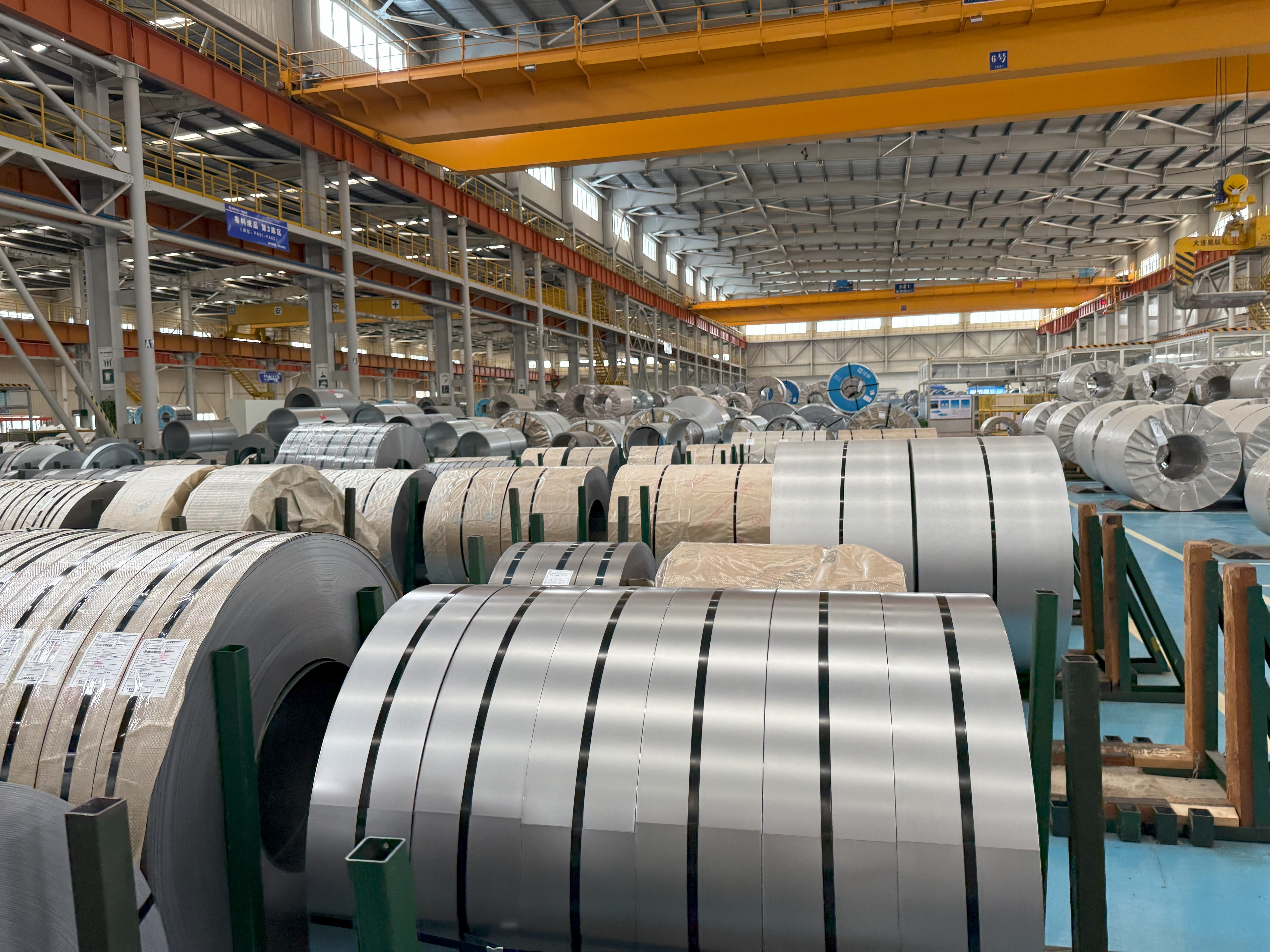
Coated steel families such as Magnelis are available for sample requests and application review before a full project order.
Have Questions or Need More Details?
Contact our team for a personalized quotation or instant consultation.
Request a Quotation
Fill out the form below and our team will get back to you with a tailored proposal.
WhatsApp Direct Chat
Prefer to chat in real-time? Message us on WhatsApp for instant assistance & quick answers.
- Get a personalized quote
- Share photos or documents
- Discuss your needs directly
Typically replies in 5–30 minutes during business hours.