Aluminized Steel FAQ: Long-Term Supply, Delivery Windows & After-Sales Support
Aluminized Steel FAQ: Long-Term Supply, Delivery Windows & After-Sales Support
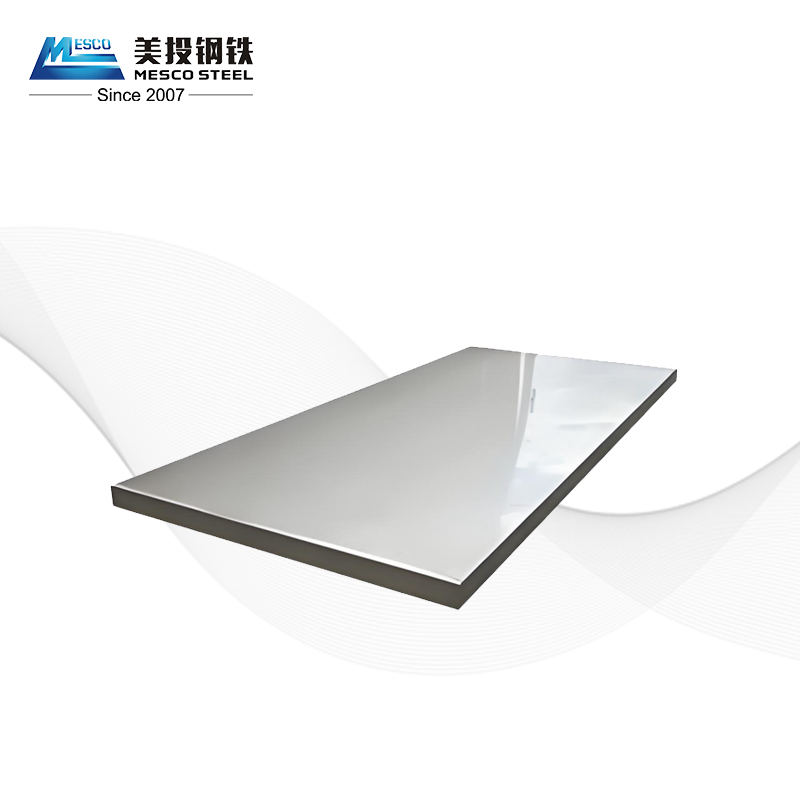
Aluminized steel sheet: carbon steel base metal with an aluminum-silicon coating, supplied in ASTM A463 Type 1 and Type 2.
Why Repeat Aluminized Steel Programmes Fail Differently
Aluminized steel is a carbon steel base metal carrying an aluminum-silicon coating. The material itself does not change between one order and the next — what changes is everything around it. That is why a supplier evaluation that works for a single container often breaks down once the same specification has to be reproduced four or six times a year.
Three failure points appear consistently when buyers scale up:
- Specification drift. A first order is usually confirmed by drawing and by email. A repeat programme is confirmed by a coating weight, a thickness tolerance and a width that must be identical across lots. If the coating weight designation is not written into the order each time, the delivered coil can be compliant with the standard yet wrong for the line.
- Delivery uncertainty. A one-off order can absorb a two-week slip. A programme feeding an HVAC line or an exhaust fabrication cell cannot. Buyers need to know which part of the order comes from stock and which part is scheduled, because those are two different clocks.
- Undefined after-sales. When a lot arrives and a dimension or coating issue is suspected, the value of a supplier is decided in the first 48 hours: who receives the claim, what data they ask for, and whether the quality records exist to resolve it. A supplier with no laboratory data has nothing to compare against.
The FAQ structure below addresses those three points in the order a buyer usually meets them — material definition, customization envelope, then supply and service after the purchase order.
Industry Background: What Buyers Need to Know Before Committing to a Programme
Aluminized steel sits between cold-rolled carbon steel and stainless steel. The aluminum-silicon coating is applied to a carbon steel base to give the surface heat resistance and atmospheric corrosion resistance while keeping the formability and cost profile of carbon steel. Commercial research published by Zion Market Research puts the global aluminized steel sheet market at USD 13.43 billion in 2024, which reflects how widely the material is now specified rather than how exotic it is.
Most technical conversations converge on one reference point: ASTM A463, the standard specification for aluminum-coated steel sheet. ASTM A463 defines two types, and the difference matters before any commercial discussion begins.
- Type 1 uses an aluminum-silicon alloy coating and is specified for heat resistance, with the standard addressing service up to 677 °C.
- Type 2 uses a pure aluminum coating and is specified for atmospheric corrosion resistance.
In practical sourcing terms, the specification is usually fixed by the end application rather than by preference. Automotive, HVAC and exhaust components dominate the demand pattern for coated sheet, and each of those segments pushes the buyer toward a particular combination of type, coating weight and gauge.
What MESCO Supplies, and How the Supply Model Works
Dalian Mesco Steel Co., Ltd. was established in 2007 and operates from a 40,000 m² facility in the Dalian Economic and Technological Development Zone, Liaoning Province, China. The company employs approximately 120 staff and maintains an annual production capacity of 120,000 units. Its product range covers stainless steel, aluminized steel, aluminum coil, galvanized steel and other steel products, and it exports to more than 100 countries and regions, with export business accounting for 70% of total sales.
The material, stated precisely
The aluminized steel supplied is an aluminized steel sheet conforming to ASTM A463, available in Type 1 and Type 2. It consists of a carbon steel base metal with an aluminum-silicon coating. Stated this way, the definition is deliberately narrow: it tells a buyer what the product is, what standard governs it, and what the surface actually is — which are the three things a specification sheet needs to establish before a drawing is issued.
The customization envelope
Customization in aluminized steel is not open-ended, and buyers should treat the envelope as a design constraint rather than a negotiation lever. The published range is as follows.
| Parameter | Available range | What it determines |
|---|---|---|
| Standard | ASTM A463, Type 1 and Type 2 | Coating chemistry and the intended service environment |
| Base material | Carbon steel base metal with Al-Si coating | Formability, weldability and the weight-to-strength balance of the part |
| Thickness | 0.37–3.0 mm | Structural performance, press load, forming radius |
| Width | 600–1500 mm | Slit width, blank yield, coil-to-blank matching |
| Coating weight | AS80, AS120, AS240, AS275, AS300 g/m² | Corrosion and heat duty life of the finished component |
| Typical industries | Automotive, HVAC, exhaust | Which type and coating weight combination is normally specified |
Coating weight is the parameter most often under-specified on repeat orders. AS80 and AS120 are the common production grades; AS240, AS275 and AS300 sit at the heavy end and are the grades buyers request when a part has to survive a harsher duty cycle. The difference between AS120 and AS240 is not a cosmetic upgrade — it changes the material's endurance in service, and it should be written into every repeat order rather than assumed from the first one.
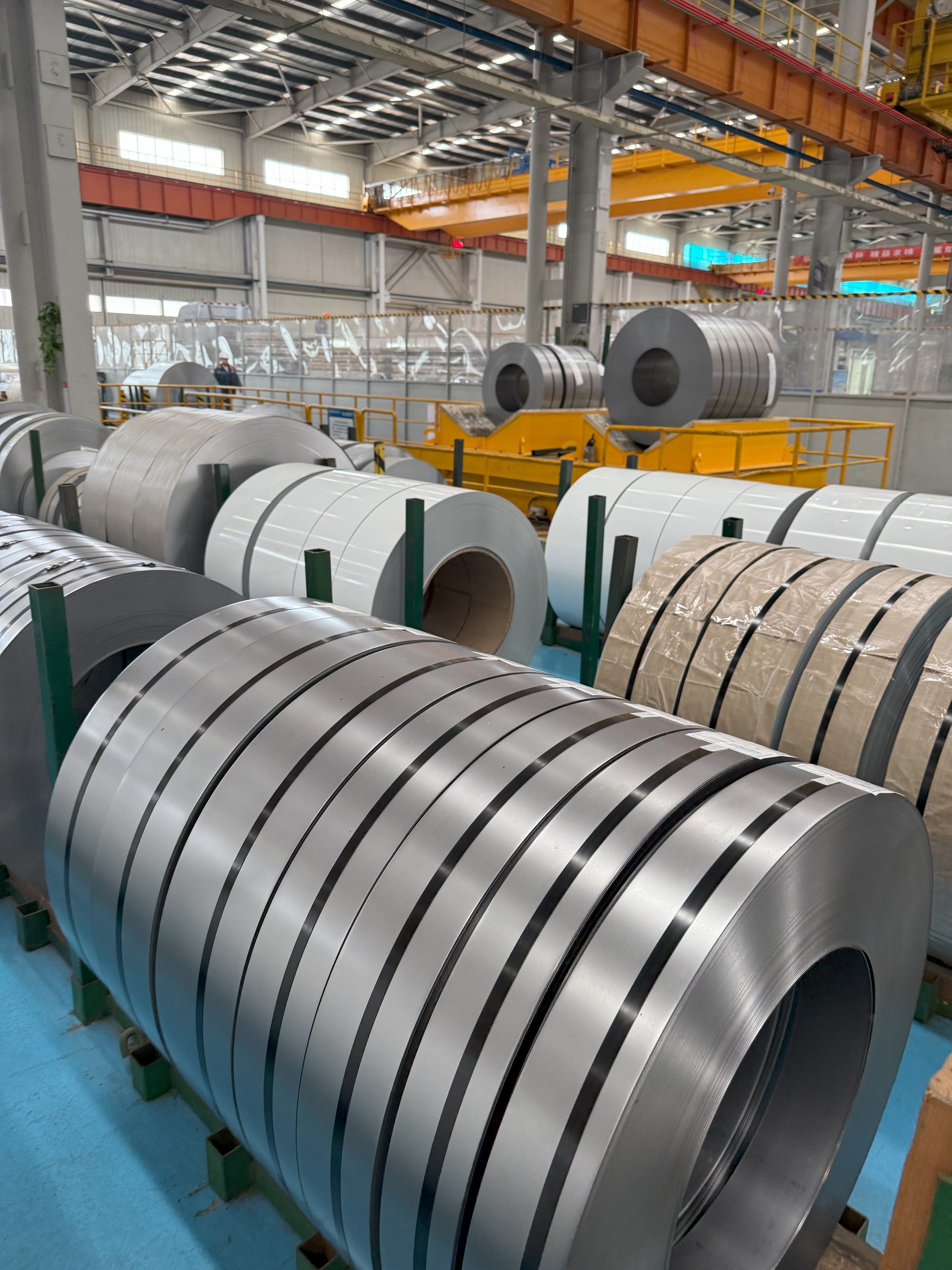
Dalian Mesco Steel Co., Ltd. operates a 40,000 m² facility in the Dalian Economic and Technological Development Zone, Liaoning Province, China.
Stock versus scheduled production
The company maintains tens of thousands of tons of stock for standard specifications, and delivery for standard specifications can be within 3–7 working days. That figure applies to stock items — it is a stock-release window, not a rolling schedule. Non-standard thickness, width or coating weight combinations follow a production route, and the window for those is confirmed at quotation against the specific combination requested.
For a repeat buyer, this distinction is the single most useful planning fact available. A programme can be structured so that the fast-moving sizes are drawn from stock while the heavy or unusual gauges are scheduled, which keeps the line supplied without holding the entire annual volume as inventory.
Quality verification
Key performance indicators are tested and verified in laboratories. For a repeat programme this matters more than for a single order: laboratory records create a comparable baseline across lots, so a query on lot four can be checked against the data for lot one rather than argued on the basis of appearance.
After-sales and technical follow-up
Support after the purchase order is handled through the same contact channel used for quotation: +86 151-3456-5556 (phone and WhatsApp) and mesco@mescogroup.com.cn. Follow-up covers specification questions on a delivered lot, documentation requests, and the scheduling of subsequent releases within an agreed programme.
Step-by-Step: Setting Up a Repeat Aluminized Steel Programme
The sequence below reflects how a buyer typically moves from a trial order to a recurring supply arrangement. Each step produces one document or one confirmed data point, which is what makes the programme repeatable.
- Fix the ASTM A463 type. Decide whether the application is driven by heat resistance (Type 1, Al-Si coating) or by atmospheric corrosion resistance (Type 2, pure aluminum coating). This decision should come from the engineering drawing, not from the purchasing desk.
- Fix the coating weight. Select from AS80, AS120, AS240, AS275 or AS300 g/m². Write the designation into the specification — not a description such as “standard coating”.
- Confirm thickness and width against the envelope. Thickness must fall between 0.37 mm and 3.0 mm, and width between 600 mm and 1500 mm. A part drawing that sits outside either limit requires redesign before sourcing, not a supplier exception.
- Decide the release pattern. Split the annual requirement into sizes that can be drawn from standard-specification stock (3–7 working days) and sizes that need scheduled production. The split determines how much inventory the buyer carries and how the production slots are reserved.
- Place the purchase order with the full specification attached. Type, coating weight, thickness, width, quantity and delivery window should appear on the order itself. This is what prevents specification drift between lots.
- Close the loop after delivery. Confirm the lot against the order, keep the laboratory test records on file, and raise any deviation through the contact channel immediately. Feedback from a delivered lot is what makes the next release accurate.
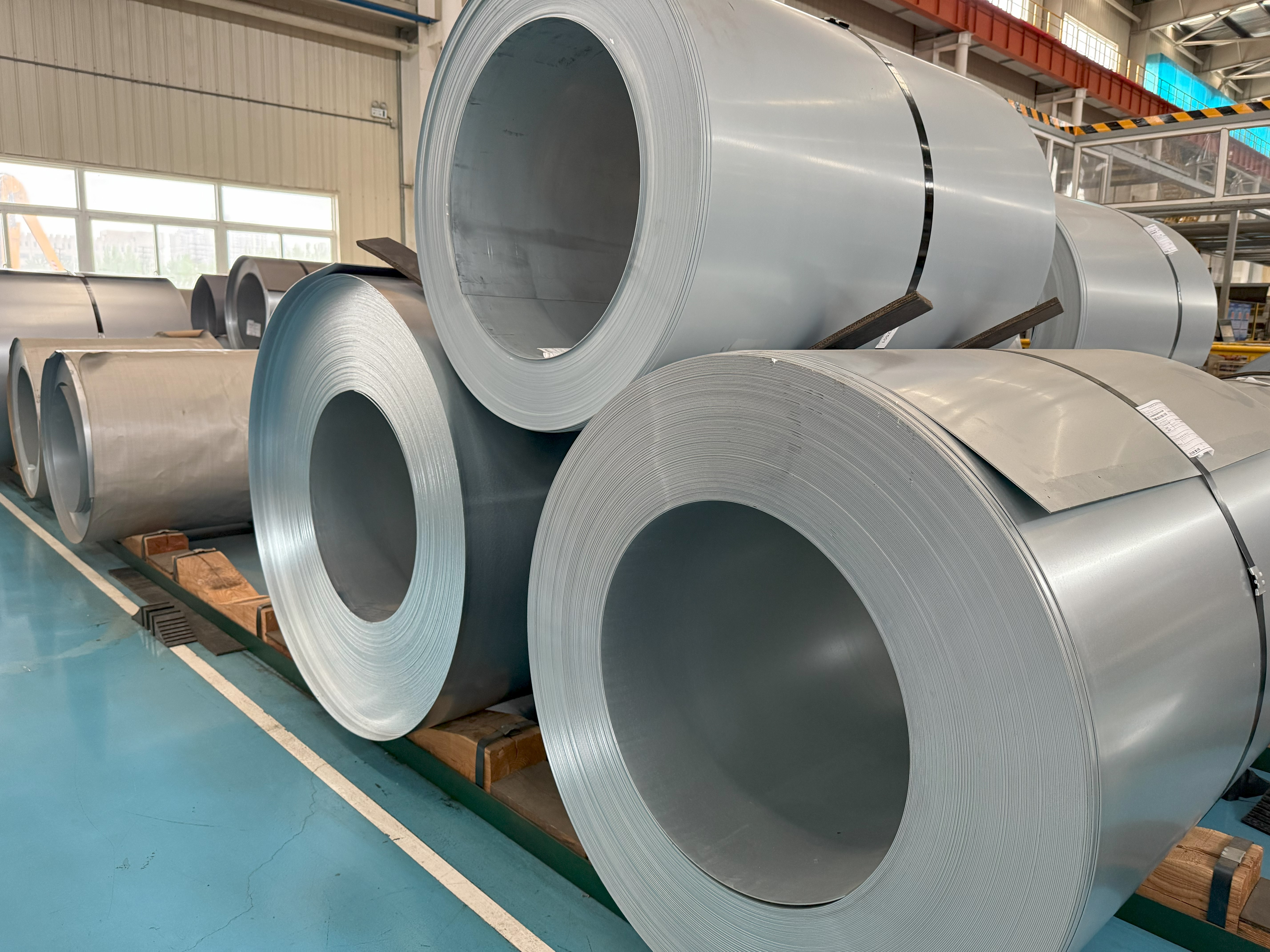
Tens of thousands of tons of stock are held for standard specifications, enabling delivery within 3–7 working days.
Where Repeat Aluminized Steel Supply Is Used
Aluminized steel is specified where a part needs the heat and corrosion behaviour of a coated surface without the cost and weight penalty of stainless. The three application areas that dominate repeat demand — automotive, HVAC and exhaust — each place different demands on the supply arrangement.
HVAC components
HVAC manufacturing is a high-volume, repetitive environment: heat exchangers, ducting and casing parts are produced to fixed drawings week after week. The buying pattern is therefore driven by gauge consistency and width matching rather than by exotic coatings. A programme built on standard specifications and stock release is usually the right fit, because the sizes rarely change while the volumes repeat.
Automotive parts
Automotive buyers typically work from a released drawing with a fixed coating designation, and any deviation requires re-approval. Here the value of a written specification on every purchase order is highest — the part number does not change, but the coating weight must still be restated to keep the supply chain aligned. Laboratory verification of key performance indicators supports the documentation trail that automotive customers are expected to maintain.
Exhaust systems
Exhaust applications combine heat exposure with atmospheric corrosion, which is precisely the combination aluminized steel was developed for. Buyers in this segment usually move between Type 1 and Type 2 depending on which side of the system the part sits on, and often need two coating weights within the same programme. A supplier able to hold both in stock shortens the planning cycle considerably.
Comparison: ASTM A463 Type 1 vs Type 2
The table below compares the two types only on attributes that are defined in ASTM A463 or stated in the supplier's published specification. It is not a ranking — the correct choice is the one that matches the service environment of the part.
| Attribute | ASTM A463 Type 1 | ASTM A463 Type 2 |
|---|---|---|
| Coating chemistry | Aluminum-silicon alloy coating | Pure aluminum coating |
| Primary purpose | Heat resistance | Atmospheric corrosion resistance |
| Service temperature reference | Addressed in ASTM A463 up to 677 °C | Not the heat-resistance option |
| Base metal | Carbon steel | Carbon steel |
| Coating weight options offered | AS80, AS120, AS240, AS275, AS300 g/m² | AS80, AS120, AS240, AS275, AS300 g/m² |
| Dimensions offered | 0.37–3.0 mm thickness; 600–1500 mm width | 0.37–3.0 mm thickness; 600–1500 mm width |
| Typical industries | Automotive, HVAC, exhaust | Automotive, HVAC, exhaust |
| Selection rule | Choose when the part sees elevated temperature in service | Choose when the part is exposed to atmosphere and moisture |
Frequently Asked Questions
Does MESCO aluminized steel conform to ASTM A463?
Yes. The aluminized steel sheet supplied by Dalian Mesco Steel Co., Ltd. conforms to ASTM A463 and is available in Type 1 and Type 2. Type 1 carries an aluminum-silicon alloy coating and is specified for heat resistance; Type 2 carries a pure aluminum coating and is specified for atmospheric corrosion resistance. In both cases the base metal is carbon steel, and key performance indicators are tested and verified in laboratories.
What thickness, width and coating weight can be customized?
Thickness can be customized between 0.37 mm and 3.0 mm, and width between 600 mm and 1500 mm. Coating weight options are AS80, AS120, AS240, AS275 and AS300 g/m². Combinations inside that envelope follow a production route, while standard specifications are supplied from stock. Any requirement outside the envelope should be reviewed at the design stage rather than treated as an order-level exception.
How is pricing handled for a repeat programme rather than a single order?
Pricing is quoted against the actual specification: ASTMA A463 type, coating weight, thickness, width, quantity and release pattern all affect the quotation, so a repeat programme is priced from the confirmed specification rather than from a published list. Buyers moving from a trial order to a recurring arrangement should send the full parameter set for quotation, which allows the stock-versus-production split to be priced separately and the total programme cost to be compared on a like-for-like basis.
How can a buyer validate quality before scaling up?
Validation rests on specification discipline and test data. Buyers should confirm the ASTM A463 type and coating weight in writing, then check the delivered lot against the purchase order. Because key performance indicators are tested and verified in laboratories, each lot carries a data record that can be compared with earlier or later lots in the same programme. Dalian Mesco Steel serves more than 700 clients worldwide, including 9 Fortune Global 500 companies, and the same laboratory verification applies to repeat programmes as to first orders.
What is the delivery window for standard specifications?
Delivery for standard specifications can be within 3–7 working days, supported by tens of thousands of tons of stock held for standard specifications. That window applies to stock items; non-standard thickness, width or coating weight combinations follow a production schedule that is confirmed at quotation. Buyers planning a repeat programme should separate stock-draw sizes from scheduled sizes so that the fast-moving items are released against the 3–7 working day window and the rest are planned into production slots.
Who handles technical and after-sales follow-up after the purchase order?
The same contact channel used for quotation remains open after the order is issued. Technical and after-sales follow-up is handled by phone or WhatsApp on +86 151-3456-5556 and by email at mesco@mescogroup.com.cn. Buyers can raise specification questions on a delivered lot, request documentation, or schedule the next release within an agreed programme through either channel.
Conclusion
A repeat aluminized steel programme is decided by three things that a single order never tests: whether the specification is written down every time, whether the delivery clock is understood as a stock window or a production schedule, and whether there is a named contact when a lot needs to be checked. On the material side, the parameters are finite and verifiable — ASTM A463 Type 1 or Type 2, a carbon steel base with an aluminum-silicon coating, 0.37–3.0 mm thickness, 600–1500 mm width, and coating weights from AS80 to AS300 g/m². On the supply side, the reassuring facts are operational rather than promotional: an established facility since 2007, a 40,000 m² plant in Dalian, tens of thousands of tons of standard-specification stock, 3–7 working day delivery on those items, laboratory verification of key performance indicators, and a client base of more than 700 companies including 9 Fortune Global 500 firms.
For buyers still assembling the specification, the catalogue linked below lists the full product range and parameter set. For buyers ready to convert a trial order into a schedule, send the type, coating weight, thickness, width and required release pattern for quotation.
Next Step: Technical and Commercial Follow-Up
Send your ASTM A463 type, coating weight, thickness and width for quotation, or request the product catalogue to review the full specification range.
Phone / WhatsApp: +86 151-3456-5556 | Email: mesco@mescogroup.com.cn | Website: www.mescogroup.com.cn
Download the catalogue: MESCO STEEL CATALOGUE 2507 (PDF)
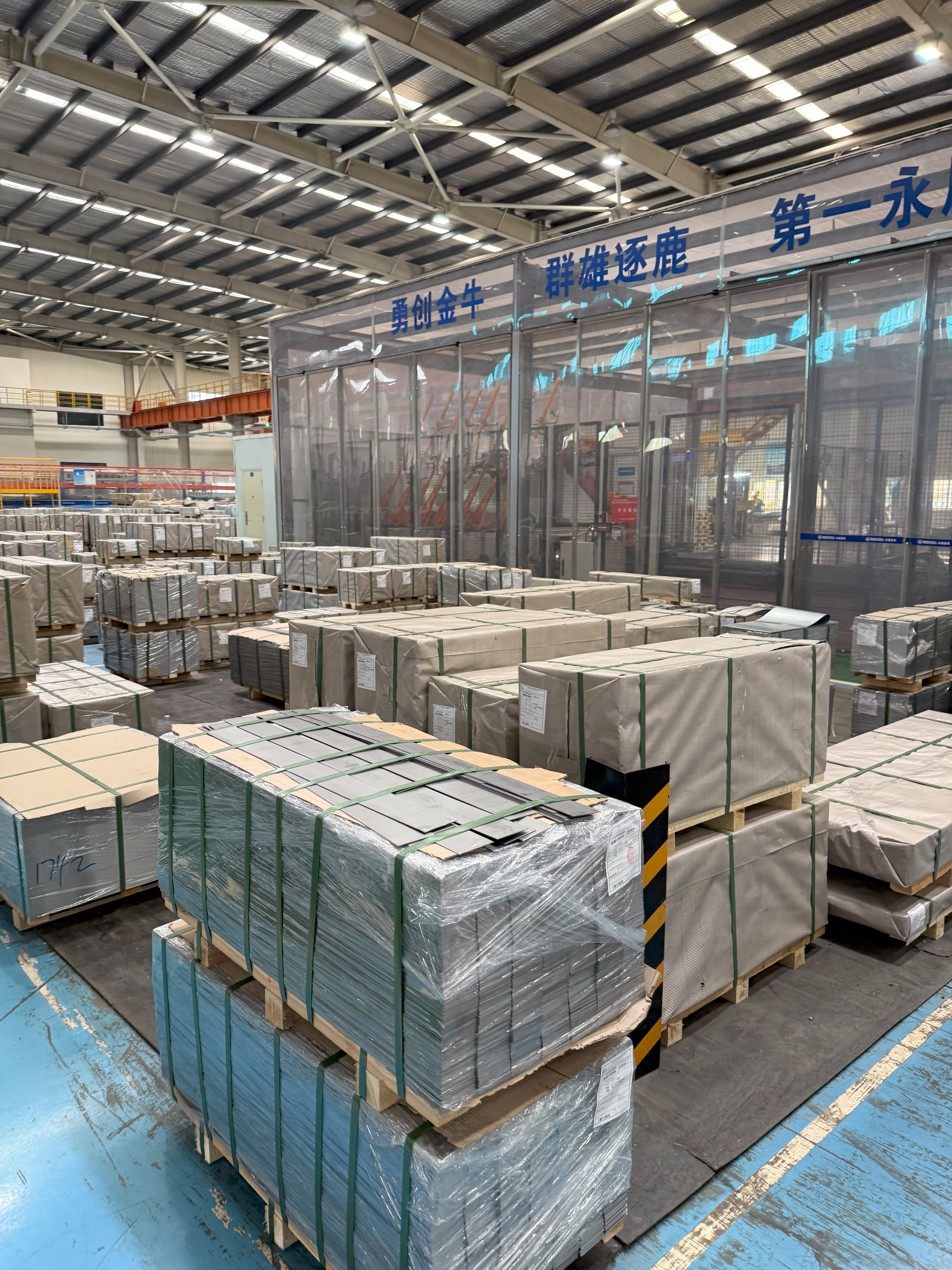
Dalian Mesco Steel Co., Ltd. — established 2007, serving more than 700 clients worldwide including 9 Fortune Global 500 companies.
Have Questions or Need More Details?
Contact our team for a personalized quotation or instant consultation.
Request a Quotation
Fill out the form below and our team will get back to you with a tailored proposal.
WhatsApp Direct Chat
Prefer to chat in real-time? Message us on WhatsApp for instant assistance & quick answers.
- Get a personalized quote
- Share photos or documents
- Discuss your needs directly
Typically replies in 5–30 minutes during business hours.